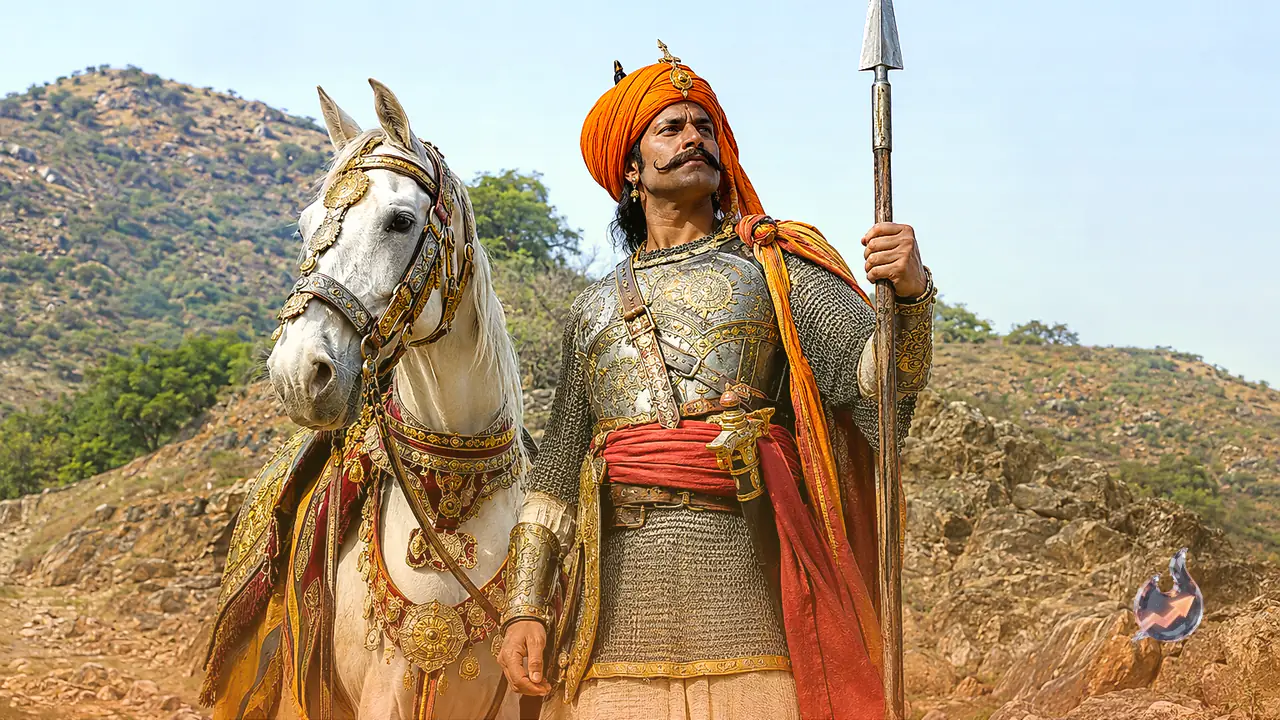

Human existence is rarely as smooth as it appears on the surface, and obstacles inevitably cross everyone's path. Whenever minor challenges arise in daily endeavors, people tend to abandon their pursuits immediately and surrender to circumstances. However, an individual is never truly defeated in any undertaking until they mentally accept failure within themselves. Refusing to accept defeat ensures that absolute failure never truly materializes. This profound truth is vividly illustrated in historical accounts following the fierce battle of Haldighati. Maharana Pratap faced immense hardships, wandering through dense forests and subsisting on grass bread to survive, yet he never relinquished his resolve. If that same relentless tenacity took root inside every person, no one would ever truly be beaten in the game of life. This struggle extends far beyond battlefield combat, touching upon the everyday trials of ordinary existence. When someone decides that academic subjects are too difficult or concludes that their income cannot grow any further, that exact resignation represents the true loss. Maharana Pratap forged this timeless truth through his own actions, providing lessons that remain useful against every modern hardship.
Challenging a Vastly Superior Empire
Centuries later, this remarkable saga survives not only in dusty history books but deeply embedded within the hearts of ordinary citizens. Maharana Pratap served as the ruler of Mewar in Rajasthan. Amidst the rugged hills of the Aravalli range and harsh desert terrain, he confronted a Mughal empire that possessed vastly greater wealth and military might. His army was exhausted, his kingdom bore the deep scars of ongoing conflicts, and the future appeared thoroughly uncertain. Despite these grim realities, the brave Rajput warrior steadfastly refused to bow down. His entire existence transcends simple warfare, standing instead as a powerful symbol of self-respect, unwavering courage, and an unyielding quest for freedom. Even after the devastating conflict at Haldighati, he continued his grueling struggle under brutal conditions to defend his personal dignity and his homeland. His most enduring lesson remains the principle that defeat only occurs when an individual embraces it. This is why his name continues to be invoked across generations as the ultimate embodiment of bravery, sacrifice, and unbreakable resolve.
The True Meaning of Self-Respect
Historians recount that Maharana Pratap endured years of severe deprivation in the wilderness rather than accepting any form of humiliation or surrender. He and his family suffered through immense poverty and endless trials without ever capitulating to foreign pressure. While some modern observers might view this stubborn stance as impractical or risky, for millions of people, it stands as the purest definition of personal honor and dignity. His famous philosophy was never restricted merely to the theater of war; it remains just as relevant today as it was centuries ago. Individuals frequently experience demoralizing setbacks in everyday life, whether through business failures, fractured relationships, disappointing exam results, or debilitating illnesses. Maharana Pratap reminds people that physical wounds sustained in battle inflict far less agony than the psychological pain of surrendering in spirit. Every person today navigates the exact same internal battlegrounds that he once traversed, even if the outward appearance of the adversary has completely transformed.
Real Failure Begins When Courage Fades
In the contemporary era, countless individuals feel crushed beneath relentless workplace pressures, complicated personal relationships, and heavy societal expectations. In such testing times, the message left by Maharana Pratap demonstrates that genuine defeat arrives only when courage is abandoned and surrender is officially accepted. Every preceding obstacle serves merely as a temporary hurdle rather than permanent ruin. The mental fortitude frequently discussed by modern psychologists was demonstrated centuries ago through his unwavering actions. His legacy proves that life may knock someone down repeatedly, but failure only occurs when they stop trying to get back on their feet. He understood thoroughly that people rarely fail simply because circumstances are difficult, but rather because they convince themselves that their misery is permanent. The moment the human mind accepts defeat, the physical body follows those exact instructions. Consequently, his enduring legacy continues to serve as an indispensable fountain of motivation for anyone currently struggling against the adversities of modern existence.