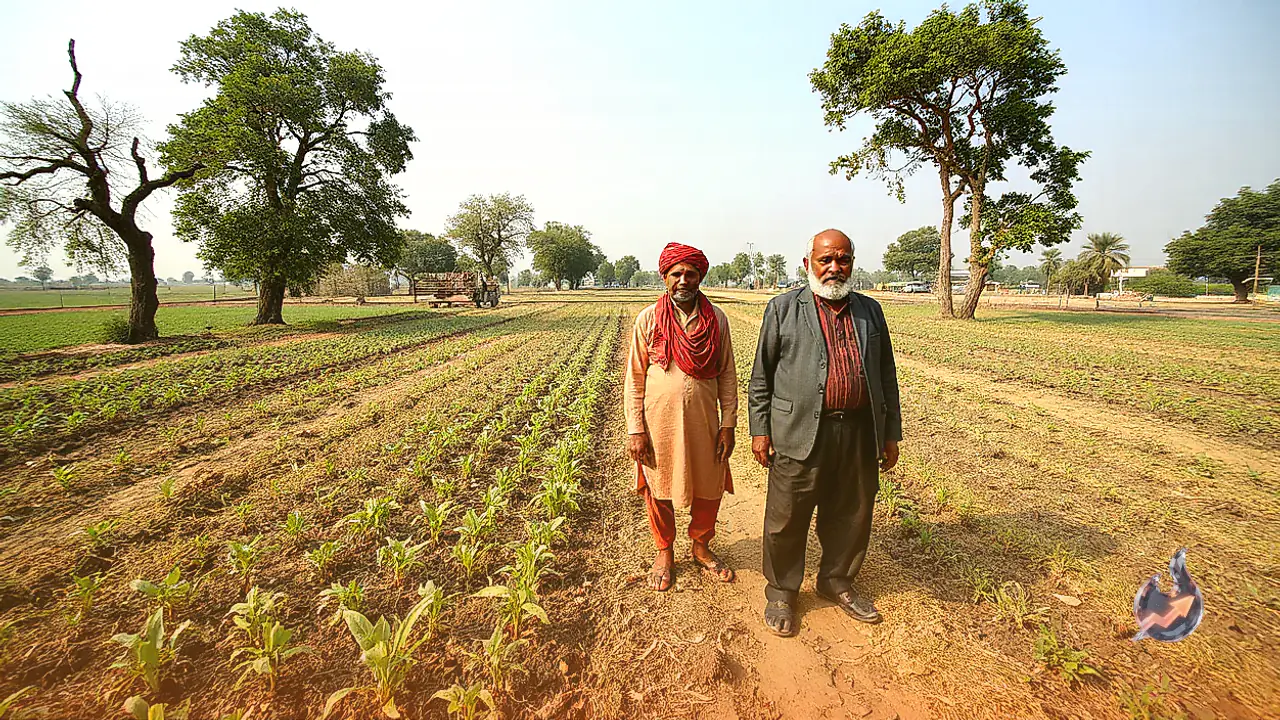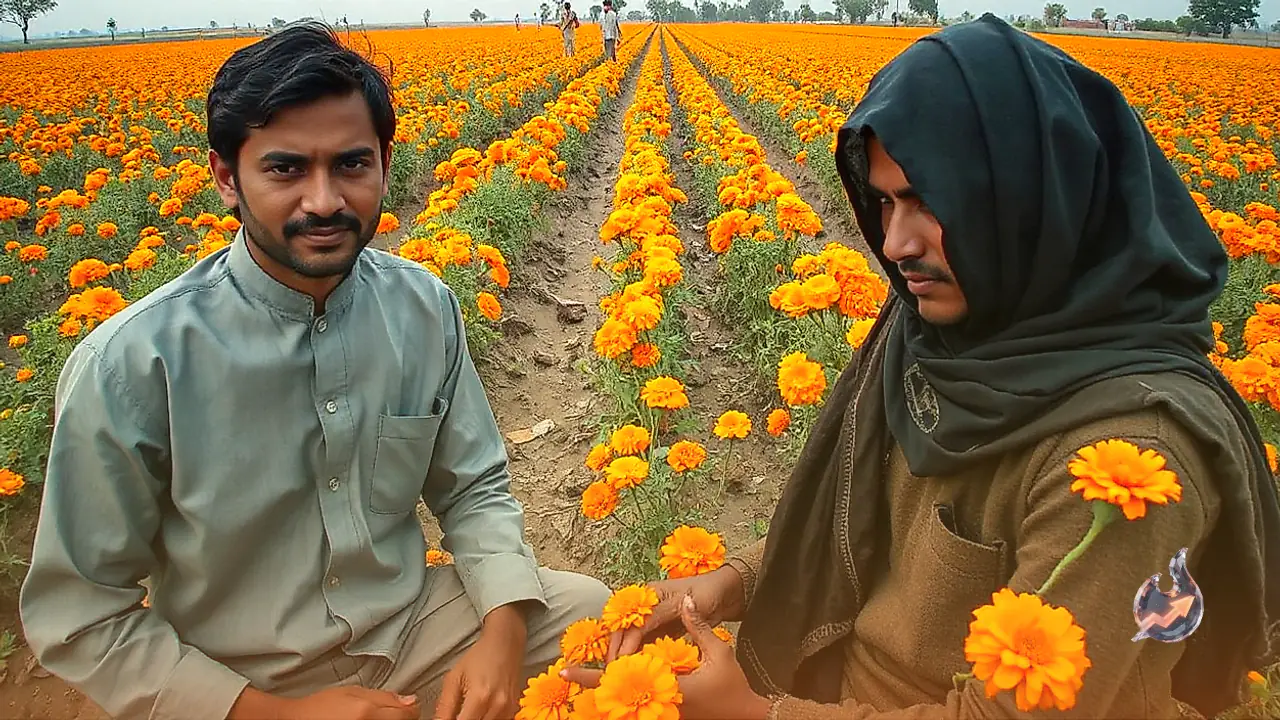

Agricultural practices in various regions of Bihar have increasingly become a reliable source of sustainable income for rural communities. Commercial flower farming, in particular, is reshaping the rural economy, with many farmers stepping forward to embrace floriculture. In Araria district, a significant number of agricultural families depend entirely on marigold cultivation for their daily livelihood and financial stability. The district's Raniganj block serves as a major hub for this specific type of farming, spanning multiple hectares of land. Within this block, the village of Lalhomohan witnesses several families engaged in year-round marigold farming.
A Deciding Shift Towards Agriculture
Among these dedicated cultivators is Pankaj Kumar, who uses roughly one bigha of land exclusively for growing marigold flowers. Rather than migrating to other cities in search of manual labor or low-paying jobs, he chose to stay close to home and dedicate his efforts to farming. Having spent about 15 years in this agricultural pursuit, he manages to support his entire household comfortably through the yields of his land. His limited formal education never became a barrier; instead, his sheer determination and hard work paved the way for a stable and respectable livelihood right in his native village.
Sourcing Quality Varieties from Kolkata
Achieving a bountiful harvest requires careful attention to the quality of seeds and saplings planted in the soil. To ensure optimal results, Pankaj procures his plant varieties directly from Kolkata in West Bengal. He explains that purchasing flowers and saplings locally within Bihar often results in subpar quality alongside much higher price tags. The varieties brought in from Kolkata guarantee better growth, stronger resistance, and superior bloom quality, which ultimately commands better appreciation and rates in the local market when harvest time arrives.
Year-Round Cultivation and Crop Rotation
Marigold farming requires a continuous cycle of planting and harvesting across different seasons throughout the year. The varieties sown during the month of July are currently undergoing harvesting, a phase that will wrap up by November. Following this, preparations begin for planting winter-specific varieties in the fields. This systematic crop rotation ensures that farming activities remain active all year long. Additionally, he utilizes the field borders to cultivate complementary flowers that require minimal investment while yielding attractive extra profits.
Analyzing Investment, Expenses, and Returns
Detailing the financial aspects of his venture, he notes that cultivating marigolds on one bigha entails an investment of roughly 25,000 rupees. A single bigha can yield a solid return over the course of three distinct agricultural seasons in a year. By managing the crop cycles efficiently, a farmer can generate an annual income ranging between 2 to 3 lakh rupees from that single plot of land. This eliminates the necessity of leaving home for employment elsewhere, allowing individuals to earn a respectable living locally.
Surge in Demand During Wedding Seasons
Market dynamics for floral products fluctuate significantly depending on festive periods and the traditional wedding seasons. During peak matrimonial months, the market demand for marigold garlands surges, directly boosting profitability for growers. In the off-season, a standard bundle containing 20 garlands generally sells for 100 to 150 rupees. However, during peak wedding dates, the price per bundle climbs to between 200 and 300 rupees, substantially increasing the overall earnings for the season.
Muskaan Nursery and Total Annual Earnings
Beyond traditional crop farming, Pankaj also operates an independent commercial plant nursery named Muskaan Nursery. Situated prominently in the old market area of Raniganj near the local police station, this nursery provides a wide variety of plants to local buyers. Combining the revenue generated from his marigold harvest and the operations of his nursery, his total seasonal earnings comfortably exceed 5 lakh rupees. His journey stands out as a remarkable testament to what dedication and local enterprise can achieve in the agricultural sector.