





















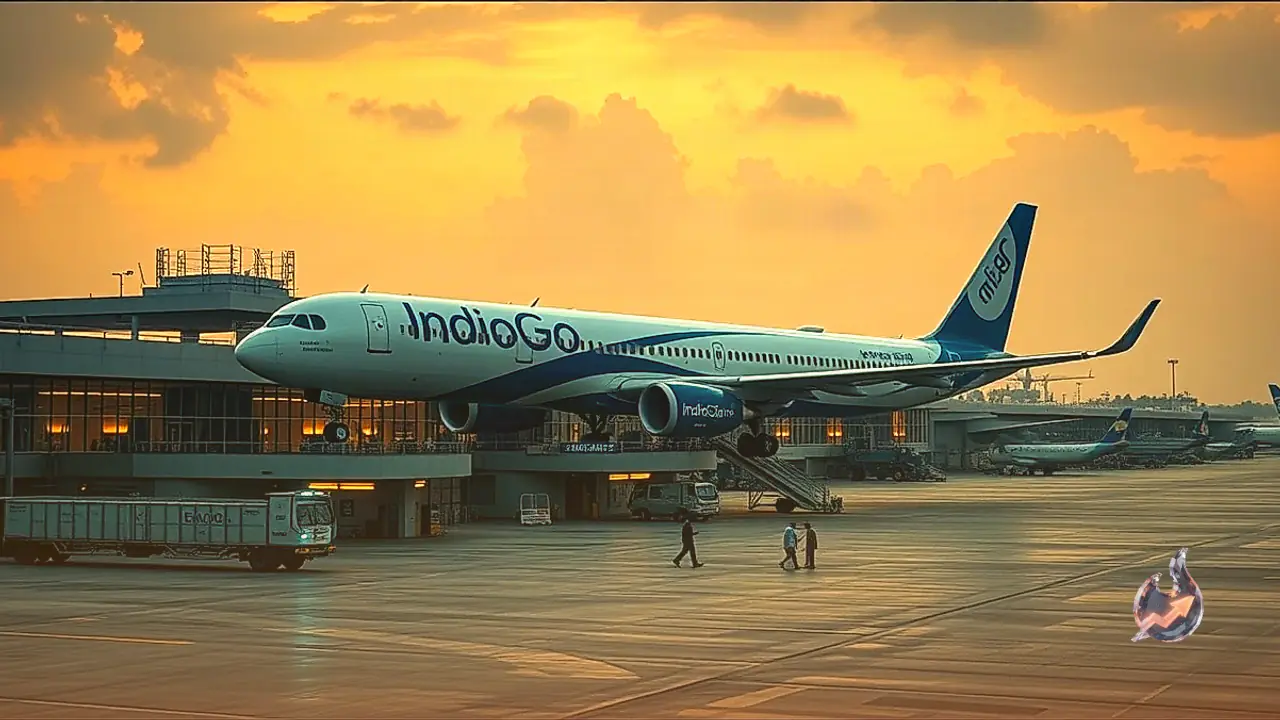

A Singapore-bound IndiGo commercial flight originating from Tiruchirappalli International Airport in Trichy, Tamil Nadu, was forced to execute an emergency return shortly after takeoff following a technical malfunction detected mid-flight. Carrying 127 passengers on board, the aircraft did not land immediately upon returning to Trichy airspace. Instead, it was required to circle above the airport for approximately 2.5 hours to burn off excess aviation fuel to reach a safe landing weight. The aircraft touched down safely at Trichy International Airport around 9:00 PM, bringing relief to everyone on board.
Trichy to Singapore Flight Disruption and the 2.5-Hour Fuel Reduction Holding Pattern
The scheduled international flight had departed from Trichy International Airport at 6:40 PM bound for Singapore. Shortly after takeoff, while gaining altitude, the flight crew detected a technical glitch within the aircraft's systems. Following standard aviation protocols, the pilot immediately established communication with Air Traffic Control and airport management to initiate an emergency return. Because international flights carry heavy fuel loads for long-distance travel, attempting an immediate landing with full fuel tanks carries significant structural risks to the landing gear and airframe.
To eliminate these safety risks, the flight crew maintained continuous contact with air traffic controllers while holding over Trichy airspace for roughly two and a half hours. This extended holding pattern allowed the aircraft to burn through its fuel load until its weight fell within permissible emergency landing limits. Around 9:00 PM, the pilot successfully brought the plane down on the Trichy runway. Airport Director Gopalakrishnan confirmed that all 127 passengers aboard the flight were unharmed and safely deboarded. He further stated that airline authorities promptly arranged an alternate aircraft to transfer the passengers to Singapore. While IndiGo has not publicly detailed the specific mechanical fault, the plane was grounded for technical inspection.
Delhi to Mangaluru IndiGo Flight 6E-6456 Delayed by 3 Hours Due to Taxiway Fault
In a separate incident on Thursday, another IndiGo flight faced significant operational delays at Indira Gandhi International Airport in Delhi. Flight 6E-6456, bound for Mangaluru and operated using an Airbus A320 aircraft, was delayed by nearly three hours after encountering technical issues right before takeoff. Originally scheduled to depart at 5:30 PM, the flight was already running approximately 20 minutes behind schedule. At around 5:50 PM, as the plane began taxiing towards the runway, the pilot noticed a malfunction.
Prioritizing passenger safety, the pilot halted the taxiing process. After moving slowly along the taxiway for about 8 to 10 minutes, the aircraft came to a complete stop and was steered back toward the parking bay. About five minutes later, the pilot made an announcement over the cabin address system, informing passengers that the aircraft was returning due to a technical issue. Once parked at the bay, the cabin doors were opened, and maintenance engineers spent 5 to 10 minutes assessing the aircraft. Following the inspection, the crew requested all passengers to deboard while a replacement plane was prepared. According to flight tracking platform FlightRadar24, the newly assigned aircraft finally took off for Mangaluru at 8:28 PM.
Recent String of Operational and Safety Incidents Across IndiGo Flights
These dual technical glitches come amid a series of recent safety challenges for IndiGo flights. In June, an IndiGo flight carrying 141 passengers bound for Agartala was struck by lightning while airborne. Despite the sudden lightning strike, the flight crew maintained control and landed the plane safely without any reported casualties.
Furthermore, on July 17, security concerns escalated when a threat note reading "bomb in plane" was discovered inside the lavatory of an IndiGo flight preparing to depart from Bengaluru to Ahmedabad. The discovery prompted immediate emergency security protocols at Kempegowda International Airport. While airline representatives reiterate that passenger safety remains their highest priority, these recurring technical and security events have drawn heightened attention to fleet maintenance and operational safeguards.