




















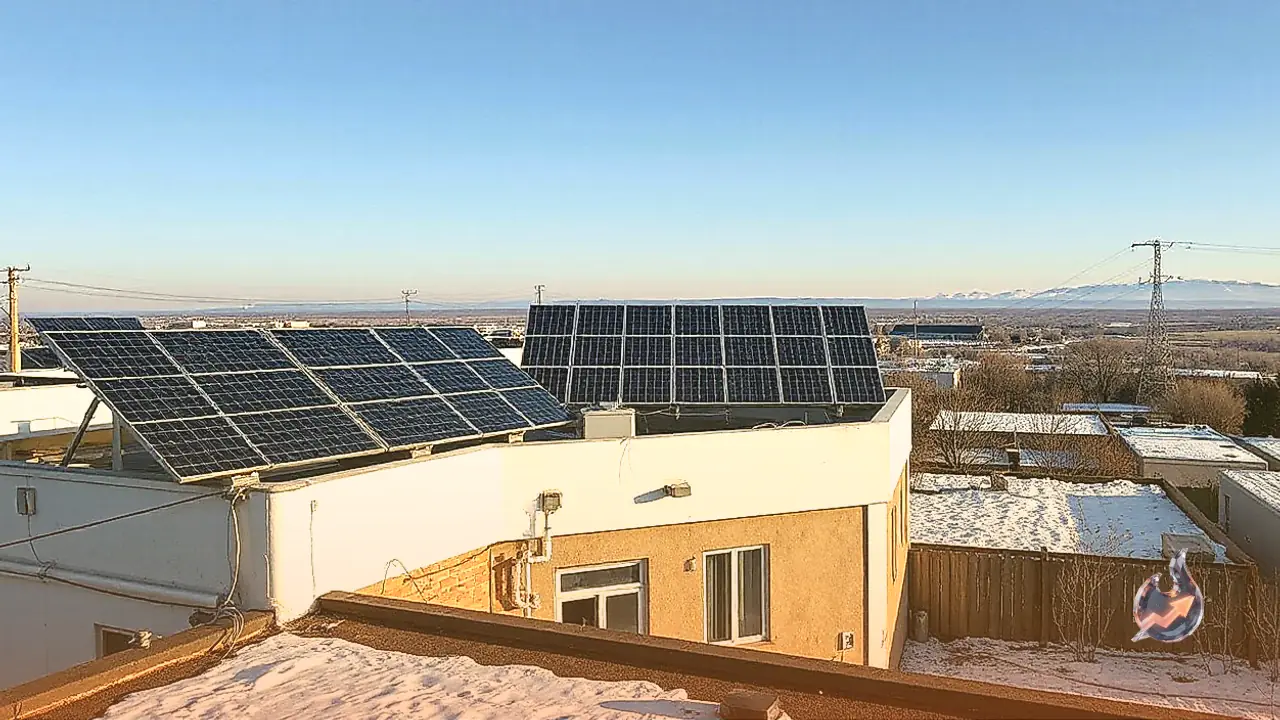

To encourage clean energy adoption and lessen dependence on heavy monthly utility bills, government programs such as the Har Ghar Surya Bijli Yojana promote rooftop solar installations across India. During summer, long daylight hours and intense sunshine allow rooftop panels to generate surplus electricity, often exceeding a household's daily consumption. However, as winter sets in, foggy skies, overcast weather, and reduced daylight raise questions about how these systems function and whether a home can rely entirely on solar power around the clock.
The Science Behind Solar Panel Performance in Cold Weather
According to Bhavna Tyagi, Program Lead at the Council on Energy, Environment and Water, solar panels continue to generate electricity during winter because they rely on sunlight rather than heat. Photovoltaic cells convert light photons into electrical current, meaning atmospheric temperature is not the driving factor behind power creation.
Cold ambient temperatures actually improve the operational efficiency of solar cells and extend panel lifespan compared to extreme summer heat. However, because winter days are shorter and the angle and intensity of sunlight are diminished, the reduced exposure hours offset this temperature efficiency gain, resulting in lower overall daily energy output.
Understanding the 20 to 40 Percent Winter Drop in Output
Across most regions of India, solar power generation drops by approximately 20 percent to 40 percent during the winter season compared to peak summer months. In North India, dense fog and cloudy weather during December and January frequently block direct sun rays for consecutive days, causing a notable dip in daily generation. A similar reduction in output occurs during the monsoon season due to prolonged rainfall and heavy cloud cover.
For instance, a standard 5 kW rooftop solar system that produces about 20 to 25 units of electricity per day during clear summer conditions will typically yield only 12 to 18 units per day during winter. The exact variation depends on geographical location and the number of clear sunny days experienced locally.
Can a Home Depend Solely on Solar Power Year-Round?
Tyagi notes that a home cannot rely strictly on solar panels alone for continuous 24/7 power without supporting infrastructure. Because solar panels produce energy exclusively during daylight hours, generation stops completely at night and slows drastically during dark, foggy weather.
To achieve complete off-grid energy independence, a household must install an oversized solar system combined with high-capacity battery storage. During peak daylight hours, excess energy generated by the panels charges the batteries. This stored energy is then dispatched during nighttime hours or on low-sunlight days, operating similarly to a standard inverter system.
Four Strategies for Reliable Year-Round Solar Energy
To ensure a consistent electricity supply through winter, solar adopters rely on four established design and grid connection strategies.
- System Oversizing: Installing a solar capacity that exceeds baseline summer needs. For example, if a home requires 10 units daily, the system is sized so that even reduced winter production meets that 10-unit threshold.
- Battery Energy Storage Systems: Capturing daytime surplus electricity in deep-cycle batteries to power lighting and appliances overnight or during overcast periods.
- Grid-Tied Systems with Net Metering: Linking the rooftop system to the local electrical grid. Excess energy produced in summer is exported to the grid, while winter deficits are covered by drawing electricity back from the grid, paying only for the net balance.
- Secondary Backups: Utilizing auxiliary generators or supplemental battery banks in remote off-grid locations where main grid supply is unavailable.