






















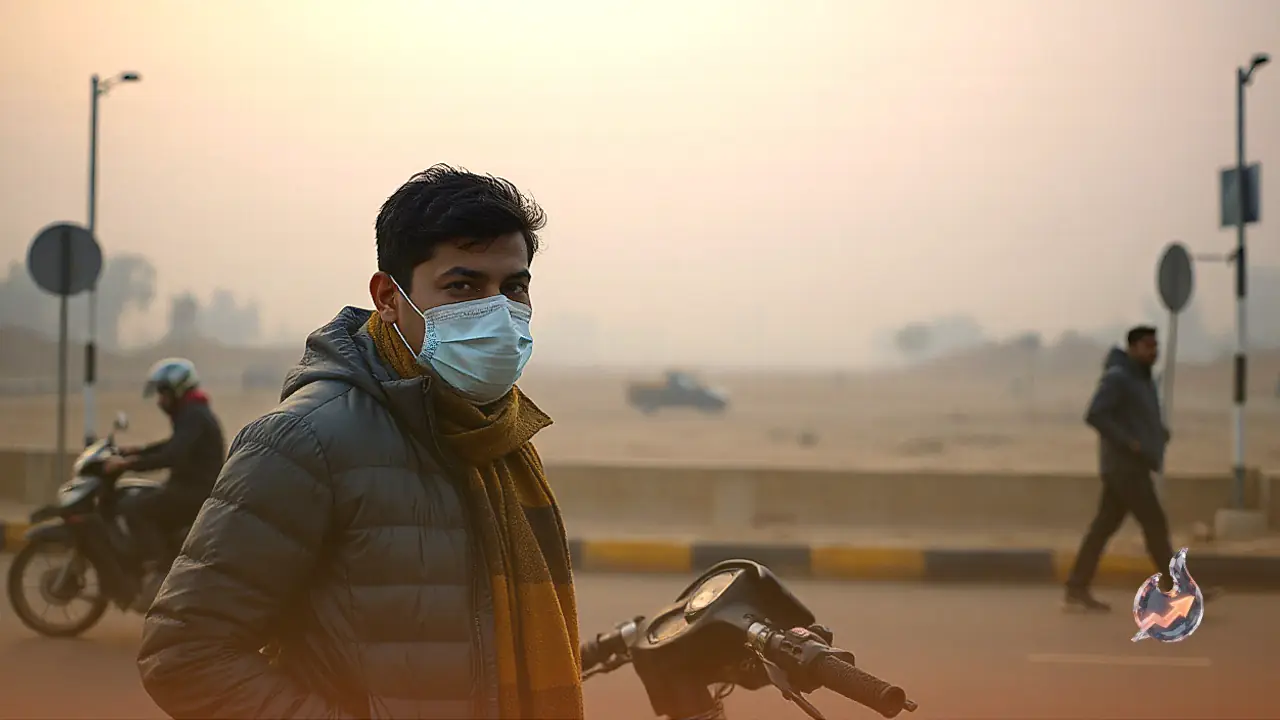

With the onset of winter across Delhi-NCR and several major metropolitan regions, air quality indices frequently deteriorate to poor and severe levels. While running indoor air purifiers helps maintain clean air inside homes, maintaining personal protection while commuting to work, visiting markets, or traveling in public transport remains a major concern. To bridge this gap, wearable air purifiers have increasingly gained popularity. Designed as small, lightweight gadgets worn around the neck or clipped onto clothing, these devices claim to create a localized bubble of purified air around the user's breathing zone.
Operating Mechanism: Anion Technology and Protective Radius
Most wearable air purifiers available in the market rely on negative ion, or anion, technology. The device continuously emits negative ions into the surrounding air, which attach themselves to positively charged airborne particles such as dust, PM 2.5, smoke, and pollutants. Once bound, these particles become heavy and fall to the ground away from the user's respiratory space. While some advanced models feature small motorized fans and basic physical filters, many options operate entirely filterless. These purifiers generate an effective cleaning sphere of roughly 20 to 30 centimeters around the face. Although they do not seal off the face like a physical mask, they significantly reduce the concentration of inhaled particulate matter.
Utility and Expert Recommendations
Standard room air purifiers are restricted to enclosed spaces. In contrast, wearable devices offer mobility for individuals navigating semi-open environments like taxis, metro trains, and corporate offices. They serve as a secondary line of defense, particularly for vulnerable demographics including children, senior citizens, and individuals with chronic respiratory conditions. However, health experts emphasize that wearable purifiers should not be treated as a total replacement for N95 masks or high-efficiency HEPA room purifiers. During periods of severe smog, using these devices in conjunction with an N95 mask provides the most reliable personal protection.
Price Categories and Battery Performance
Personal air purifiers cater to various budget segments in India. Entry-level models range between Rs 1,500 and Rs 4,000, while mid-range devices sell for Rs 4,000 to Rs 8,000. Premium choices with advanced connectivity features can cost over Rs 10,000, though the most sought-after options sit in the Rs 3,000 to Rs 7,000 bracket. Operational battery backup ranges from 12 to 50 hours on a single charge, allowing several days of regular use before requiring a recharge.
Popular Models and Available Brands in India
Among domestic options, the Atovio Pebble and Atovio X have drawn notable consumer interest. Made in India and tested at IIT Kanpur, the manufacturer claims these units eliminate up to 99 percent of airborne pollutants. Priced between Rs 2,800 and Rs 3,500, they are favoured for their light build and extended battery life, with the Atovio X also incorporating Bluetooth integration and mobile app controls.
Other negative ion necklace purifiers on the market include the NEWDRU PureVibe, élixir ATMOS, Timeage Personal Necklace Purifier, Phavix, and OxyHalo, which retail between Rs 1,300 and Rs 6,000. For users seeking physical filtration, portable HEPA units like the Nano AerPod offer near medical-grade air cleaning suitable for asthma or allergy sufferers. Earlier luxury alternatives, such as the Dyson Zone, carried significantly higher price tags and are now less common in the market.
Key Considerations Before Buying
When purchasing a wearable air purifier, buyers should carefully evaluate battery capacity, total weight, noise output, and verified lab test certificates. For filter-based designs, factoring in long-term replacement costs is essential. While not an absolute cure for severe seasonal smog, these gadgets offer a convenient extra layer of air defense for daily travel.