























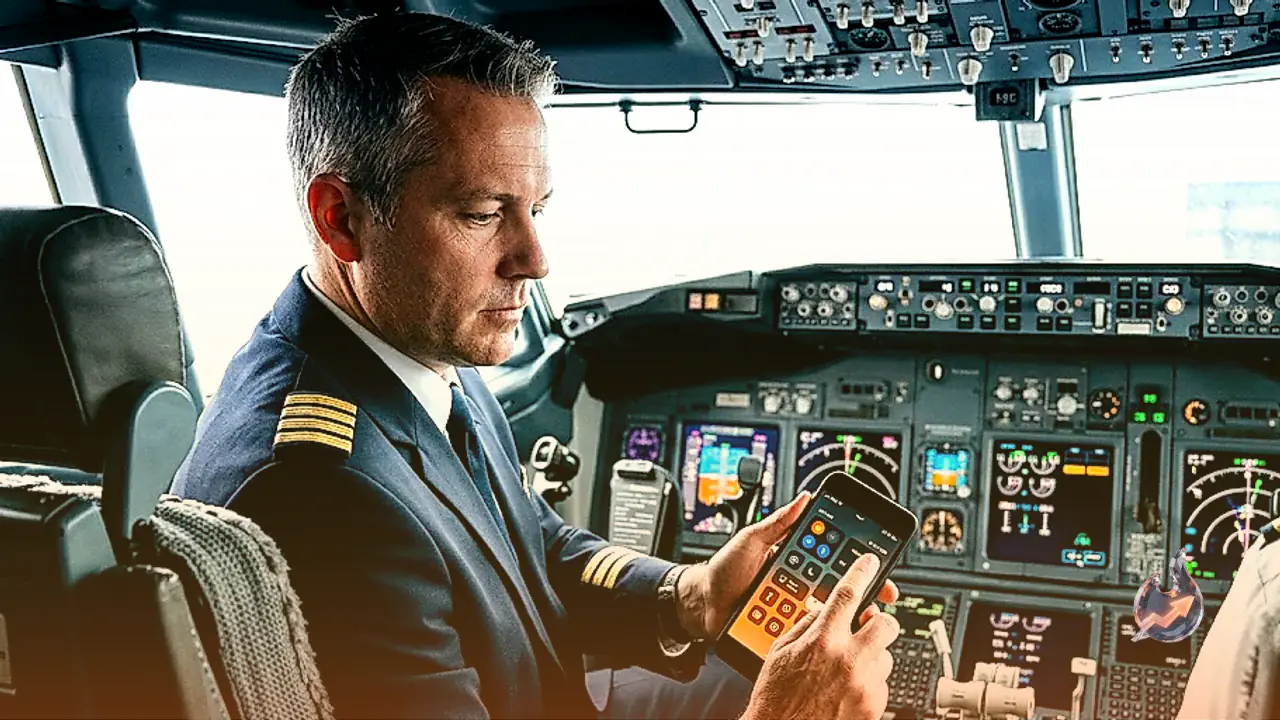

Every time a commercial aircraft prepares for departure, flight attendants deliver a standard announcement urging travelers to switch their electronic devices to airplane mode. Many passengers wonder why such a precaution remains mandatory when modern aircraft feature advanced digital avionics. The core purpose of this procedure is to preserve the integrity of critical communication channels and eliminate unnecessary electromagnetic static throughout the journey.
The Constant Search for Ground Cellular Towers
Under normal conditions on the ground, a smartphone connects smoothly to the nearest cell tower and transitions seamlessly between base stations as a user moves around. When traveling through the sky at cruising altitudes and tremendous speeds, the operating environment changes completely. A phone with an active cellular antenna struggles to lock onto a single station, prompting it to emit maximum power as it scans dozens of ground towers simultaneously in an endless loop of disconnection and reconnection.
Radio Frequency Congestion and Signal Interference
When dozens or hundreds of handheld devices aboard an airliner attempt to communicate with ground infrastructure at once, cumulative electromagnetic noise surges. This concentrated burst of cellular signals can generate unwanted radio interference. Airline pilots rely heavily on clean audio feeds to maintain constant dialogue with air traffic controllers. Stray radio frequencies can translate into buzzing or clicking sounds in cockpit headsets, creating unnecessary distractions and potentially obscuring vital landing or routing instructions.
Modern Avionics and Aviation Safety Margins
There is a widespread misconception that forgetting to activate flight mode will trigger an immediate onboard malfunction or cause an instrument failure. Modern commercial airliners undergo rigorous shielding evaluations and are specifically certified to withstand considerable electronic interference. Even so, international aviation protocols operate on a philosophy of absolute redundancy and preventive caution. Limiting superfluous radio signals around primary navigation instruments and landing aids remains the smartest operational standard.
Using In-Flight Wi-Fi and Bluetooth Connections
Activating flight mode shuts down the phone's primary cellular radio, preventing it from reaching out to terrestrial networks. Modern mobile operating systems are configured so that passengers can independently switch on Wi-Fi and Bluetooth while cellular networks remain disabled. Many contemporary airlines now offer specialized in-flight broadband delivered via satellite or dedicated aircraft antennas. These systems are thoroughly tested to operate safely alongside the plane's internal hardware, letting passengers stream or work without compromising flight safety.
Following Airline Policies and Cabin Crew Orders
Civil aviation regulations vary across jurisdictions and individual carriers. Some regulatory bodies strictly enforce a complete wireless blackout during the critical phases of taxi, takeoff, and landing, while permitting short-range Bluetooth accessories and sanctioned Wi-Fi during cruise altitude. Adhering closely to the specific instructions given by the flight crew ensures that the cabin remains safe and that pilots have an unobstructed operational environment from departure to touchdown.