















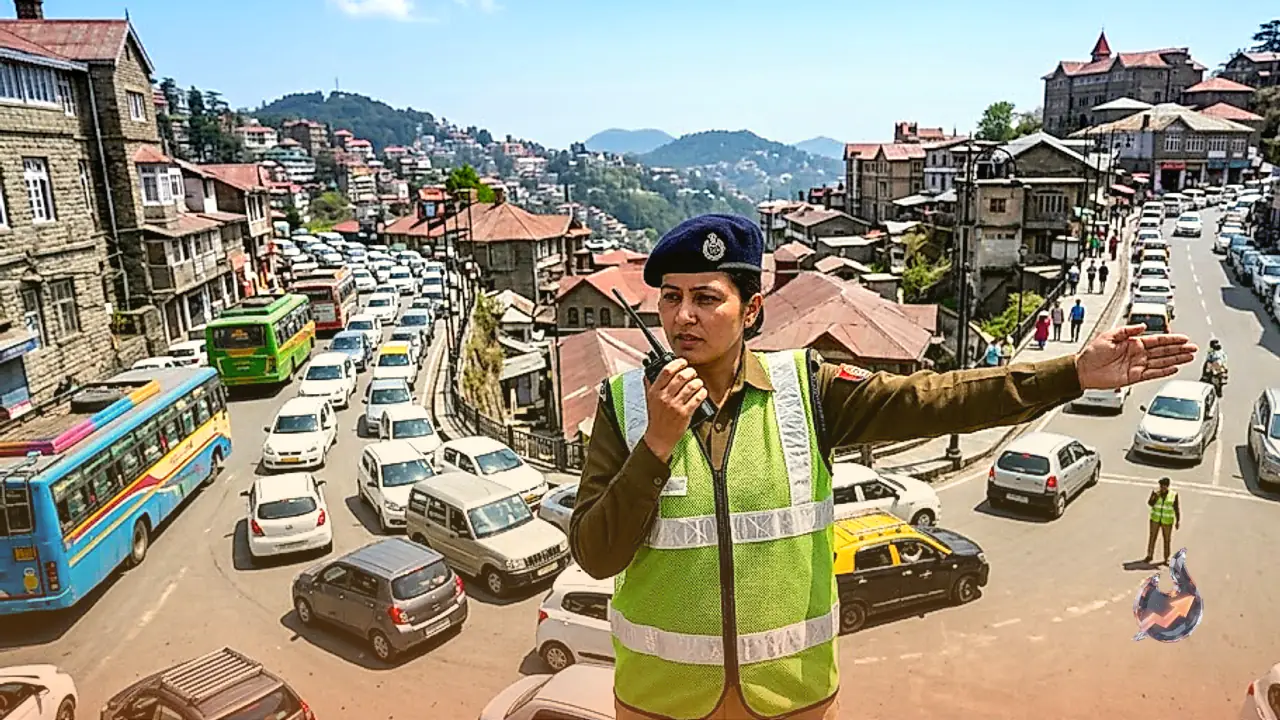

With the arrival of the monsoon in Himachal Pradesh, the intense summer season has finally concluded. During these past three months, a massive number of tourists flocked to Shimla, often referred to as the Queen of Hills. Amidst this significant tourist surge, Shimla Police claimed that they successfully maintained a smooth traffic flow despite the record-breaking volume of visitors. Since May, approximately 22 lakh vehicles have been recorded passing through the various entry points into the capital city, a feat the department attributes to their effective traffic management strategies.
Breakdown of Traffic Volume
The statistical data released by the police highlights the scale of the challenge: around 8.5 lakh vehicles entered Shimla in May, while the figure climbed to 10.5 lakh in June. Even in the early days of July, 3 lakh vehicles were recorded entering the city. To handle this mounting pressure, the police significantly bolstered their resources. The workforce of police and Home Guard personnel was increased from 136 to 265. Additionally, 50 volunteers and 32 traffic bike riders were deployed on the ground to ensure immediate intervention in case of any traffic congestion or bottlenecks.
The Decentralized Management Approach
To streamline operations, Shimla Police implemented a decentralized traffic management model, dividing the entire city into five distinct sectors. The responsibility for each sector was assigned to an NGO Grade-One officer working under the direct supervision of the DSP Traffic. Senior police officers remained actively present in the field, constantly monitoring the flow of vehicles during peak hours. To reduce congestion within the city center, traffic headed toward Kufri, Mashobra, Naldehra, Upper Shimla, and Kinnaur was diverted through the Shoghi-Mehli bypass. Vehicles were identified using special stickers, which allowed between 600 and 800 vehicles to utilize these alternative routes daily, effectively relieving pressure from the main city roads.
Maintaining Flow and Community Cooperation
The core of the police strategy was to keep traffic moving continuously rather than halting it. Regulations were enforced in a phased manner only in high-traffic zones where absolutely necessary. Furthermore, larger tourist vehicles like Travelers, Urbania, and Scania were granted access to major tourist destinations to ensure convenience for visitors. The police also integrated parking management, real-time traffic updates via social media platforms, promotion of public transport, and the use of interceptor vehicles into their operational framework. Ultimately, Shimla Police expressed their gratitude to citizens, tourists, Home Guards, NCC, NSS, school volunteers, and other supporting departments for their cooperation, while urging everyone to continue strictly adhering to traffic regulations in the future.