















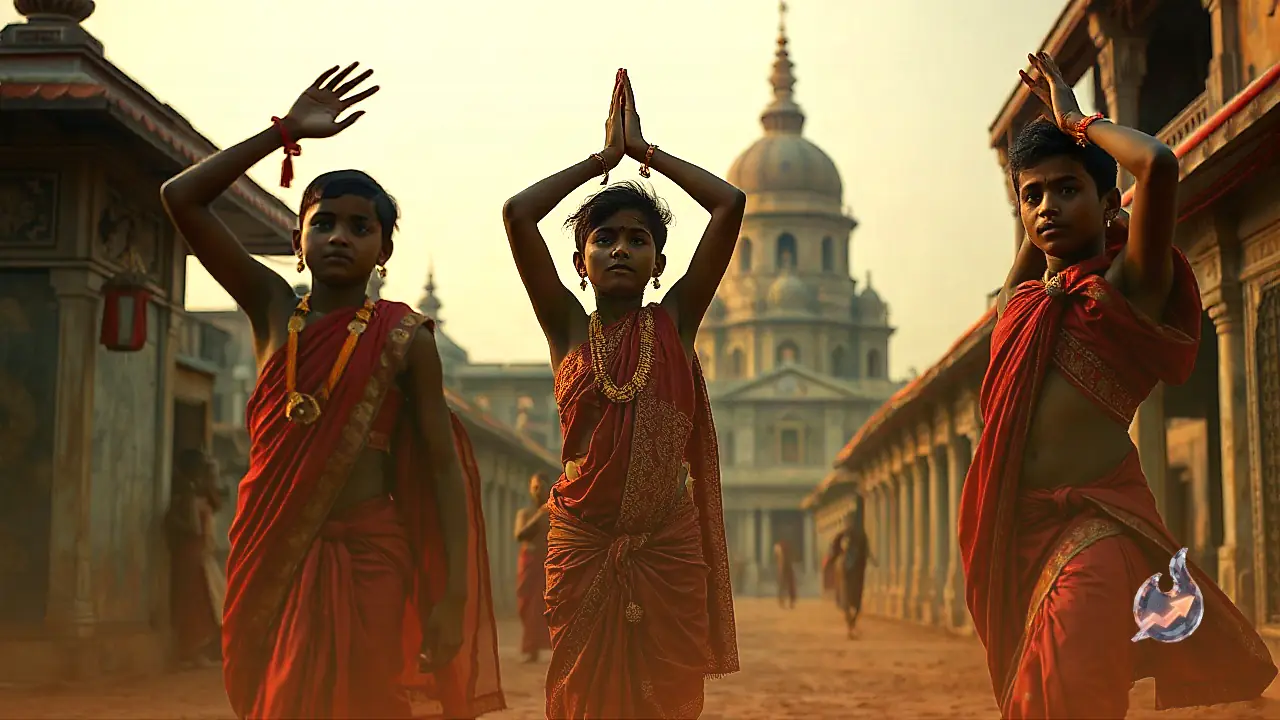

Among the vibrant cultural treasures of Odisha, the tradition of Gotipua dance holds a deeply revered and distinct place. Standing before mirrors, young boys under the age of 14 adorn their foreheads with ornate sandalwood paste, wrap themselves in traditional silk sarees, fasten tinkling ankle bells, and complete the Sola Shringar sixteen-fold traditional cosmetic adornment. These expressive faces are not female dancers, but young male performers who dedicate their youth to worshipping Lord Jagannath in Puri. Far from being a modern trend or theatrical gimmick, Gotipua represents a resilient chapter of Indian folk heritage that emerged during a period of intense socio-cultural transformation. When ancient temple customs were endangered, these young boys stepped forward to preserve and revitalize a sacred performance art.
Decline of the Mahari Tradition and Rise of Akhada Culture
The historical origins of this unique performance art trace back to the 16th century during the reign of King Ramachandra Deva of the Bhoi dynasty. At that time, the Mahari or Devadasi tradition was deeply entrenched at the renowned Shri Jagannath Temple in Puri, where female temple dancers performed exclusively inside the temple complex as part of daily rituals for the deity. However, as foreign invasions, political instability, and social shifts swept through the region, the Mahari tradition underwent a sharp decline. The societal standing of Devadasis diminished, prompting women to gradually step away from performing publicly in front of temples and courtyards.
Faced with the impending loss of this sacred artistic heritage, the community established the Akhada culture across Odisha. Drawing profound inspiration from the Bhakti movement championed by the revered Vaishnava saint Shri Chaitanya Mahaprabhu, local masters and scholars formulated an innovative solution. They resolved that young boys would be dressed in traditional female attire to perform devotional dances before Lord Jagannath, ensuring the continuity of the sacred art form. In the Odia language, the word 'Goti' signifies 'single or alone' and 'Pua' means 'boy'. Because the dance was initially performed by a solo young boy, it acquired the name Gotipua.
Feminine Adornment and the Acrobatic Rigor of Bandha Kala
The defining characteristic of Gotipua is its strict age requirement, as performances are conducted exclusively by young boys aged 14 or under. Prior to taking the stage, these young artists undergo a meticulous transformation, donning authentic sarees, intricate jewelry, and elaborate facial paintings reflective of classical Indian aesthetics. Gotipua is not merely a lyrical dance; it integrates 'Bandha Kala', a demanding performance style that fuses graceful dance movements with rigorous yogic postures and acrobatic feats.
The dancers undergo intense physical conditioning to make their bodies as malleable as wax, allowing them to form complex human sculptures and pyramids within seconds. During performances, they construct intricate physical depictions representing Lord Krishna's chariot, the blooming lotus flower, and the subduing of the serpent Kalia. The dance is accompanied by devotional songs composed by medieval Odia poets, particularly Banamali Das, which depict the spiritual love of Radha and Krishna, the Raasleela, and absolute devotion to Lord Jagannath. Classical instruments such as the Pakhawaj, Harmonium, and Flute provide the rich musical backdrop for these performances.
Strict Training in Akhadas and Retirement at Age 14
Mastering Gotipua requires years of unwavering discipline and sacrifice. Young boys are inducted into local training centers, known as Akhadas, at the tender age of 5 or 6. Under the strict tutelage of Gurus, they undergo grueling daily physical exercises to cultivate remarkable strength, endurance, and bodily flexibility. Simultaneously, they are taught classical Odia vocal music, rhythmic patterns, and facial expressions (Abhinaya).
A traditional Gotipua performance opens with Vandana, an invocation dedicated to Lord Jagannath, Mother Earth, and the Gurus. The dancers then transition into storytelling using eye movements, hand gestures, and expressive posture derived from classical Odissi conventions. Because Bandha Kala places intense physical strain on the body that requires peak flexibility, dancers retire from Gotipua upon reaching 14 or 15 years of age. Following their retirement, these experienced performers transition into mainstream Odissi dance careers or become Gurus themselves, training future generations of young artists.