





















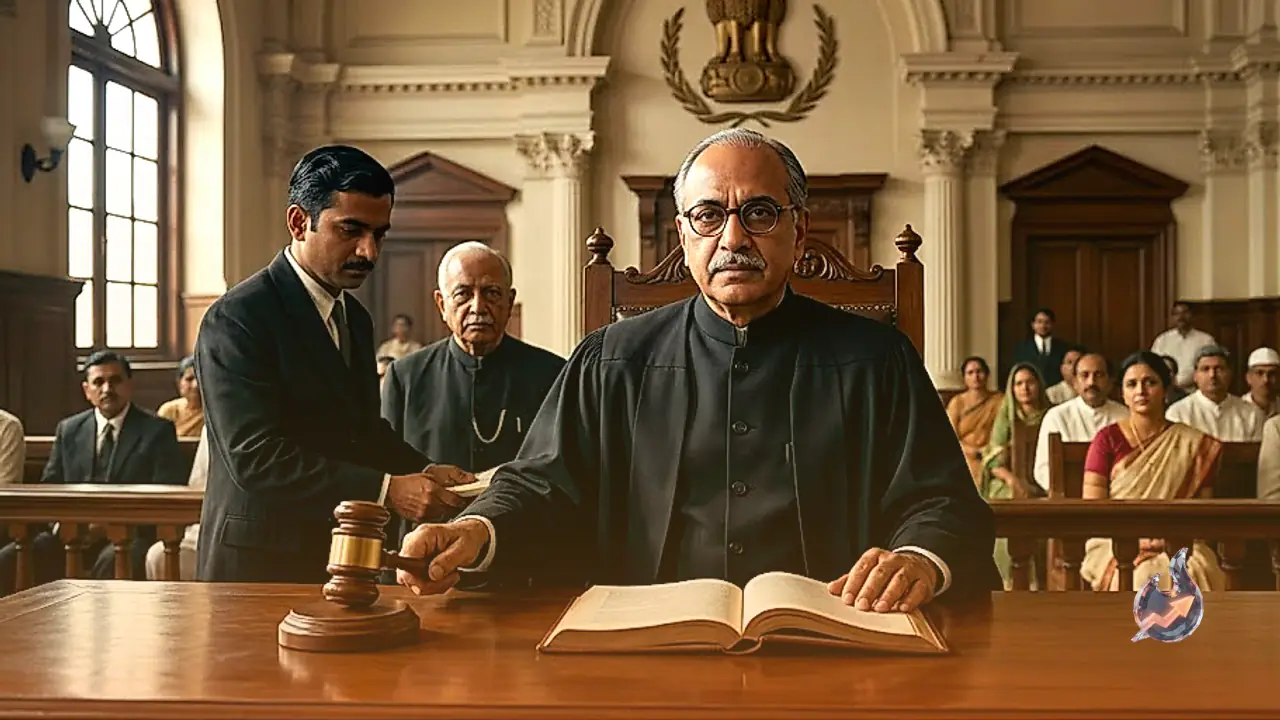

The judicial history of Sultanpur district in Uttar Pradesh stretches back nearly 80 years, with a defining moment coming on March 11, 1956, when the district finally broke away from the Faizabad judgeship and got its own independent judicial identity. To understand how that happened, and what kind of court system existed before it, the story goes back more than a century.
Civil cases were split between two Munsifs in 1902
According to the Sultanpur Gazetteer of 1903, two Munsifs were appointed in 1902 to hear civil cases in the district. The Munsif Uttari (Northern) held jurisdiction over the Sultanpur and Kadipur tehsils, while the Munsif Dakshini (Southern) was responsible for the Amethi and Musafirkhana tehsils. Even at that time, civil disputes in the district were handled by splitting the area geographically into two zones.
The court functioned under the Faizabad district judge
Senior journalist Raj Khanna says the Sultanpur judgeship was not independent back then. It functioned under the district judge of Faizabad, who would personally travel to Sultanpur from time to time, set up camp and hear local cases. To assist him, an assistant judge was also posted in Sultanpur to handle routine matters. This shows that before independence, Sultanpur's judicial system was entirely dependent on Faizabad.
Judgeship separated after independence, Tarachandra Kapoor became first district judge
After the country gained independence, a decision was taken to separate Sultanpur's judgeship from Faizabad, and the new arrangement came into effect in Sultanpur on March 11, 1956. Following this, the late Tarachandra Kapoor was appointed as Sultanpur's first district judge, and he formally took charge on July 28, 1956. That date is considered a turning point in the district's judicial history, since it marked Sultanpur getting its own independent judicial identity.
Taluqedars were given honorary magistrate powers
The judicial system was not limited to government courts alone. The British had granted the Raja of Kudwar, Hasanpur and Diyara, along with the taluqedars of Shahganj and Baraulia, the right to hear and decide cases connected to their own estates. They held the status of Honorary Magistrates. In addition, the Raja Sahab of Kudwar also served as an Honorary Munsif and was specially authorised to settle small civil disputes linked to pargana Miranpur and Barounsa.
From police to schools, the administrative setup of the time
Several other government officials were also posted in the district to manage law and order and administrative work. These included a Police Superintendent, District Surveyor, Civil Surgeon and two Assistant Surgeons. Alongside them were four Tehsildars, a Salt Tax Superintendent, a Postmaster Assistant, an OPM Agent and the Headmaster of the Government School. This entire machinery worked to maintain law and order in the district and safeguard public interests.