























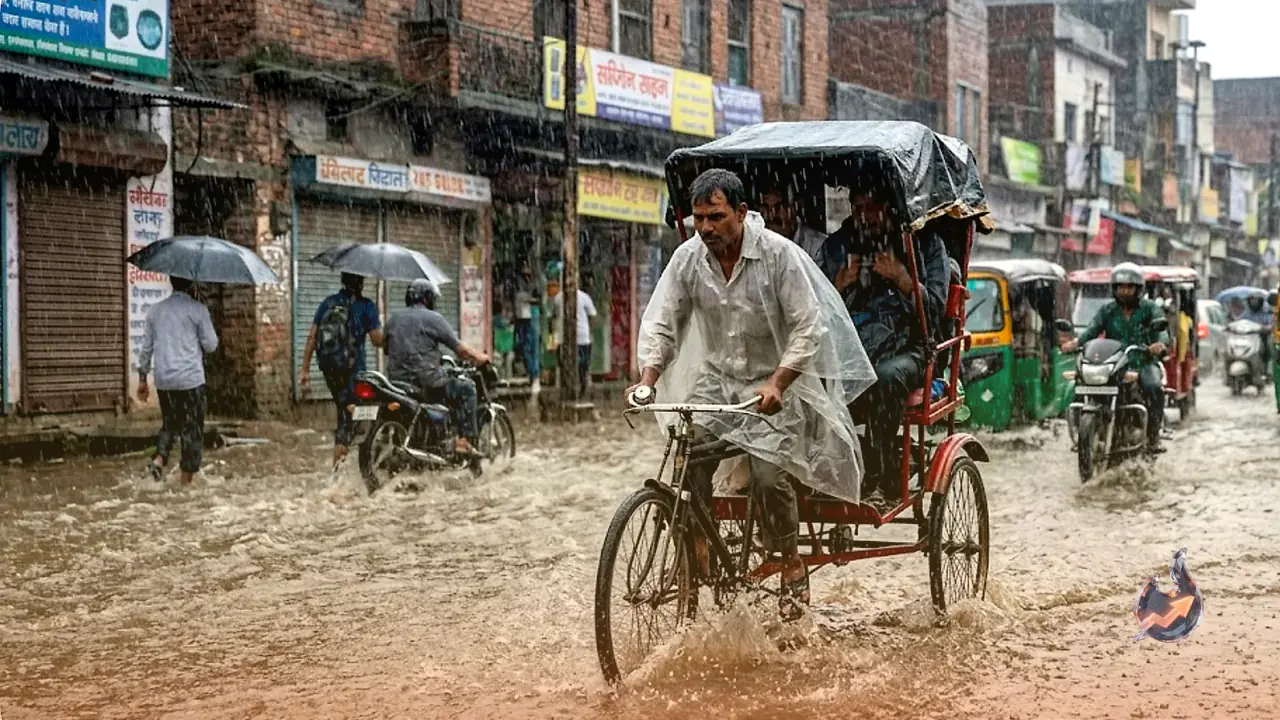

The monsoon has once again become fully active across Uttar Pradesh, with significant impacts visible since Tuesday. Since early Wednesday morning, several districts have been witnessing intense rainfall. Major cities, including Noida, are experiencing heavy downpours, which have brought a welcome chill to the atmosphere and provided much-needed relief to citizens suffering from humid, oppressive heat. The meteorological department has issued warnings for heavy rain across a majority of the state's districts. On Tuesday, rainfall was recorded in over 50 cities, including Lucknow, Prayagraj, Varanasi, Chandauli, and Moradabad. In Shamli, streets resembled rivers due to waterlogging, and Mathura faced a similar situation.
Districts Under Heavy Rain Alert
For Wednesday, the weather bureau has issued alerts for over 60 districts in Uttar Pradesh. Specifically, Gautam Buddha Nagar, Bulandshahr, Aligarh, Mathura, Hathras, Kasganj, Etah, Agra, Firozabad, Mainpuri, Etawah, Auraiya, Jalaun, Sambhal, Badaun, Kanshiramnagar, Mahamayanagar, Jhansi, and Lalitpur are under a heavy rain warning. Western Uttar Pradesh is expected to see good rainfall until July 10, while Eastern Uttar Pradesh is likely to witness heavy to extremely heavy rainfall between July 10 and July 13. Constant precipitation is expected to lower temperatures by 3 to 4 degrees Celsius. In Lucknow, scattered showers are expected until July 10, followed by heavier rain.
Reasons for the Monsoon Surge
Atul Kumar Singh, a scientist at the Regional Meteorological Center, explained that the monsoon strengthened in UP due to a low-pressure area that formed over the North-Western Bay of Bengal. This system crossed the Northern Odisha coast and is currently centered around Southern Jharkhand and Northern Chhattisgarh. While this has caused heavy rain in parts of the state, meteorologists have warned that total rainfall this year is expected to be below normal. Normally, Uttar Pradesh receives between 820 and 840 millimeters of rain from June to September, but this year, a deficit of about 8 percent is projected, with rainfall expected to reach only between 754 and 773 millimeters.
Previous Year and El Nino Impact
According to the India Meteorological Department, Uttar Pradesh recorded between 870 and 900 millimeters of rain during the 2025 monsoon season, which was 10 to 15 percent above the normal average. Dr. M. Mohapatra, Director General of the IMD, stated that this year, conditions in the Pacific Ocean indicate that La Nina is transitioning toward El Nino, which is likely to result in reduced precipitation. Additionally, the lower-than-average snowfall recorded in the Northern Hemisphere between January and March this year may also negatively influence the monsoon's performance.
Infrastructure Failures Amidst Rain
In Hardoi district, heavy rainfall has exposed the failures of the local municipal authorities. While the temperature drop made the weather pleasant, poor drainage caused sewage from drains to flood streets and enter people's homes, kitchens, and even prayer rooms. Meanwhile, in Amroha, only a few minutes of heavy rain brought traffic on the Delhi-Lucknow Highway to a standstill. With water logging reaching a depth of nearly one foot on the highway, transportation was severely affected. Local residents allege that officials from the NHAI have ignored repeated complaints regarding the drainage issue, creating a dangerous environment prone to major accidents.