






















Characterized by snow-capped peaks, extreme altitudes, and paths blocked for months each year, the rugged mountains of Afghanistan conceal one of the most vital strategic strips in the world known as the Wakhan Corridor. Spanning roughly 350 kilometers, this narrow stretch of land may look insignificant on a map, yet it sits at the center of a massive geopolitical tug-of-war involving India, China, Pakistan, and Central Asia. Originally carved out as a buffer between the Russian Empire and British India, this remote territory is now a major source of anxiety for Beijing.
The corridor has transformed into a focal point for Pakistan ambitions of reaching Central Asia and for northern strategic planning. Recent diplomatic references to the Wakhan Corridor in relations between India and Afghanistan have once again pushed this rugged region into the international spotlight.
A Narrow Strip on the Map with Massive Stakes
Emerging from the Badakhshan province of Afghanistan, the Wakhan Corridor extends eastward all the direction to the Xinjiang region of China. To its north lies Tajikistan, while Pakistan-administered Gilgit-Baltistan and its mountainous surroundings border it to the south, with China standing at its eastern extremity. This means the strategic borders of four nations and regions converge into extremely close proximity along this single thin strip of terrain.
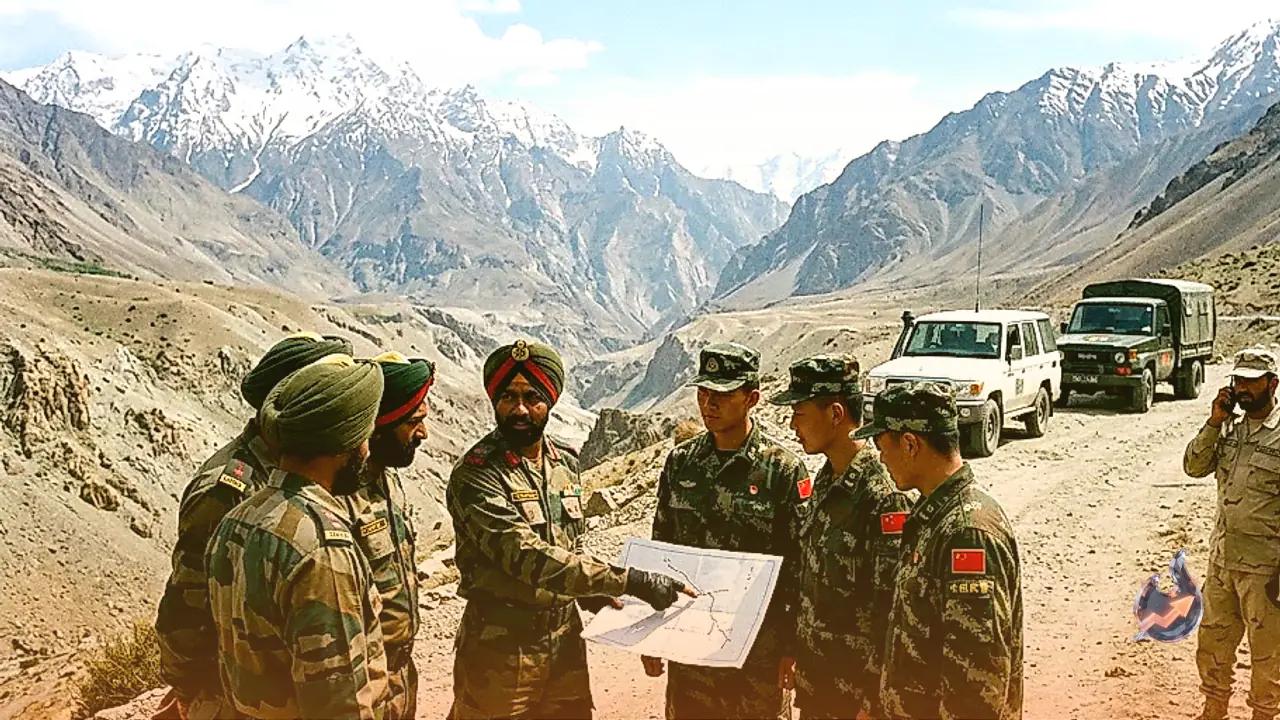
The most crucial segment of the corridor is its eastern tip, where the borders of Afghanistan and China meet across a span of roughly 74 to 76 kilometers. Located here is the Wakhjir Pass, which serves as a primary connecting point between the two countries. Situated at an elevation of approximately 5,000 meters, this pass ranks among the most arduous mountain terrains globally. Road infrastructure built up to this point from the Afghan side is virtually nonexistent. However, in geopolitics, the significance of any route is determined not by its width, but by its directional importance.
From a Nineteenth Century Buffer to a Modern Security Doorway
During the nineteenth century, a fierce rivalry unfolded between the Russian and British empires to expand their influence across Central Asia, a historical phase famously termed the Great Game. At that time, British India sought to prevent direct Russian influence from reaching its own sphere of control. Amidst these strategic maneuvers, this narrow strip of Afghanistan was designated as a buffer zone. Consequently, the very genesis of the Wakhan Corridor was rooted in maintaining separation between two major imperial powers.
Ironically, roughly a century and a half later, the function of this territory remains largely unchanged. The primary difference is that the competing actors are no longer Russia and British India, but rather China, Pakistan, India, and Afghanistan.
Why This Border Strains Beijing
For China, the Wakhan Corridor represents much more than a minor frontier linked to Afghanistan. The opposite end of this corridor reaches directly toward the sensitive Xinjiang region of China. Beijing has long maintained deep concerns that instability within Afghanistan and the presence of militant factions there could spill across the border into Xinjiang. China remains especially vigilant to ensure that groups associated with Uyghur militancy do not exploit Afghan territory to generate unrest within Xinjiang. For this reason, Beijing views this rugged corridor not as an ordinary border, but as a sensitive security corridor.
Where India Enters the Strategic Picture
This brings India directly into the narrative. The Gilgit-Baltistan region of Jammu and Kashmir remains under the illegal occupation of Pakistan. This territory sits in close proximity to the Wakhan Corridor. This intersection is precisely where a thin strip on the world map suddenly integrates into India wider strategic framework. Recent diplomatic engagements between India and Afghanistan referencing the Wakhan are directly tied to this strategic calculation.
The China-Pakistan Axis and Indian Vigilance
The deepening strategic partnership between China and Pakistan around the Wakhan Corridor constitutes a major factor for India. The China-Pakistan Economic Corridor, or CPEC, already traverses Pakistan-occupied Gilgit-Baltistan. China continues to advance road, energy, and connectivity projects alongside Pakistan.
Under such circumstances, if the Wakhan region is developed in the future for China-Afghanistan or Pakistan-Central Asia connectivity, the strategic landscape of the entire region could undergo a complete transformation. Should improved roads and connectivity routes emerge across this rugged terrain, China could gain alternative pathways to reach Afghanistan and Central Asia, while Pakistan could secure a fresh strategic route toward Central Asia. India continues to monitor these exact possibilities closely.
Strategic Implications and Regional Connectivity
India has consistently sought to establish access to Afghanistan and Central Asia by bypassing Pakistan, with Iran Chabahar port playing a critical role in this strategy. India aims to develop communication and transit options toward Afghanistan and beyond via Chabahar. However, potential activities by China and Pakistan within the Wakhan sector have the capacity to influence this entire equation.
Consequently, for India, the Wakhan region is not merely land trapped between mountains, but rather a component of future connectivity chess where every road, pass, and boundary carries definitive significance.
Distance from Major Hubs and Future Potential
It is also essential to note that the Wakhan Corridor sits roughly 1,000 kilometers away from Uzbekistan. At present, its immediate significance lies less in heavy road transport or commercial transit and more in its geographical positioning and future potential. Should regional powers establish advanced road and rail networks here in the coming years, the strategic value of this territory will undoubtedly scale new heights.