























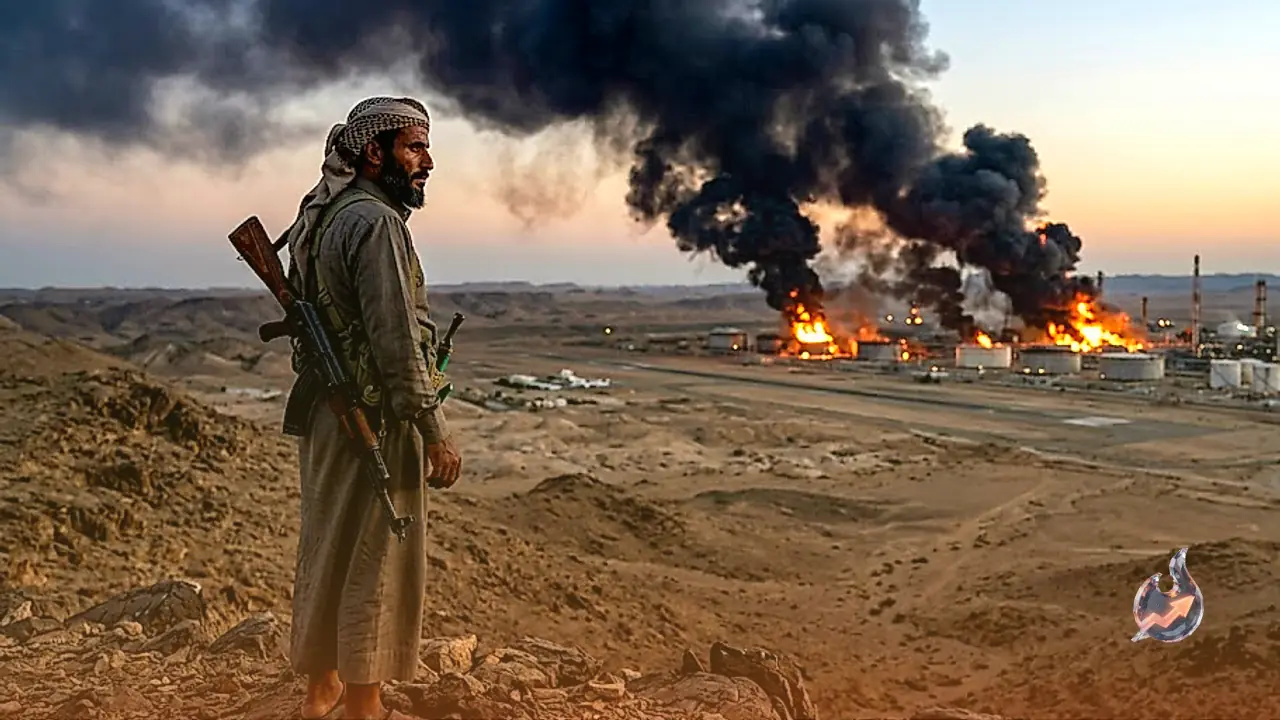

Geopolitical friction across the Middle East escalated significantly as Yemeni Houthi forces claimed responsibility for a series of coordinated drone and missile strikes directed at multiple critical infrastructure locations, military bases, and energy sites across Saudi Arabia. The operations reportedly targeted the primary international aviation hub in the capital city of Riyadh as well as a key state-owned oil refining complex located in the Mecca administrative district. These developments have simultaneously heightened security concerns across the region and drawn immediate scrutiny from international commodity and financial markets.
Strikes Claimed on Riyadh Aviation Hub and Rabigh Oil Facility
Military spokesperson Yahya Saree announced that the initial phase of the offensive concentrated directly on King Khalid International Airport situated in Riyadh. Saree stated that the strike reached its designated mark and successfully created disruptions in regular civil and military air traffic across the capital. Following this first action, a second operation focused on a refining installation managed by state energy producer Aramco situated in Rabigh, located within the Mecca province. According to statements delivered by Saree, the impact on the industrial facility initiated an active fire inside the compound, raising immediate questions regarding refinery integrity.
Offensive Across Southern Bases and Border Provinces
The military spokesperson detailed a third comprehensive operational tier concentrated across southern territorial zones of the kingdom. This wave targeted Abha Airport, the Khamis Mushait military facility, and Akfa camp situated within the southern Asir administrative zone. Beyond these named installations, Saree declared that forces struck additional locations described as sensitive assets distributed throughout Najran and Jazan in southwestern Saudi Arabia. The Houthi spokesperson maintained that these military measures were executed in direct retaliation against intensified aerial bombardments conducted by Saudi forces against territories held by the group within Yemen.
Israeli Preparedness and United States Perspective
Compounding the regional friction, media in Israel reported on Monday that Israeli authorities are actively preparing for potential military actions aimed at Iran. These reported preparations are advancing either through close strategic coordination with the United States or as an independent sovereign operation. Concurrently, US President Donald Trump articulated confidence regarding the ultimate trajectory of the military offensive led by Saudi Arabia alongside Saudi-aligned Yemeni units opposing the Houthis. Commenting on the ongoing military engagement, Donald Trump stated that it will work out very well.
Global Crude Benchmarks and WTI Market Behavior
The escalation of hostilities coincided with immediate movements across international energy desks. West Texas Intermediate, widely tracked as WTI crude, traded lower by 2.21% on the session, falling to $88.35 per barrel. WTI represents one of the primary crude oil grades traded on international commercial markets, functioning as a benchmark alongside Brent and Dubai Crude. Categorized as light and sweet due to its low density and minimal sulfur proportion, WTI yields high-grade refined fuel products with relatively low processing complexity. Pumped domestically in the United States, it flows through the key distribution hub at Cushing, an infrastructure nexus commonly known as the pipeline crossroads of the world.
Structural Forces Directing Petroleum Valuation
As with all major tradable commodities, the market clearing value of WTI oil is fundamentally driven by supply and demand dynamics. Robust worldwide economic expansion accelerates consumption demand and pushes pricing higher, whereas decelerating macroeconomic activity compresses consumption and drags valuations lower. Severe disruptions stemming from regional armed conflict, political volatility, and trade embargoes directly choke delivery channels and impact spot prices. Because international petroleum contracts are settled primarily in US Dollars, exchange rate shifts play an integral role: a weaker greenback reduces acquiring costs for foreign buyers, while dollar strength makes barrels costlier globally.
Supply Verification Metrics and OPEC Quota Policy
Energy traders monitor physical supply volumes through weekly commercial inventory disclosures issued by the American Petroleum Institute, known as API, and the Energy Information Agency, or EIA. Significant inventory drawdowns generally reflect firming consumer demand and lift benchmark pricing, whereas rising stockpiles demonstrate excess market supply that pushes prices down. API publishes its survey results on Tuesday, with the EIA releasing official findings the following day. Historical data shows that figures from both bodies align within 1% of each other approximately 75% of the time, with EIA figures carrying greater market authority due to its standing as an official governmental agency. Concurrently, OPEC, comprising 12 petroleum-exporting nations, gathers semi-annually to determine member production quotas. Constraining output tightens global supplies and elevates pricing, whereas expanding quotas exerts downward pressure. The broader OPEC+ alliance incorporates ten non-member producers, led centrally by Russia.
Foreign Exchange Crosses and Precious Metals Reaction
Currency desks reflected the shifting geopolitical and macroeconomic background across Asian hours. The AUD/USD currency pair maintained positive bids near 0.6970 ahead of regional trading on Tuesday, resuming upward progress toward the 0.7000 resistance threshold even as the US Dollar gained broadly, with market participants awaiting the Westpac Consumer Confidence gauge. Concurrently, USD/JPY reversed earlier pullbacks to climb past 158.00 in Monday trade within a familiar weekly trading band. Heightened geopolitical uncertainty lent support to the US Dollar despite diminishing probabilities of Federal Reserve interest rate hikes, though gains faced limits from hawkish Bank of Japan monetary policy expectations and prospective government intervention risks. In commodities, gold found renewed footing to trade near $4,150 per troy ounce late Monday, navigating the pressure of rising US Dollar strength and climbing US Treasury yields across maturities.
Central Banking Complexities in the Eurozone
Broader monetary policy considerations continue to challenge international central banks facing elevated consumer prices. The European Central Bank normally responds to inflation rates tracking at nearly double its mandate by directly lifting benchmark policy rates. However, contemporary monetary circumstances depart from standard models. In current conditions, sovereign debt markets are executing an organic tightening process through rising yields, confronting the European Central Bank with an exceptionally delicate policy conundrum as it evaluates appropriate tightening measures.