























Once harvest season concludes in pineapple plantations, the remaining dense greenery and foliage are routinely treated as disposable agricultural residue. Farmers frequently leave this plant waste to rot across fields or set it on fire to clear the land for the next cycle. That very post-harvest scrap is now transforming into a prized resource for sustainable fashion and green manufacturing. Because the long, rigid blades of the pineapple plant harbor exceptionally sturdy natural strands, artisans and industrial producers are actively turning to this crop waste as a renewable fiber supply.
Extracting High-Tensile Strands From Fresh Foliage
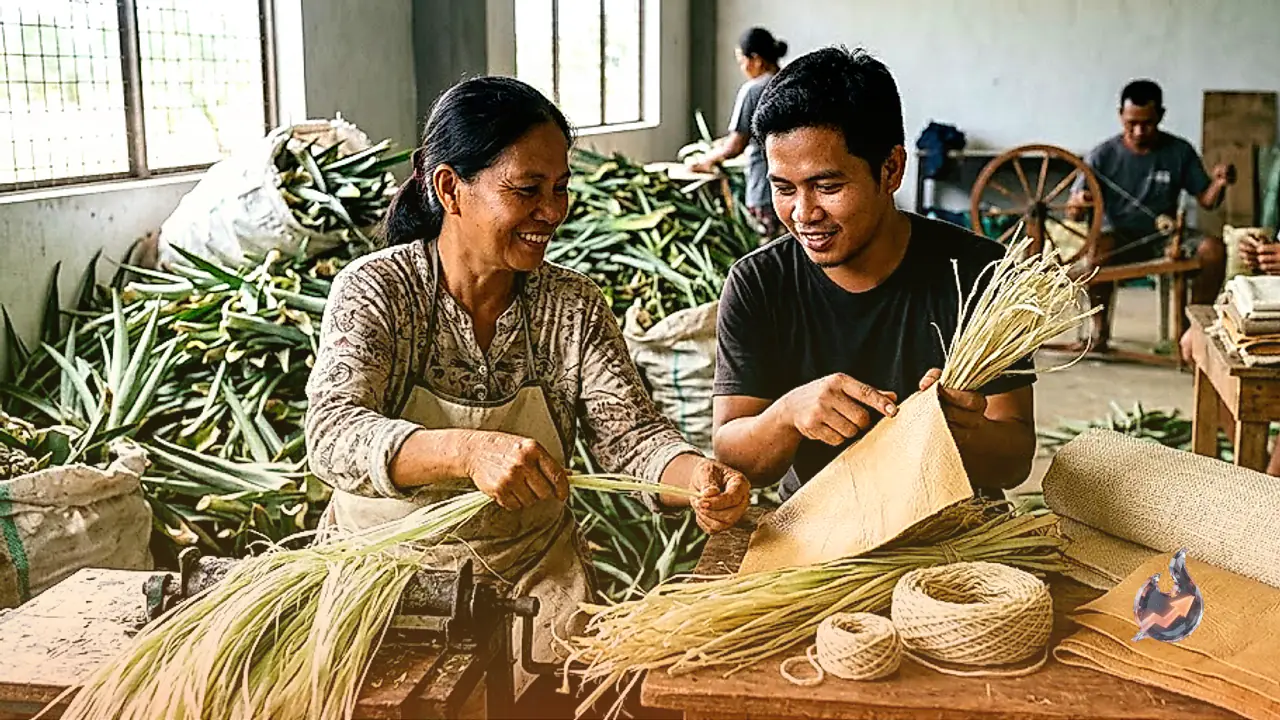
The transition from farm waste to fine fiber begins immediately after the fruit is detached. Workers process the freshly harvested green leaves using specialized wooden frames fitted with scraping tools, or deploy mechanized decorticator units for high-volume handling. This stripping action peels away the pulpy outer vegetable matter and green surface flesh. Stripped of their outer pulp, the hidden inner strands emerge as ultra-fine, lustrous, and remarkably tear-resistant plant threads.
Washing, Sun-Curing, And Weaving Pina Fabric
Once freed from the leaf pulp, the raw strands undergo thorough washing in fresh water to eliminate any lingering plant residue, after which they are spread beneath the open sun to dry. Upon dehydration, the material gains a supple resilience that rivals the tensile strength of jute while retaining a sheer, silk-like luster. Spinners knot and twist these dried fibers into consistent yarn to weave an internationally celebrated textile known as pina fabric, prized across global markets for its featherweight feel, breathability, and natural longevity.
Cruelty-Free Leather Alternatives And Industrial Uses
Beyond garment manufacturing, this plant fiber serves as the foundation for ethical vegan leather, delivering a durable material without harming animals or consuming livestock resources. Designers utilize this eco-friendly leather alternative to manufacture consumer goods such as footwear, carry bags, waist belts, jackets, and robust upholstery covers for interior furniture. The processing leftovers and raw pulp fibers are also repurposed into premium craft paper, heavy-duty utility ropes, and biodegradable packaging supplies.
Converting Farm Waste Costs Into Economic Returns
This upcycling workflow represents a practical shift toward turning waste into wealth in agricultural communities. Growers who formerly spent their own money on labor to clear and dispose of dense plant residue now possess a commercial byproduct that generates supplementary earnings. Concurrently, this plant-derived resource offers a dependable, non-toxic alternative to synthetic polyester fabrics and petroleum-heavy faux leathers, actively curtailing the environmental toll linked to non-biodegradable consumer goods.