





















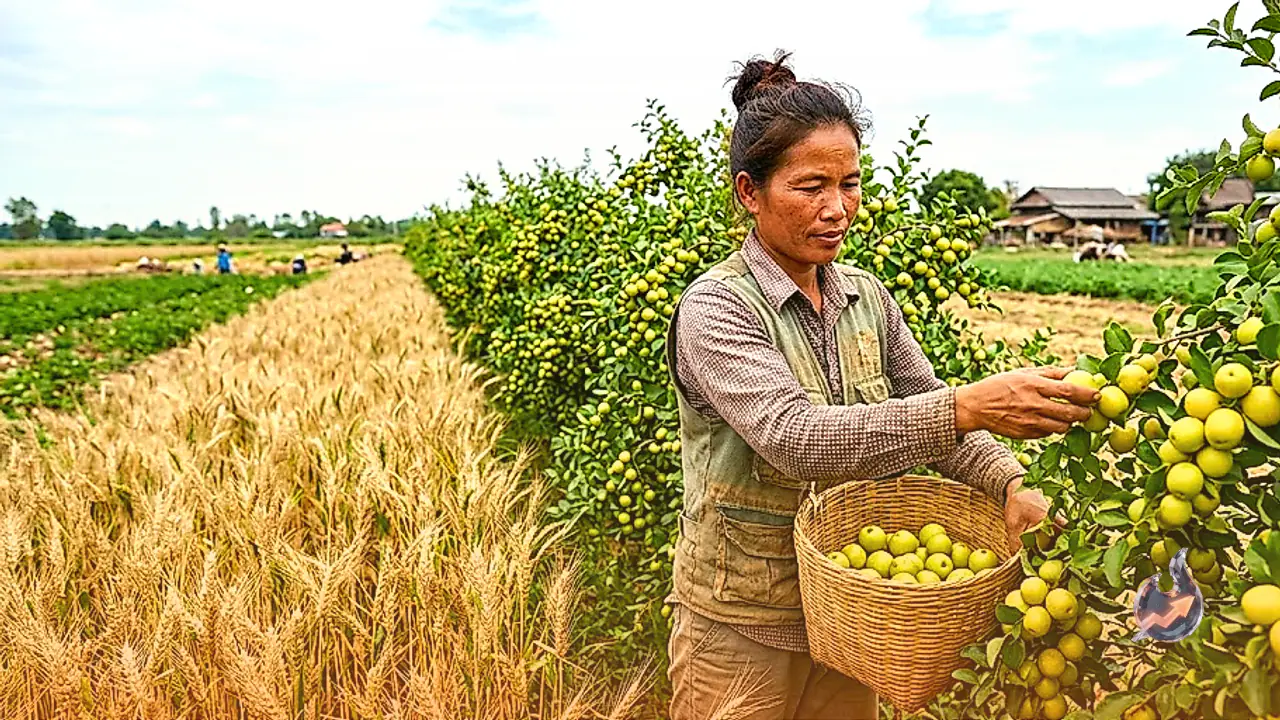

Integrating horticulture into conventional farming practices is emerging as a reliable pathway for growers seeking extra income without compromising regular field routines. Farmers routinely leave field boundaries, ridges, and peripheral strips uncultivated because standard tilling equipment cannot operate on these edges. Planting Thai apple saplings on this vacant border land allows agriculturalists to extract value from unused patches while leaving their primary acreage entirely intact. The approach delivers an efficient land management method that maximizes returns across the entire holding.
Origin and Adaptation Across Indian Regions
Originally indigenous to Thailand, Thai apple has adapted well to the varied agro-climatic conditions found across different parts of India. Its ability to thrive in compact spaces and harmonize with seasonal field crops makes it an appealing horticultural addition for domestic growers. Agricultural experts note that the plant accommodates diverse soil profiles, enabling cultivators who rely on cereal and oilseed harvests to step into fruit production without dedicating dedicated orchard plots.
Protecting Core Crops While Adding Fruit Harvests
A key strength of this border farming model is that growers do not need to abandon or reduce staple commodities such as wheat, pearl millet (bajra), gram, or mustard. The center of the field continues to support seasonal grain and pulse cycles, while peripheral tree rows mature along the boundaries. Cultivators essentially gain a dual revenue stream from a single parcel of land, harvesting food grains from the interior and fresh fruit from the perimeter season after season.
Cultivation Requirements and Early Fruit Yields
Once planted along field borders, saplings require standard care to help them develop into sturdy, fruit-bearing trees. Agriculture experts point out that the plants can begin yielding fruit in about six months, offering rapid financial returns compared to traditional timber or citrus orchards. As the trees establish deeper root structures and larger canopies over time, total fruit output per plant increases substantially.
Input management for Thai apple remains straightforward and economical, as the crop responds well to organic and indigenous manure. Water demand is relatively low when compared to conventional commercial fruits, making it suitable for areas where irrigation resources must be conserved for field staples. Once fully mature, these trees remain productive over an extended lifespan, ensuring multi-year harvests from a single round of planting.
Market Pricing and Commercial Considerations
Consumer appetite and commercial valuations for Thai apple fluctuate based on regional demand and distribution networks. In certain wholesale produce markets, trade values have touched roughly 25 rupees per kilogram. Before undertaking extensive border plantation, growers should examine local market trends, trade logistics, and prevailing price points in nearby agricultural wholesale centers to verify off-take arrangements.
Optimizing Farm Assets for Sustainable Returns
Adopting Thai apple not as a replacement for primary staples but as a supplementary crop helps cultivators utilize every square yard of land. Utilizing peripheral boundaries and fallow margins transforms unproductive pockets into viable economic assets. This balanced planting pattern serves as a practical blueprint for small and medium landholders striving to enhance total farm earnings and cushion seasonal agricultural risks.