























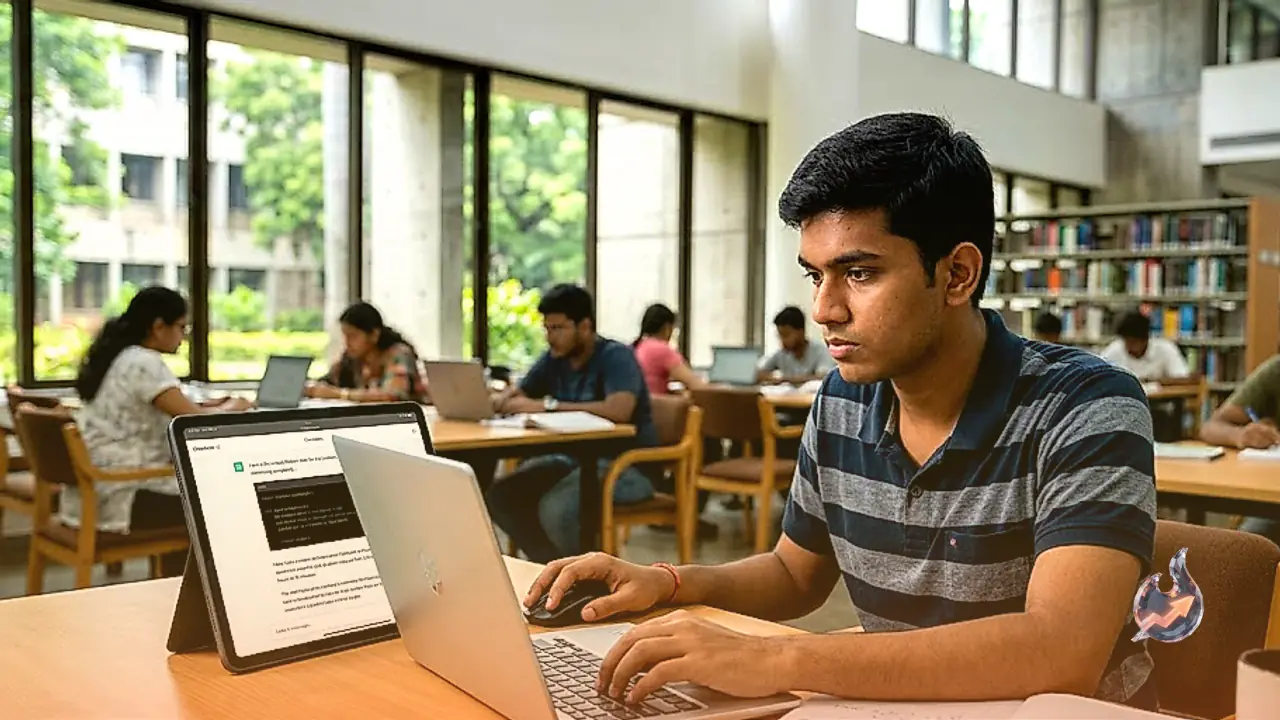

A massive technological transformation is actively unfolding across Indian classrooms and study spaces. Traditional learning methodologies are rapidly yielding space to Artificial Intelligence, which has emerged as the most trusted academic companion for students. Fresh data from the Anthropic Economic Index report reveals that Indian students are not merely relying on AI for resolving basic queries, but are extensively leveraging it for completing daily assignments, mastering coding skills, and sharpening their overall career readiness.
AI Integration in Homework and Academic Pursuits
Whether it involves understanding intricate coding logic, solving complex mathematical equations, or crafting an outstanding resume for upcoming job interviews, young Indians are turning to advanced AI platforms such as Claude and ChatGPT. Statistical findings indicate that approximately 20% of total AI usage in India is directly linked to education and learning activities. Within this category, nearly 7.9% of total prompts are dedicated specifically to completing school and college homework assignments. Unlike trends where digital tools are used primarily for casual browsing or entertainment, Indian students are actively focusing their AI consumption on academic growth and professional development.
Leading Global Benchmarks in Coding and Computer Science
When it comes to technology education and software development skills, Indian learners are significantly outperforming global averages. The report highlights that AI adoption for mastering mathematical concepts and computer science theory in India is exactly twice the global average. Furthermore, in areas such as exploring new AI applications and acquiring web development expertise, Indian youth are 1.8 times more active than their international peers. This trend underlines a strong inclination among Indian students to evolve into technical creators and developers rather than remaining passive technology consumers.
Dramatic Time Savings: Turning Hours into Minutes
One of the most impactful advantages of incorporating AI into daily study routines is the substantial reduction in task completion time. The research reveals a striking efficiency gain: academic and analytical tasks that previously demanded an average of 3.8 hours can now be accomplished in roughly 15 minutes with AI assistance. Students are effectively reinvesting these saved hours into mastering new technical skills, carrying out hands-on project work, and gaining practical exposure, thereby dramatically boosting their overall productivity.
Daily Usage Patterns and Evolving Prompt Dynamics
The study also outlines clear temporal patterns in how Indian users interact with AI throughout the day. Early in the morning around 6 AM, AI interactions are predominantly focused on gathering news, current affairs, and general updates. However, as the day progresses into evening and night, the nature of AI prompts shifts dramatically toward technical execution. During these later hours, there is a sharp surge in prompts related to programming code execution, drafting professional emails, essay writing, and personal content creation. This breakdown demonstrates a clear transition from morning informational consumption to evening practical output.
Career Advancement Tool of Choice and Key Regional Hotspots
In today's evolving hiring landscape, holding an academic degree alone is no longer a guaranteed ticket to employment, as corporate recruiters increasingly demand proficiency in modern digital tools. Consequently, Indian youth between the ages of 18 and 24 are turning to AI as their primary weapon for career enrichment. From drafting tailored resumes and producing professional content for LinkedIn and social media to creating business presentations and analyzing marketing strategies, AI has become the preferred choice. Geographically, the highest concentration of AI usage is recorded across states like Maharashtra, Tamil Nadu, Karnataka, and Delhi. Candidates who gain mastery over AI skills are positioned to be the first to unlock premier opportunities in the job market.