






















Across the globe, technology companies are raising billions of dollars in debt to construct some of the largest data centers and power facilities ever built. For average consumers, the necessity for such colossal infrastructure often remains unclear, especially when primary interactions with artificial intelligence appear limited to searching for recipes or planning vacations. However, the industry is rapidly shifting beyond basic text query systems toward autonomous AI agents, a transition that requires immense computational processing and energy power.
Unlike conventional chatbots that provide single responses to direct prompts, AI agents function as autonomous decision-making systems capable of breaking down complex goals into self-generated workflows. When requested to perform a broad task, such as creating a fully functional website, an agent may operate independently for several hours. During this process, it generates dozens of secondary prompts to write code, design navigation menus, configure databases, and resolve internal bugs without human intervention. This continuous operation dramatically expands the processing resources required per user interaction.
Complex Mathematical Claims and High Computational Costs
Frontier AI research laboratories are increasingly orienting their roadmaps around agent-driven systems. In a recent benchmark demonstration, OpenAI deployed a cluster of more than 10,000 parallel agents that exchanged 2.7 million messages to resolve a complex mathematical problem. Although independent mathematicians raised questions regarding the novelty of the findings, the computational resources consumed during the run were extraordinary.
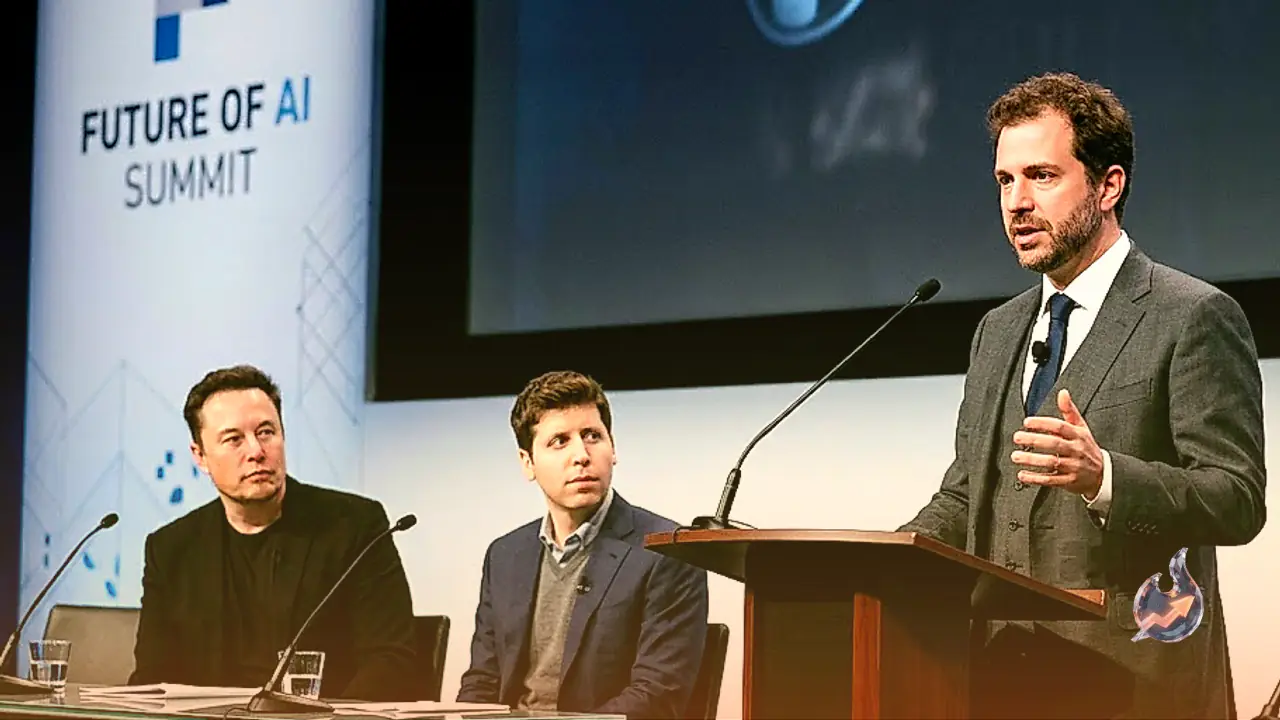
Industry experts estimate that large-scale multi-agent experiments can consume tens of millions of dollars in electrical energy and server compute time. Historically, private technology firms have disclosed limited metrics regarding the environmental footprint of their models. Corporate leaders often benchmark energy consumption against single, isolated queries. OpenAI Chief Executive Officer Sam Altman noted during a podcast appearance that the volume of water required to cultivate a single almond corresponds to roughly 38,000 queries on ChatGPT.
"The people that are scarfing down 12 almonds at a time don't feel like they're doing something horrible from a water perspective for the most part," Sam Altman said.
Analysts have questioned the methodology of such comparisons, particularly as agentic workflows replace basic search queries. The operational spectrum of agents ranges from short digital tasks to full days of continuous software engineering conducted by teams of parallel sub-agents. As these workflows become standard, energy requirements scale non-linearly, decoupling computing demand from direct user activity.
Decoupled Consumption and Individual Carbon Footprints
In traditional digital sectors, resource growth is constrained by active human participation, such as the number of people driving vehicles or streaming video content. Boris Gamazaychikov, co-founder and Chief Executive Officer of Sustainable AI, notes that agentic systems break this link. The emerging corporate model envisions businesses maintaining minimal human staff supported by thousands of autonomous background agents running continuously on remote servers.
Due to the lack of official corporate environmental data, independent researchers have attempted to measure the carbon footprint of agentic tools. Climate scientist Zeke Hausfather evaluated his personal daily AI usage, which relies heavily on autonomous agents. Aggregating technical parameters, he calculated that his average daily usage of models like Claude consumed more electricity than operating two standard household refrigerators continuously. Gamazaychikov noted that while precise metrics remain difficult to establish due to corporate opacity, Hausfather's findings underscore that agent usage represents a net addition to global carbon emissions at a time when climate mitigation targets are under pressure.
Mass-Market Deployment and Massive Infrastructure Projects
The transition toward agentic computing is moving rapidly into consumer products. Meta recently introduced its personal AI agent, named Muse, which the company intends to scale to billions of global users. Meta's technical architecture assigns a dedicated virtual computer in the cloud to each individual user, allowing the agent to perform tasks even while the user is offline. The system is planned for integration with hardware devices, including smart glasses.
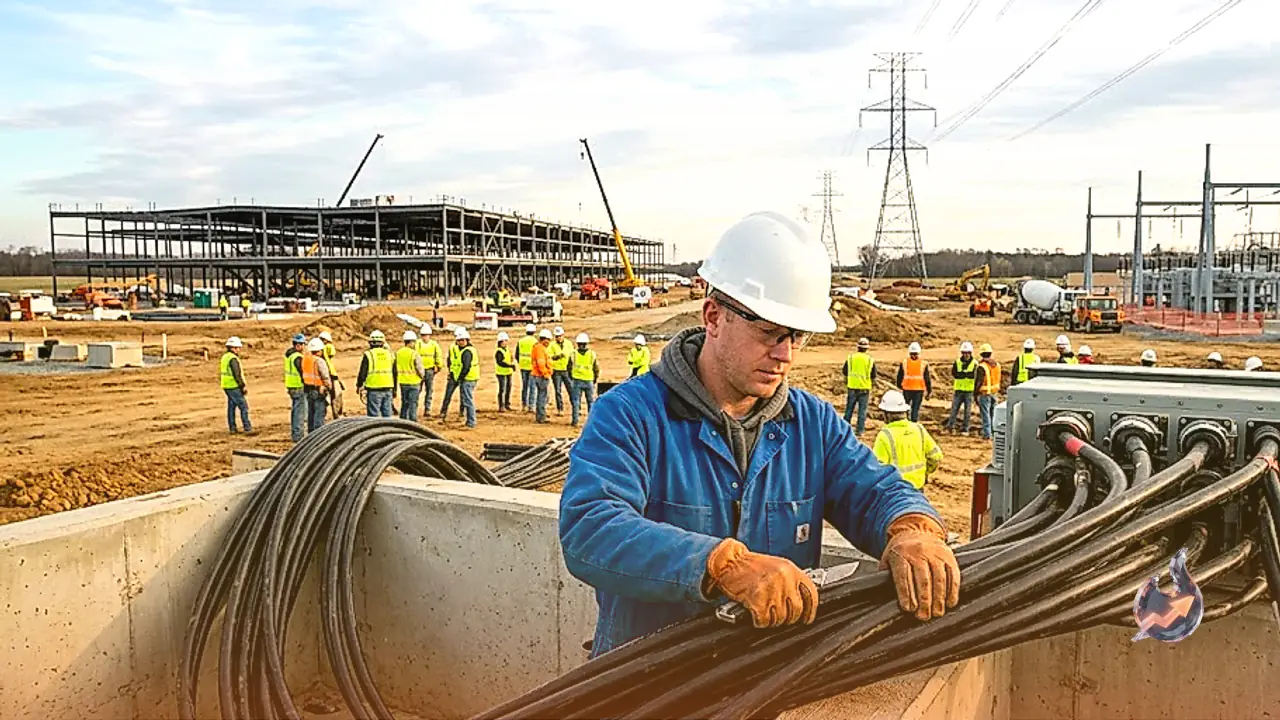
Deploying dedicated background agents to billions of users requires an infrastructure scale far exceeding current digital networks. To support these processing requirements, Meta is developing the Hyperion data center project in Louisiana, which is designed to draw power directly from 10 natural gas power plants. Industry experts point out that facilities currently under construction are intended to train and run systems that will be deployed three to five years from now, representing an entirely different computational model than simple web interfaces.
Nuclear Ambitions versus Immediate Fossil Fuel Reality
To supply carbon-free power to energy-intensive facilities, technology firms are evaluating small modular nuclear reactors (SMRs). Developers envision co-locating data centers directly alongside modular nuclear plants to bypass regional electrical grid bottlenecks.
However, commercial deployment of small modular reactors in the United States faces significant regulatory and timeline hurdles. Currently, no commercial SMRs are operational in the country, and only one design has achieved regulatory licensing after decades of development. The Donald Trump administration launched a Department of Energy pilot initiative involving 11 startups to accelerate regulatory milestones, with a small number reaching key performance targets this year. Nevertheless, commercial availability remains years away.
Faced with immediate operational timelines, data center operators are unable to wait for next-generation nuclear deployments. As a result, developers are installing large-scale natural gas turbines to secure immediate energy supplies, increasing reliance on fossil fuels despite long-term sustainability commitments.
Local Opposition, Tax Reversals, and Political Friction
The rapid expansion of data center infrastructure is generating local backlash and policy shifts across several regions. In Memphis, municipal residents and environmental groups have organized protests against industrial data facilities operated by SpaceX, citing concerns regarding local air quality and heavy water consumption for cooling systems.
Simultaneously, state governments that previously offered aggressive tax incentives to attract tech infrastructure are re-evaluating those agreements. States are pulling back tax exemptions due to rising municipal energy costs and grid capacity constraints. In states such as Texas, mounting concerns over electricity costs and grid reliability are creating political friction among voters, turning data center energy consumption into a prominent civic issue.