




















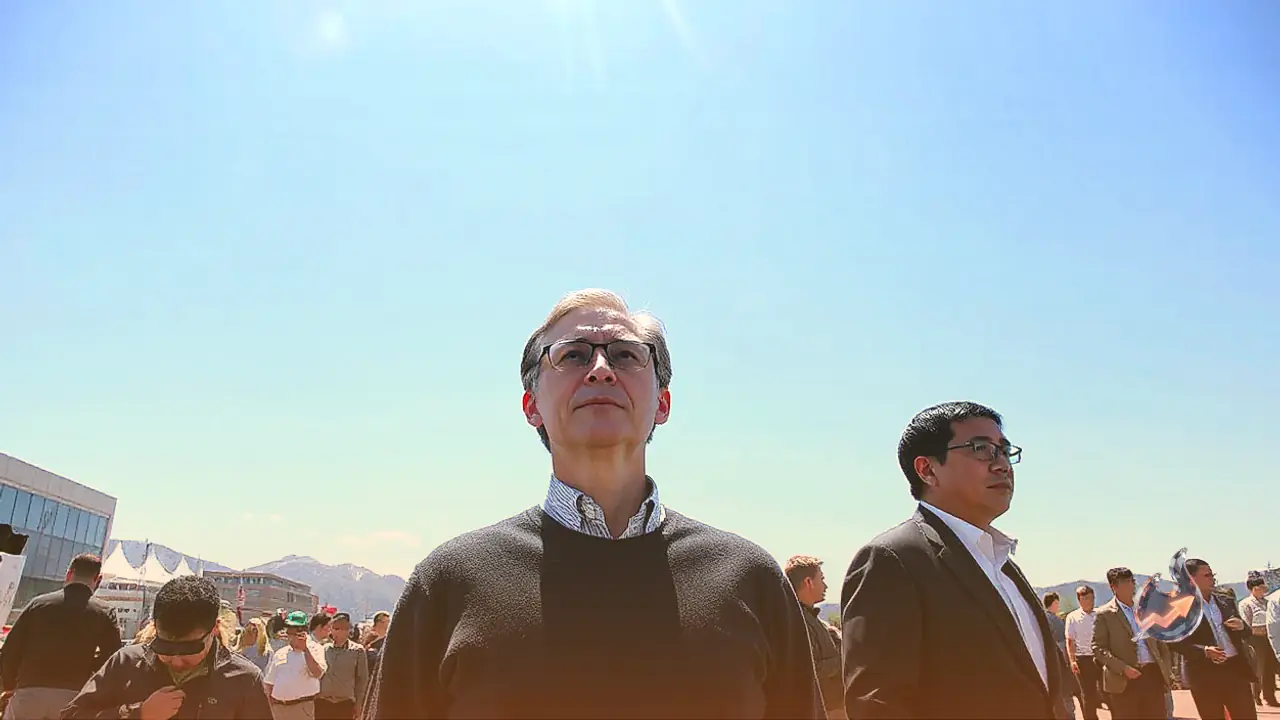

A major shift in executive leadership has shaken the technology sector as Nvidia chief executive Jensen Huang tendered his resignation on Thursday. The decision followed public admission of an undisclosed relationship with Alice Huang, an executive at Megaspeed who has been identified as an alleged Chinese spy. The revelation has ignited widespread alarm in Washington concerning potential breaches of U.S. national security, while casting intense scrutiny over Huang's historical push to ease federal chip export restrictions to China. Beyond the immediate political fallout, industry observers note that Huang's exit poses significant questions for the future of open-source artificial intelligence, an ecosystem for which he served as one of Silicon Valley's most prominent corporate champions.
Scrutiny over National Security and Chip Export Policy
Huang's departure occurs at a delicate time for U.S. technology policy. For months, federal lawmakers and regulatory bodies have debated how strictly to regulate advanced hardware exports to foreign adversaries. Huang consistently advocated against heavy-handed restrictions on semiconductor shipments, maintaining that global technological access fostered faster innovation and security. However, the revelation of his personal connection to a foreign intelligence asset has amplified calls from Washington policymakers for stringent controls. Opponents of loose export standards contend that close commercial and personal ties may have influenced corporate pushback against national security measures. With Huang removed from his post, legislative factions advocating for strict bans on high-performance chip exports to Chinese technology firms are expected to gain significant momentum.
Uncertainty Surrounding High-Stakes Open-Source Deals
Huang's personal backing was a driving force behind Nvidia's aggressive strategy to acquire and fund major open-source platforms. Prior to his resignation, Nvidia was in the process of finalizing a $13 billion acquisition of Hugging Face, the leading platform for hosting and sharing open-source AI models. Following news of Huang's exit, Hugging Face chief executive Clem Delangue posted on X to reassure the developer community, emphasizing that his platform remains fully committed to defending and promoting open-source AI regardless of structural corporate changes. Additionally, Nvidia had recently agreed to a $6 billion deal for a non-exclusive license to technology developed by Poolside, a startup specializing in open-source AI coding applications. The sudden leadership transition leaves the long-term execution and strategic alignment of these massive financial commitments in a state of flux.
Internal Model Development and Ecosystem Support
Under Huang's direction, Nvidia moved beyond hardware manufacturing to build proprietary open-weight software solutions. Inside the company, Huang spearheaded the creation of the Nemotron series, a family of open-weight models tailored for agentic AI applications and complex enterprise reasoning tasks. These models were designed to offer a flexible alternative to closed frontier architectures. An internal company source indicated that executive changes are not anticipated to immediately alter ongoing Nemotron engineering work. To further strengthen domestic capabilities, Huang also allocated substantial corporate capital into emerging American open-model startups, including Reflection AI and Thinking Machines Lab, aiming to ensure open models remained competitive against closed corporate alternatives.
The Regulatory Tug-of-War Between Open and Closed Models
Huang occupied a unique role in policy circles as the principal counterweight to closed-model advocates. Earlier this year, he organized an open letter sent to the U.S. government signed by executives from 25 leading technology firms, including Microsoft, Meta, IBM, and Palantir. The letter urged federal officials not to impose heavy restrictions on open-weight AI architectures. This movement coincided with aggressive lobbying from closed-model developers like OpenAI and Anthropic, both of which had directly appealed to Washington authorities regarding intellectual property theft. Anthropic and OpenAI argued that Chinese entities were illegally distilling proprietary model data, calling for stricter legal protections as detailed in Anthropic's public position paper on open-weight models. Without Huang's influential corporate presence, the open-source movement loses its most powerful champion in Washington's policy debates.
Strategic Rationale and the Transition Under Interim Leadership
To maintain operational stability, Nvidia appointed Chief Financial Officer Colette Kress as interim chief executive. While Kress brings extensive financial expertise, it remains uncertain whether she will uphold Huang's aggressive open-source initiatives with equal vigor. Supporting an open ecosystem was not merely an ideological preference for Huang; it formed a critical component of Nvidia's long-term commercial strategy. As major cloud and software clients like Google and OpenAI increasingly design custom internal silicon to reduce reliance on Nvidia GPUs, building a broad network of enterprise, state-level, and independent developers using open-weight models ensures steady demand for Nvidia hardware. Whether Nvidia's board and interim leadership will sustain this strategy without Huang's personal direction will define the company's trajectory in the evolving AI landscape.