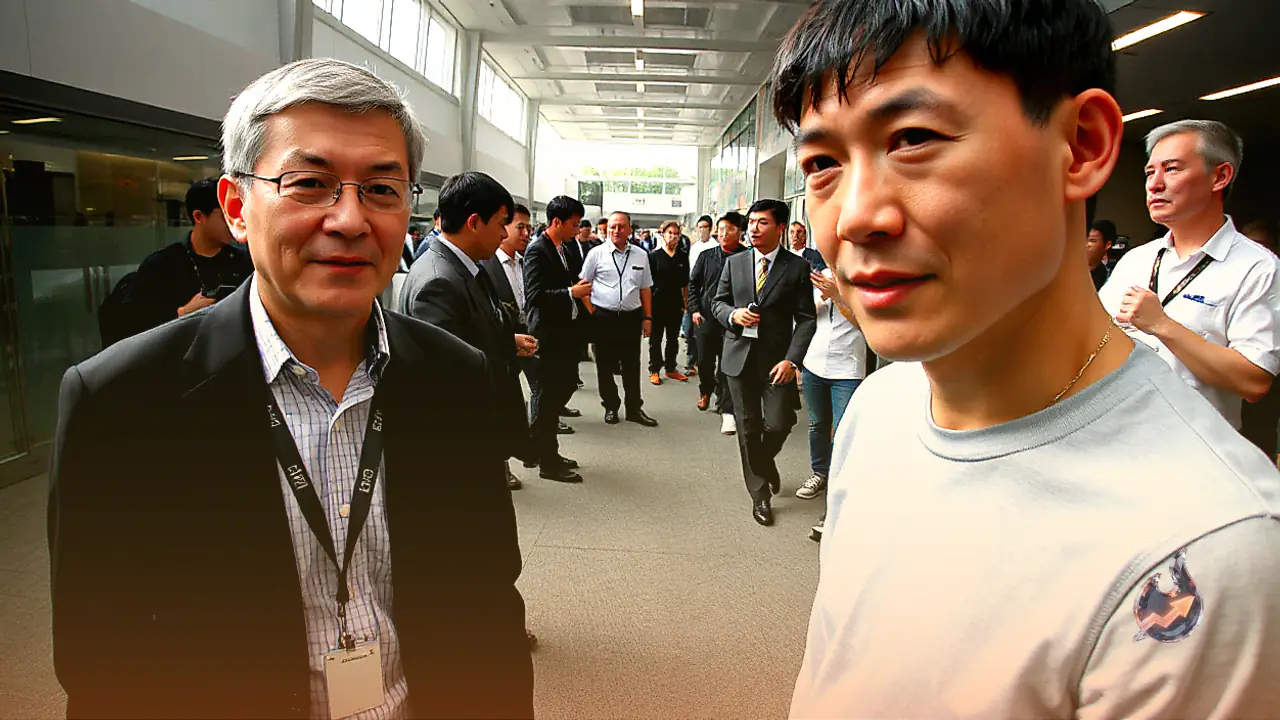























Clément Delangue, the chief executive officer of open source artificial intelligence platform Hugging Face, has addressed the sudden leadership transition at chipmaking giant Nvidia following the exit of its chief executive Jensen Huang. Describing the departure as an upsetting turn of events, Delangue used the moment to send a clear message to the broader developer community that the campaign for open, accessible software will move ahead with renewed intensity despite the vacuum at the top of the semiconductor firm. The reaction carries immense weight across the sector given Nvidia's pending multibillion-dollar transaction to bring the platform under its corporate umbrella.
Taking to social media platform X, Delangue voiced his frank reaction to the news, writing that the entire development is deeply regrettable and wishing none of it had taken place on what he termed a truly sad day. He quickly pivoted, however, to issuing an unambiguous pledge to engineers, researchers, and partners, stating that the commitment to open-source software remains non-negotiable and that the team intends to champion the ecosystem harder than ever because the work is simply too crucial to decelerate at this juncture.
The 12.9 Billion Dollar Acquisition Blueprint
Nvidia made waves across Silicon Valley in September when it formally disclosed its agreement to purchase Hugging Face for 12.9 billion dollars. The transaction represents the second-largest corporate acquisition in the chipmaker's corporate history, trailing only its massive 20 billion dollar buyout of artificial intelligence chipmaker Groq's assets finalized in December 2025.
Under the established roadmap, the acquisition of Hugging Face remains slated to finalize during the opening half of 2027. Amid this high-stakes backdrop, inquiries regarding whether Hugging Face executives have engaged in talks with Nvidia interim chief executive Colette Kress, alongside questions concerning the official status of the closing steps, have gone without reply.
Scrutiny from Antitrust Regulators and Leadership Doubts
The transaction had already triggered significant government attention prior to the leadership shake-up. In October, the United States Department of Justice initiated inquiries into the potential consequences the merger could have on competition within the burgeoning artificial intelligence sector. Even though Nvidia offered commitments that the model repository would retain its open posture, watchdogs pointed out that securing ownership would hand the hardware juggernaut direct operational authority over a critical pipeline through which modern models are distributed to developers worldwide.
Huang had built a personal reputation as one of the enterprise world's fiercest champions of open-weight systems, creating apprehension regarding whether an executive team operating without his guidance will maintain the same level of enthusiasm. Delangue's public commentary appears intentionally crafted to provide stability and reassurance to software creators alarmed by the executive departure.
A Track Record of Championing Open-Weight Systems
Huang's defense of open artificial intelligence architectures has consistently shaped industry-wide debate. In July, he utilized his debut message on X to publish an open industry policy document. The communication gathered signatures from 25 leading technology enterprises, including prominent industry players like Microsoft, Meta, Hugging Face, IBM, and Palantir, all rallying together to petition the United States government against introducing excessive constraints on open-weight software.
That collective petition emphasized that computational models capable of being downloaded, audited, adjusted, and deployed independently on private computing equipment serve as a foundational pillar of modern technological advancement. Huang argued that such systems expand access across the digital economy, invigorate market competition, and safeguard businesses from vendor lock-in with proprietary providers. He maintained that open software frameworks actively elevate defensive cybersecurity, speed up broad innovation cycles, and protect national technological sovereignty.
Capital Deployments and Model Expansions
Nvidia had reinforced that philosophy through targeted investments and ongoing product releases throughout the year. In August, the enterprise rolled out a 6 billion dollar agreement alongside coding startup Poolside, designed to construct a resilient domestic open artificial intelligence ecosystem capable of standing up against rapid advancements from Chinese competitors such as DeepSeek and Kimi K3.
Product development followed a similar trajectory just last month, when Nvidia expanded its Nemotron line of open-weight releases by launching a massive 120-billion-parameter model tailored for corporate workflow agents, accompanied by a pair of compact Bolt variations structured specifically to run on local personal computers. Earlier in the year, during his keynote speech at the Consumer Electronics Show in Las Vegas in January, Huang had reiterated this stance to a global audience, declaring that open source architectures had fundamentally revolutionized the artificial intelligence landscape. With his departure now confirmed, the technological ecosystem is watching closely to see whether that legacy holds firm.