


















A federal magistrate in San Francisco has ruled that Abdulrahman Alfozan, a former OpenAI engineer accused of placing a clandestine audio listening device inside an executive boardroom, must remain in custody without bail. Federal prosecutors argued successfully that Alfozan represents a profound flight risk, pointing directly to indications that the government of Saudi Arabia was prepared to provide unconditional assistance to facilitate his release. Among the evidence presented to the court was an offer by the Saudi consulate to coordinate with a local bail bond agency to help finance Alfozan's release, a gesture prosecutors viewed as proof that foreign resources stood ready to spirit him away from the American justice system.
Judicial Skepticism Over Foreign Bail Backing
Presiding Federal Magistrate Judge Alex Tse voiced sharp skepticism regarding the geopolitical entanglements of the case and questioned whether Alfozan effectively operated as an asset for the Gulf kingdom. The judge pressed the defense on how any government-backed financial bond could genuinely guarantee that the defendant would remain within the United States to face justice. Judge Tse remarked that such external financial backing resembled a blank check, reflecting an attitude where an overseas government simply offers to pay whatever sum the court demands to secure an individual's liberty. He emphasized that the court places far greater value on whether immediate family members are willing to stake their own personal assets as a demonstration of faith.
Defense attorney William Pernik pushed back firmly against these characterizations, dismissing the prosecution's flight risk arguments as entirely unfounded speculation. Pernik attempted to reassure the bench that Alfozan was fully rooted in his American life and had no intention of abandoning his legal status. Nonetheless, the judge remained unconvinced, underscoring that once a defendant of this profile departs American soil, the underlying criminal prosecution effectively ceases to exist.
Courtroom Dynamics and the Silicon Valley Espionage Context
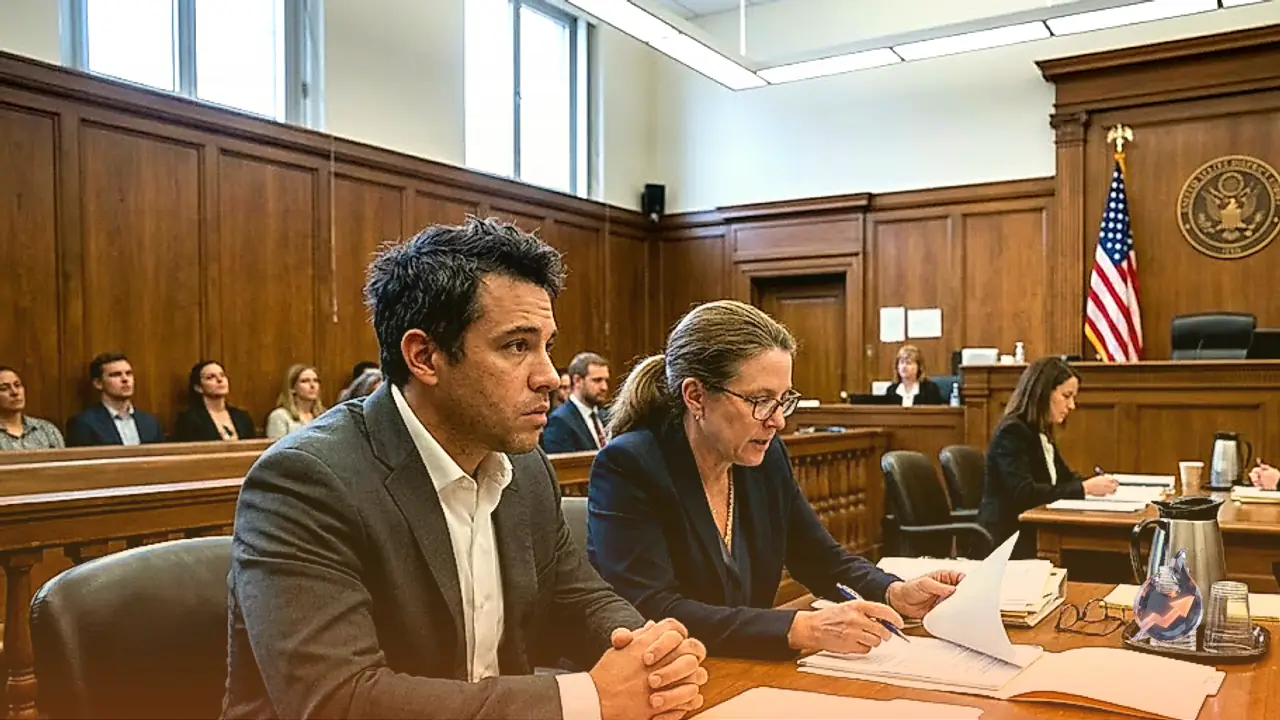
During the pivotal hearing on Monday, Alfozan sat inside the crowded courtroom wearing standard-issue orange jail garb, with a surgical face mask pulled beneath his chin. The San Francisco courtroom was packed to maximum capacity with domestic and international journalists, an observational group of visiting students on an educational field trip, and a contingent of approximately twenty personal supporters who arrived to back Alfozan. While intellectual property disputes and insider data thefts are familiar occurrences across the corporate landscape of Silicon Valley, this specific prosecution has garnered global scrutiny due to its combination of low-tech operational espionage and high-stakes international relations.
Federal law enforcement agencies have not formally ascribed a definitive motive to the alleged conduct, yet court records paint a picture of deep external connections. Prosecutors highlighted that Alfozan had previously maintained professional engagements with a Saudi venture capital fund, provided specialized technical consulting services to various commercial entities within Saudi Arabia, and cultivated relationships with influential figures situated high within the Saudi state apparatus. Defense counsel countered by asserting that there was zero factual evidence proving Alfozan operated as a spy for the kingdom. Addressing the scene of the alleged infraction, Pernik contended that Alfozan had not crept into the OpenAI executive conference space under cover of night, noting that the location functioned as an ordinary workspace accessible to employees throughout the working day. Following the hour-long proceeding, Pernik expressed profound disappointment with the magistrate's detention order and pledged to continue challenging it.
Royal Connections and Encrypted Communications
Although Alfozan holds lawful permanent residency in the United States and was actively advancing through the procedural pipeline toward American citizenship, his sustained ties to Saudi Arabia became the focal point of the government's opposition to bail. Court filings submitted by prosecutors assert that Alfozan maintained routine communications over WhatsApp with an unnamed member of the Saudi royal family spanning the entirety of 2025 and 2026. This royal figure was reportedly attempting to recruit the engineer away from Silicon Valley to spearhead an upcoming national artificial intelligence program within the kingdom.
According to text records cited in the government's evidentiary dossier, the unnamed royal wrote a message to Alfozan this past May asserting that Saudi Arabia needed his expertise far more than the United States did. Alfozan reportedly replied simply with the numeric shorthand 100, an informal response interpreted by investigators as an endorsement of the proposition. The exchange took on added weight given the massive state-backed capital currently being deployed across the Persian Gulf to construct sovereign computing infrastructure.
Disputed Family Travel and Departure Logistics
The circumstances surrounding Alfozan's household further intensified the debate over whether he planned to abscond. US authorities revealed that shortly after Alfozan was taken into custody, the Saudi government purchased airline tickets for his wife and their infant child to return to the kingdom. However, as confirmed by legal counsel representing both sides, she ended up leaving the United States ahead of that scheduled itinerary on an alternate flight arranged privately by her brother-in-law, an officer serving in the Royal Saudi Navy. Alfozan's wife has not been accused of any criminal wrongdoing, and the FBI declined to offer comment regarding whether she might face legal exposure.
Her legal representatives explained that her departure was an urgent necessity tied to renewing her American student visa requirements. Defense attorneys stated that prior to his arrest, Alfozan had intended to accompany his family on the journey abroad. The pair possessed a one-way flight itinerary to Riyadh, an arrangement that his defense described as entirely normal for the engineer, who frequently booked single-leg travel because professional obligations often necessitated returning earlier than originally anticipated. Another member of the defense team, Nas Yasin, stressed that the flight purchase by the defendant's brother-in-law was executed strictly in a private family capacity. Yasin told the court that Alfozan's wife had already obtained an American visitor visa and intended to return to California as early as Tuesday.
Discovery of the Hidden Bug and Digital Footprints
Alfozan had been employed at OpenAI for just over a year when the internal corporate security apparatus stumbled upon a clandestine listening device in late September. The surveillance hardware was discovered deliberately concealed within a ball of paper towels tucked behind a wall-mounted television screen inside a high-level executive boardroom reserved for confidential strategic discussions. Security teams traced the digital and physical footprint of the apparatus back to Alfozan. OpenAI terminated his employment earlier this month, immediately preceding his formal apprehension by the FBI.
The criminal complaint currently charges Alfozan with one count of using a device to intercept wire, oral, or electronic communications, an infraction carrying a potential penalty of up to five years in federal prison. Prosecutors have signaled that supplemental charges could follow as forensic evaluations conclude. Central to the government's case is digital evidence demonstrating that Alfozan queried an artificial intelligence chatbot for technical instructions on how to configure covert audio monitoring equipment. Furthermore, investigators retrieved photographic evidence capturing Alfozan peering behind the television monitor in the executive boardroom shortly after corporate security had secretly removed the bugging device. Law enforcement officials noted that because the onboard storage of the retrieved bug was heavily encrypted, it remains undetermined what specific conversations, if any, were successfully captured.
Home Searches, Hardware Explanations, and Financial Resources
The government expanded its investigation by executing search warrants at Alfozan's private residence, where agents reportedly uncovered an assortment of loose electronic components and hardware typical of recording assemblies. Additionally, forensic extraction of Alfozan's mobile phone revealed unauthorized photographs depicting additional OpenAI conference rooms and secondary computer displays across the corporate campus. OpenAI previously disclosed that investigators had also recovered an additional listening device packed inside a personal bag that Alfozan had transported to the corporate campus and left unattended.
Addressing the components found at the residence, defense attorney Pernik argued that the materials were dedicated entirely to harmless domestic do-it-yourself initiatives. Among these, Pernik asserted, was a hobby project aimed at upgrading an automated smart litter box for the family cat, portraying his client as a seasoned technologist who had spent fifteen years exploring the intersection of modern hardware and domestic convenience. Nevertheless, prosecutors countered that the defendant possessed immense personal wealth that would effortlessly facilitate life as an international fugitive. They pointed to his compensation structure at OpenAI, which encompassed an annual base salary of $385,000 alongside a $2.2 million profit-sharing package, supplemented by accumulated earnings from prior engineering tenures at Meta and other prominent American technology enterprises. Alfozan remains detained as proceedings head toward his next scheduled court appearance on November 6.