


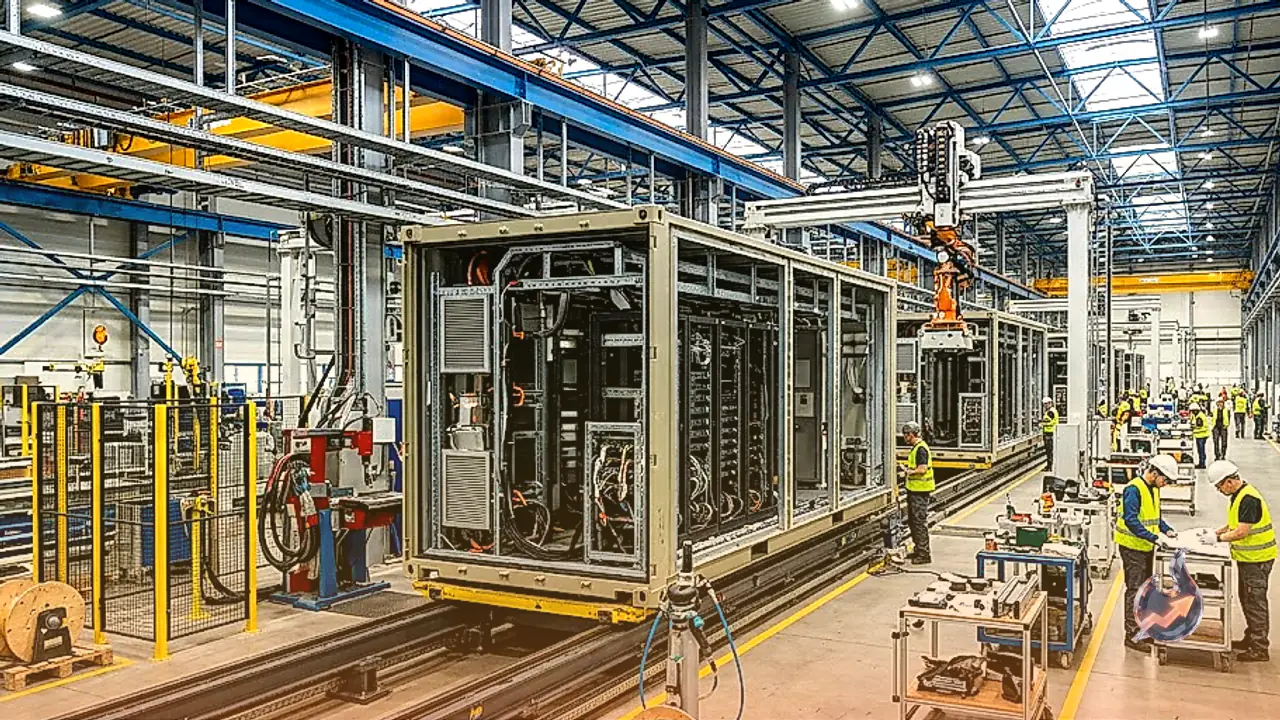
















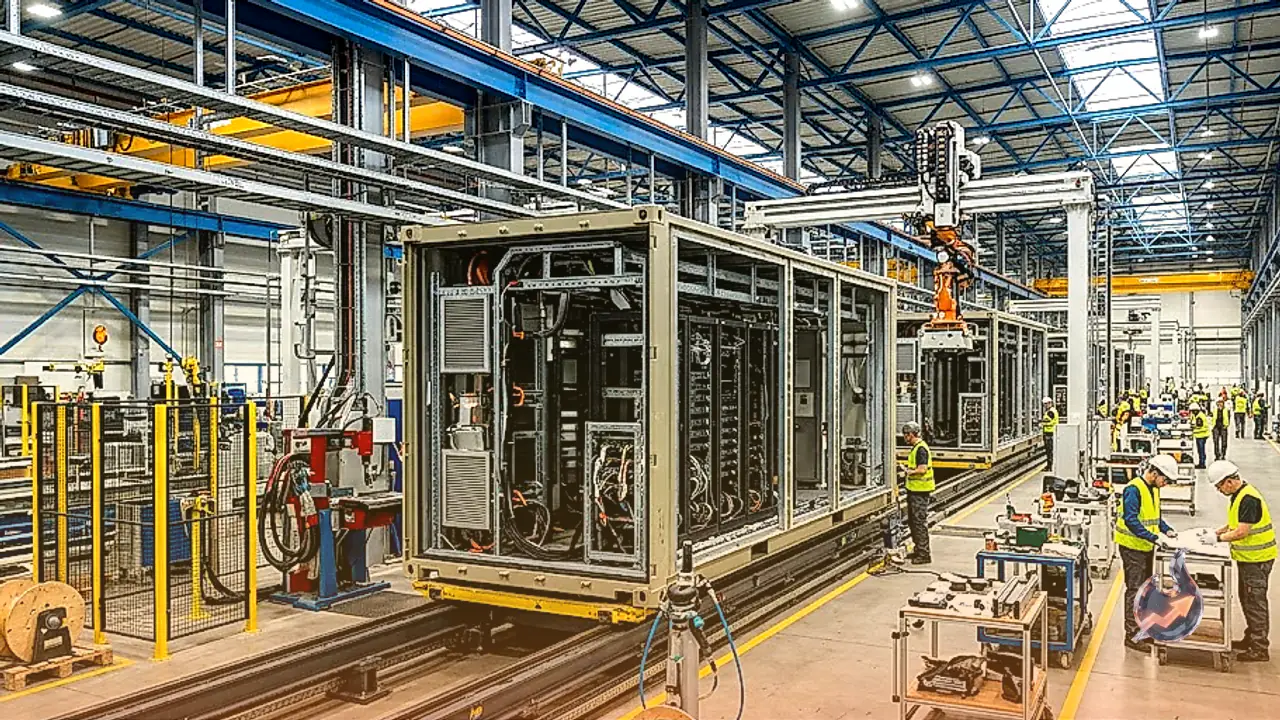

Skyrocketing demand for artificial intelligence workloads has put intense pressure on computing infrastructure worldwide. Traditional data center construction typically requires years of planning, land preparation, and complex structural engineering. Looking to bypass these multi-year bottlenecks, AI infrastructure company Runware is accelerating its push into prefabricated modular facilities following the launch of its Sonic Inference Pod. These modular units are assembled inside a factory environment and delivered directly to client locations ready for immediate setup. Now, the company is preparing to scale operations further by adopting automotive manufacturing principles, turning data center construction into a standardized factory assembly line.
The Shift Toward Prefabricated Computing Pods
The concept of building computing infrastructure off-site is not entirely unproven. Enterprises such as Crusoe and Schneider Electric have offered prefabricated pods for years, yet Runware contends that its streamlined production allows it to deliver units significantly faster. The broader tech sector is moving in a similar direction to satisfy urgent computational needs. Earlier this year, Nvidia unveiled its Vera Rubin AI factories and the DSX POD, both designed to simplify and accelerate how enterprises set up dedicated AI facilities. However, Runware distinguishes its approach by operating an actual production factory to build the hardware, rather than merely providing reference architectures or designs for third parties to execute.
Ambitious Targets for Gigawatt-Scale Output
Flaviu Radulescu, co-founder and chief executive officer of Runware, has outlined aggressive targets for the company's manufacturing footprint in Romania. By 2028, the company plans to reach an output rate of 30 megawatts of data center capacity per day. That schedule translates to roughly 1 gigawatt of capacity each month. Over the course of a full year, such an operational pace would match the approximately 10 gigawatts of data center power that the entire United States was projected to add this year. The target reflects an intensifying race across the technology sector to compress build schedules and deploy computational capacity with greater efficiency.
Dual-Factory Setup in Romania
Production will scale up gradually beginning next year. Runware currently operates with two physical manufacturing locations. The first facility has been utilized for several years to produce the company's initial pod units. A second, newly constructed plant broke ground earlier this year and is scheduled to reach completion within months, with active operations slated to begin early next year. Building a single pod previously required three weeks of fabrication time, but the company anticipates reducing that duration to just a single day once production lines reach full volume.
Rapid Site Deployment and Operating Models
Customers working with Runware can either provide their own land to host the infrastructure or rely on the company to identify and secure a suitable site. Radulescu explained that the installation and configuration process on-site is engineered to bring units online within 48 hours. This turnaround applies solely to the physical installation and system setup once units reach the location, distinct from factory manufacturing duration. Runware also handles maintenance logistics by supplying replacement components in the event of hardware malfunctions. Clients have multiple commercial arrangements available: they can lease raw compute capacity directly from Runware, or they can supply their own graphics processing units while paying a recurring monthly fee for the physical pods and management services. Grid electricity and network connectivity are billed separately.
Modular Flexibility and GPU Lead Times
Although the pods are built around a uniform baseline architecture, each unit can be adjusted to match client specifications and incorporate various hardware generations. The current reality of long lead times for graphics chips actually provides a logistical cushion for the company. Radulescu noted that the delivery timelines for the factory pods are shorter than the waiting periods required to receive advanced processors, giving technicians time to adjust enclosures and support systems while hardware orders are pending. Whenever new generations of silicon enter the market, Runware relies on an in-house hardware engineering team to design, manufacture, and validate custom components internally, allowing the layout to evolve rapidly.
Execution Risks and Automotive Management Lessons
Translating factory blueprints into continuous output presents substantial operational hurdles. Mass manufacturing demands considerable labor, extensive component stockpiles, complex supply chain coordination, and continuous capital. Industrial history contains cautionary examples of startups attempting to revolutionize factory assembly lines, such as electric vehicle maker Arrival, which once reached a valuation above $13 billion before collapsing into bankruptcy after failing to achieve cost-effective volume production compared to legacy carmakers. Runware has secured more than $60 million in total funding so far, relying on a $50 million Series A round completed last December to finish and launch its newest facility, with plans to pursue a Series B round in the future.
Addressing potential parallels with past manufacturing failures, Radulescu stressed that Runware operates under an entirely different cost structure. While the business carries regular labor and material expenses, the wage overhead of its factory personnel remains modest relative to the high economic value of delivering functional AI compute. The company also minimizes expenses by engineering proprietary cooling and power setups from widely available commercial parts. To ensure disciplined execution, Runware hired an experienced plant manager with an automotive manufacturing background to oversee production alongside the head of hardware.
Supply Chain Constraints and Commercial Interest
Component procurement remains an ongoing challenge. While Runware fabricates internal cooling loops and pod housings utilizing standardized off-the-shelf items, specific critical hardware such as pumps and industrial fans must be sourced from Germany, and the systems remain dependent on Nvidia for networking architecture. Nevertheless, commercial traction has been significant since the company made Sonic pods available to external buyers a month ago, recording $1 billion in committed interest. According to Radulescu, this represents more than 20 megawatts of capacity that the production team is currently working to deliver.
Power Grids and Closed-Loop Cooling
Data center expansion globally has faced growing community scrutiny and regulatory pushback over immense electrical consumption and water usage that strain local utilities. Addressing these environmental concerns, Radulescu stated that the pods operate without requiring direct municipal water hookups. The enclosures use a closed-loop liquid cooling system paired with air-cooled external radiators to dissipate thermal energy. Runware is currently coordinating with utility providers on an infrastructure pipeline spanning 397 megawatts, with the scope to scale up to 1.2 gigawatts across designated locations. These modular installations occupy footprints far more compact than the sprawling campuses developed by hyperscale cloud operators such as Amazon, Microsoft, and Google.
Global Expansion Plans
Following the commercial launch of its second Romanian manufacturing site early next year, Runware intends to establish additional production hubs in the United States and other international territories. Radulescu envisions prefabricated modular architecture becoming the prevailing blueprint for enterprise computing infrastructure, allowing organizations to structure large-scale facilities around factory-built modules and achieve operational readiness in months rather than years.