



















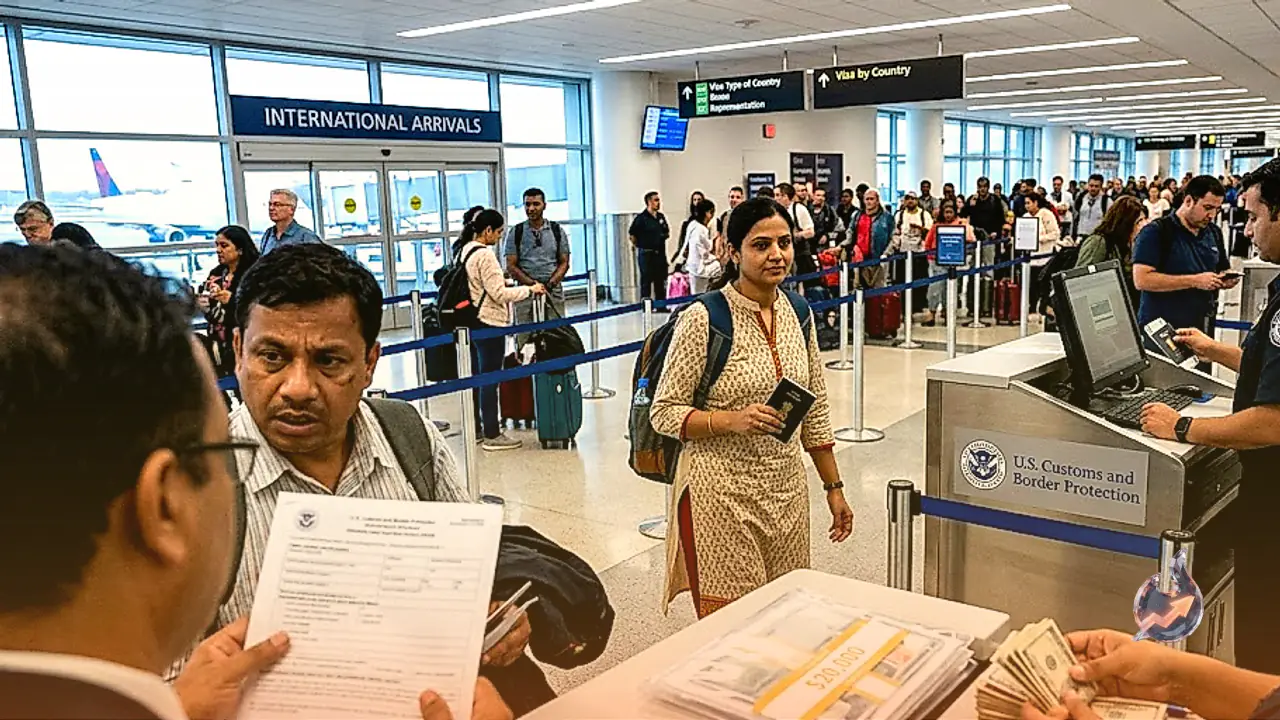

Travel regulations for visitors heading to the United States have tightened significantly as American authorities implemented a stringent financial security requirement for nationals of 50 designated countries. Under this updated framework, travelers applying for business and tourist visas from the affected nations may be instructed to furnish a visa bond reaching as high as $20,000 before their entry permits can be granted. Indian passport holders have been spared from this financial hurdle, ensuring that travelers from India will not be asked to deposit any such security funds. However, South Asian neighbors including Bangladesh, Nepal, and Bhutan have been placed directly on the designated roster.
According to the updated list published by the US Department of State, even when applicants satisfy every standard requirement for B1/B2 visas, consular officers retain the authority to mandate a cash bond prior to the actual issuance of the visa document. The initiative is structured to discourage visitors on temporary permits from overstaying their authorized duration inside American borders.
Bond Tiers and Geographic Distribution of Affected Nations
The monetary requirement under this program is divided into distinct tiers rather than a uniform flat fee. Consular personnel evaluate individual cases during the in-person visa interview to determine whether an applicant must submit a deposit of $10,000, $15,000, or the maximum amount of $20,000. This determination remains entirely at the discretion of the interviewing official.
Within South Asia, the timing of enforcement has varied across borders. Bhutanese citizens have been subjected to this requirement since January 1, whereas the mandate took effect for applicants from Bangladesh and Nepal on January 21. Beyond the immediate neighborhood, the 50-country inventory spans numerous jurisdictions situated across Africa, the Caribbean basin, Central Asia, and the Pacific region. Indian travelers remain entirely absent from the list, meaning both vacationers and commercial visitors from India can proceed without anticipating this substantial financial demand.
Statutory Authorization and the Role of Overstay Records
Federal officials pointed out that this enforcement mechanism draws its authority from Section 221(g)(3) of the Immigration and Nationality Act. Under this statutory provision, consular officers are empowered to condition visa issuance on the posting of a financial bond to ensure compliance with the terms of entry. The current iteration operates under a finalized administrative rule that came into force on August 3.
Country selection is driven by institutional tracking rather than arbitrary designations. The US Department of State relies on empirical data compiled in the 'Entry/Exit Overstay Report' generated by the US Department of Homeland Security (DHS). This document tracks instances where foreigners entered the United States on temporary B1 and B2 visas and remained on American soil past their legal departure deadlines. Nations whose citizens show elevated frequencies of overstaying are progressively incorporated into the bond program.
Payment Protocols and Refund Regulations
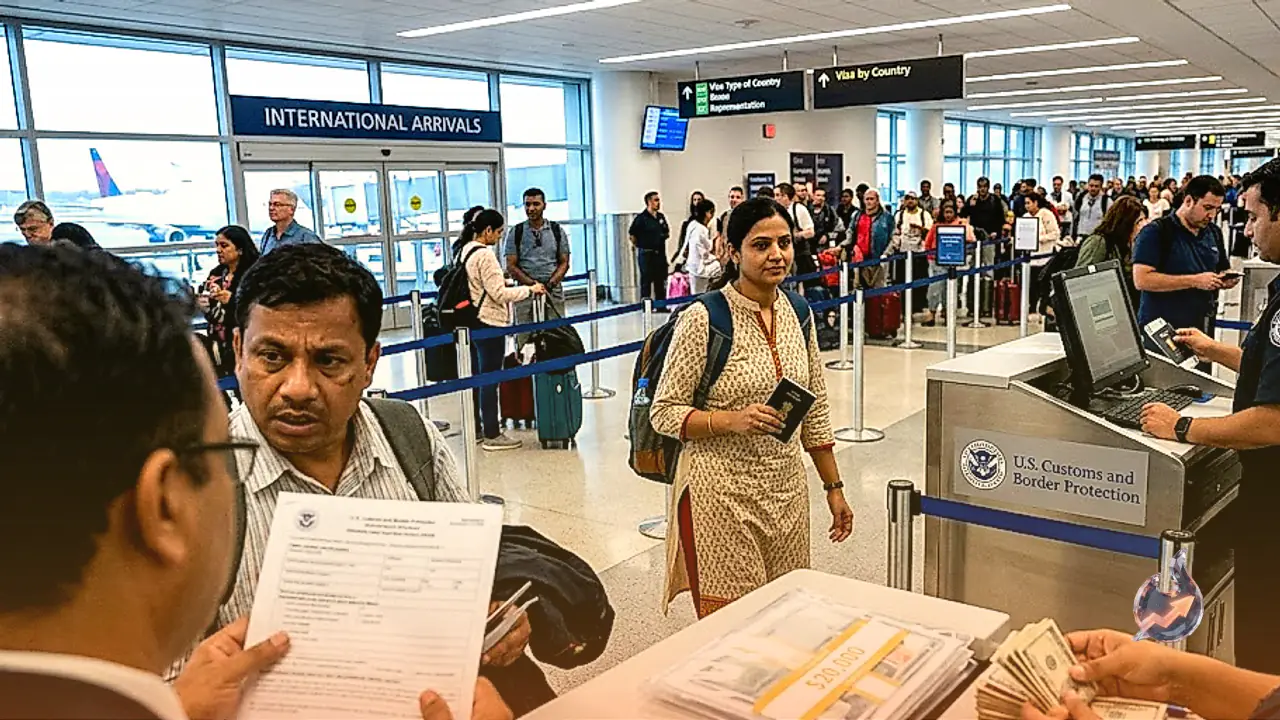
Travelers subject to this security bond must prepare and submit DHS Form I-352. Along with filing this documentation, applicants are required to formally accept the covenants of the bond agreement through Pay.gov, the digital payment system managed by the US Department of the Treasury.
US State Department officials have emphasized caution regarding payments, advising applicants never to send funds in advance without an explicit directive from an interviewing officer. The agency stated that Form I-352 should only be supplied once the consular official specifically instructs the applicant to do so. The required funds do not necessarily have to originate from the applicant directly; a third party, such as a relative, friend, or corporate partner, is permitted to post the bond. Provided that every term and condition governing the temporary stay is scrupulously maintained, the party that posted the funds will receive a full reimbursement.
Mandatory Ports of Entry and Adjudication of Violations
Officials have made it clear that posting the required financial sum does not guarantee that a visa will ultimately be issued. Furthermore, recipients of a bonded visa must adhere to specific transportation constraints during their journeys into and out of the United States. Travel is restricted solely to commercial airports, including locations operating US Customs and Border Protection preclearance capabilities. Visitors traveling under this program are prohibited from entering or exiting via land crossings, sea terminals, chartered flights, or private general aviation aircraft.
Should an alleged breach of the bond covenants occur, the matter is referred directly to the United States Citizenship and Immigration Services (USCIS). USCIS holds the institutional mandate to investigate and make the final administrative determination regarding whether an actual violation took place. The overarching purpose of this framework remains the curbing of overstay occurrences among individuals entering on temporary tourist and business visas, anchored directly to DHS compliance data.