






















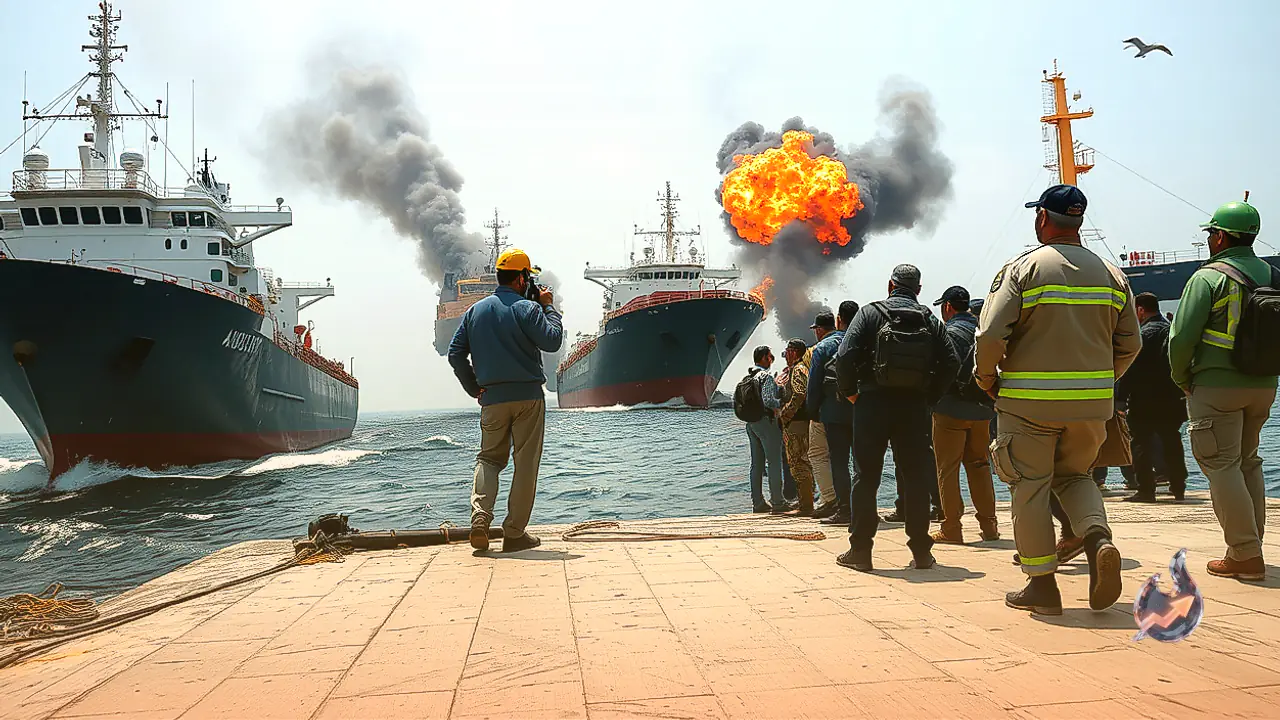

A rapid sequence of maritime strikes across the narrow waters separating the Persian Gulf and the Gulf of Oman has triggered severe distress across global shipping lanes. Despite security guarantees pledged for commercial transit in this vital sea corridor, merchant vessels continue to face relentless strikes. Over a span of just seventy-two hours, five separate ships have been targeted in the corridor, with the latest incident setting a major oil-carrying vessel on fire off the coast of Oman.
Supertanker Struck off the Omani Coast
Maritime monitoring body UKMTO confirmed that an oil tanker was hit approximately eight kilometers off the Omani coastline, sparking an onboard fire. The vessel's crew members were reported safe, though the exact extent of structural damage inflicted on the ship could not be immediately determined. Dispatches citing regional monitoring noted that the targeted vessel was a supertanker possessing a cargo capacity of roughly 2.5 million barrels. Independent confirmation regarding direct responsibility for the operation has not yet been established.
Surge in Commercial Shipping Targets
The escalation follows closely on the heels of reports from September 29, when three separate commercial tankers were singled out and struck in the region. With five vessels compromised inside a three-day window, apprehension among shipping operators navigating the corridor has reached acute levels. Coordinated military pressure stretching from the Red Sea via Houthi operations to Iranian maneuvers across the Persian Gulf and Gulf of Oman has severely disrupted conventional shipping movement.
Global Energy Corridor Under Severe Strain
Historically relied upon as the world's most indispensable transit point for crude oil and liquefied gas shipments, the passageway has become severely constricted under ongoing hostilities. Although security assurances had been offered to protect vital shipping lanes, tankers laden with critical fuels continue to be hit. Ever since regional hostilities erupted, commercial vessel traffic carrying crude oil and natural gas through this strategic choke point has dwindled to negligible levels.