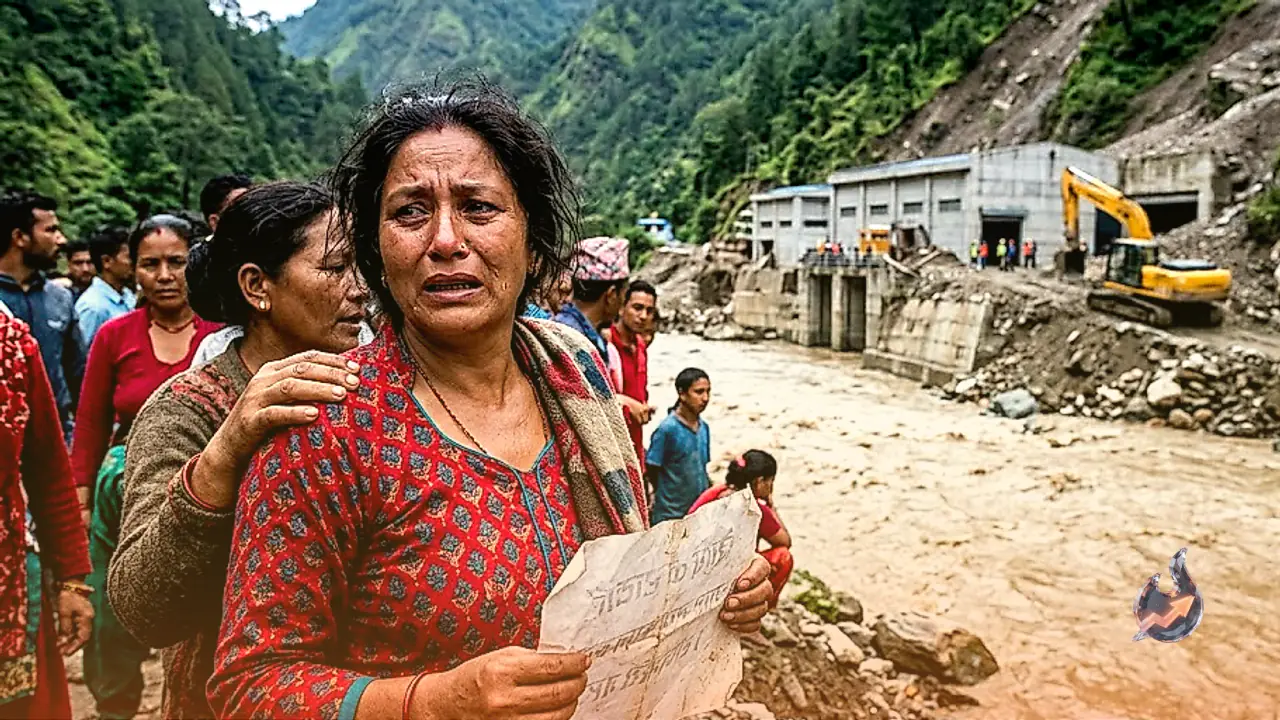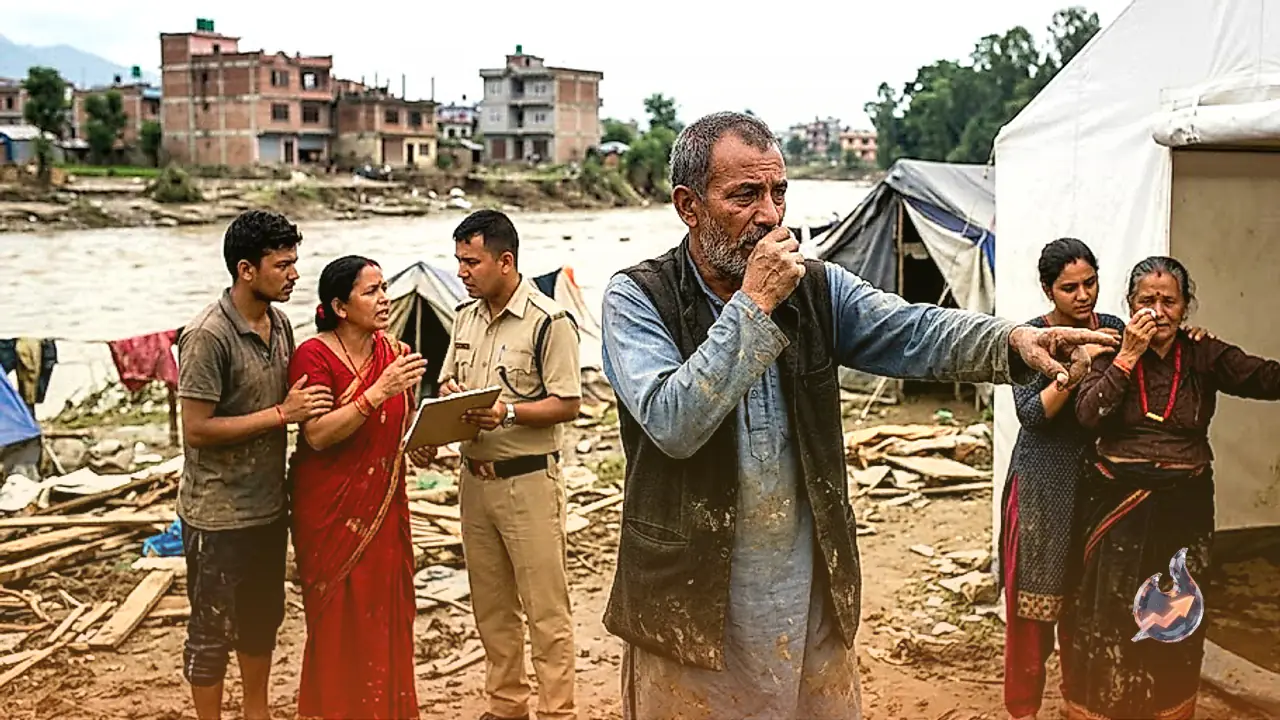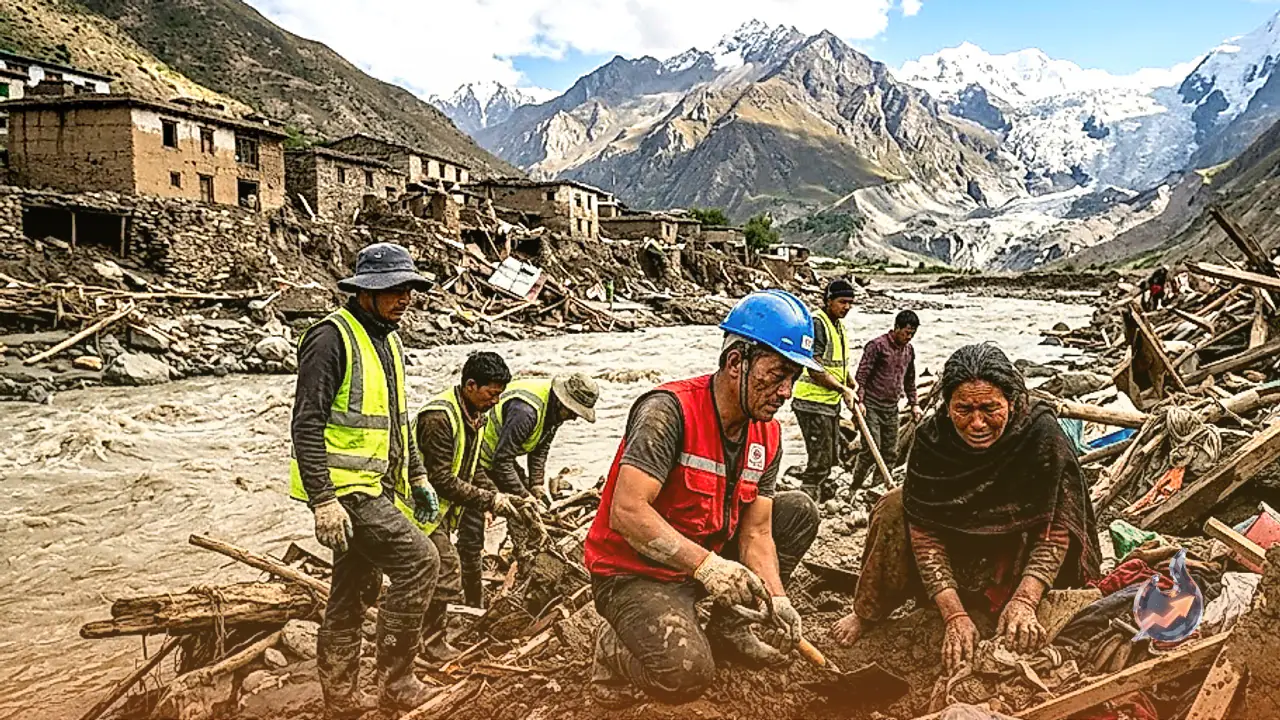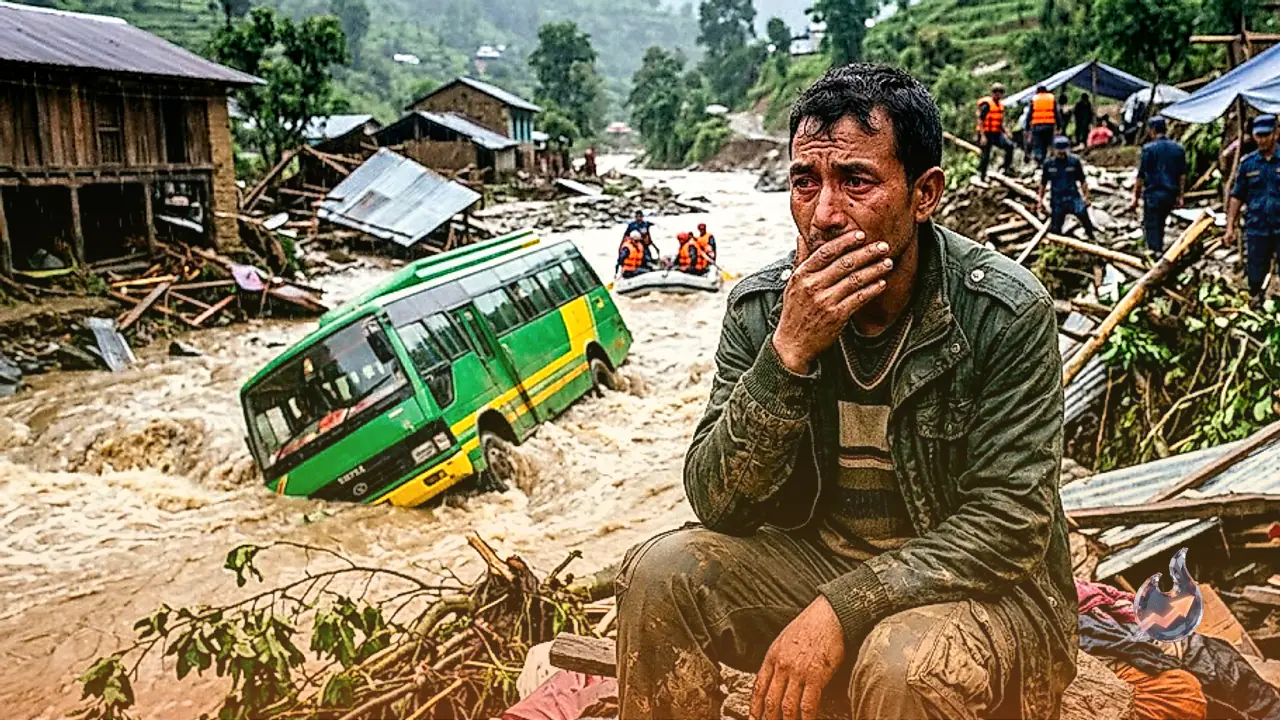



















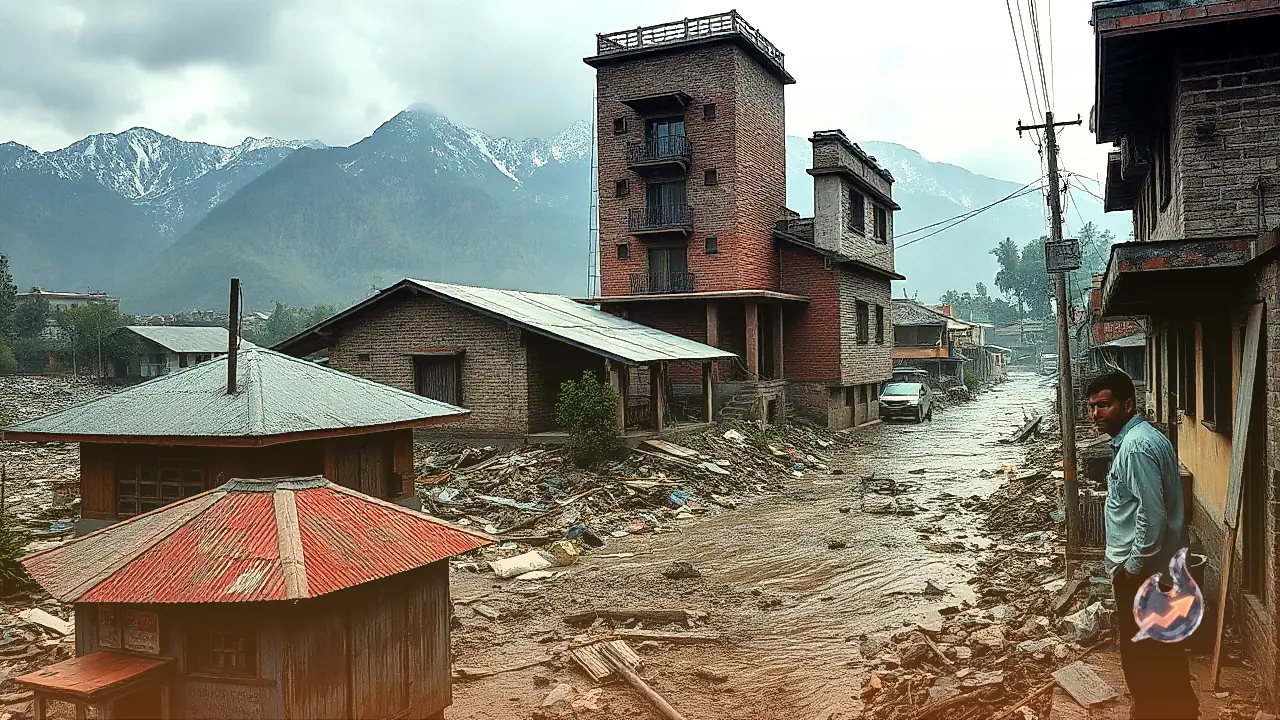

A harrowing scene of destruction has emerged across the mountainous terrain of central Nepal following catastrophic flash floods unleashed by the swollen Bhotekoshi and Trishuli rivers. Preliminary official assessments conducted by government agencies indicate that the torrential floodwaters have wreaked immense havoc across five key districts, namely Rasuwa, Nuwakot, Dhading, Gorkha, and Chitwan. Details compiled by the Department of Urban Development and Building Construction reveal that over 7,570 private residences have been inundated and damaged. Furthermore, dozens of public administrative buildings, national highway corridors, motorable bridges, pedestrian suspension bridges, and municipal drinking water networks have suffered catastrophic destruction, inflicting billions of rupees in losses on the national economy and displacing thousands of rural inhabitants.
Widespread Destruction of Private Residences and Public Infrastructure
Technical assessment teams deployed by the Department of Urban Development and Building Construction have surveyed the flood-ravaged regions to compile initial loss evaluations. According to the department's report, 1,253 private homes have been completely obliterated, leaving no physical trace behind. An additional 6,317 houses have sustained severe structural damage. The structural foundations and walls of these damaged houses have been compromised to such an extent that routine repair work will not restore their habitability. Official engineers emphasize that displaced families will require full-scale reconstruction of their homes to ensure long-term structural safety.
Financial evaluation of the residential damage indicates that destruction of private homes alone accounts for an estimated loss of 17.31 billion Nepalese rupees across the five impacted districts. In addition to private housing, state administrative infrastructure suffered major disruptions. Forty-five government buildings belonging to various municipal bodies and state ministries sustained severe damage due to floodwaters and accompanying landslides. Preliminary estimates place the financial loss to these government structures at approximately 4.5 billion Nepalese rupees. Department officials noted that these figures represent preliminary findings, as detailed ground surveys continue in remote mountainous areas, which may lead to higher final estimates.
Devastating Impact Concentrated in Nuwakot and Rasuwa Districts
A detailed breakdown of departmental data reveals that Nuwakot district bore the brunt of the catastrophic inundation. In Nuwakot, a total of 3,977 private houses were damaged, resulting in an aggregate financial loss of 9.2262 billion Nepalese rupees. Municipal breakdowns highlight the severity of the crisis within the district. Bidur Municipality suffered the largest concentrated impact, with 3,026 damaged homes accounting for 7.1758 billion Nepalese rupees in damages. In Kispang, overflowing river currents swept away 696 homes, causing losses of 1.3024 billion Nepalese rupees. Belkotgadhi Municipality recorded 212 destroyed homes valued at 600 million rupees, while Tarkeshwar Municipality reported 43 collapsed structures amounting to 147.9 million rupees in damages.
Adjoining Rasuwa district also experienced severe destruction from rising river levels. Rasuwa recorded 1,779 damaged homes and cumulative monetary losses estimated at 5.0798 billion Nepalese rupees. In the famous Gosaikunda area of Rasuwa, 1,043 houses were affected, inflicting a financial loss of 2.4986 billion Nepalese rupees. The damage was equally devastating in Uttargaya, where floodwaters completely erased 567 houses, resulting in 2.3023 billion Nepalese rupees in losses. Additionally, Kalika reported 112 ruined houses costing 184.8 million rupees, while Amachodingmo recorded 57 damaged houses valued at 94 million rupees.
Extensive Property Damage Across Dhading, Gorkha, and Chitwan
Dhading district also suffered heavy losses due to the violent surge of the Bhotekoshi and Trishuli rivers. Across various municipalities in Dhading, a total of 1,451 private homes were severely affected by floodwaters. Total financial losses in Dhading district have been estimated at 2.4095 billion Nepalese rupees. According to localized reports, Benighat Rorang experienced the highest impact within the district, with 1,037 broken homes causing 1.7264 billion Nepalese rupees in damage. Siddhalek recorded 228 damaged houses amounting to 376.2 million rupees in losses, Gajuri reported 107 damaged homes costing 176.5 million rupees, and Galchhi recorded 79 damaged residences valued at 130.3 million rupees.
Neighboring Gorkha and Chitwan districts similarly reported significant damage to residential settlements. Gorkha district documented 263 damaged private houses, representing a total financial loss of 433.9 million Nepalese rupees. Within Gorkha, 248 houses were damaged in the Gandaki area and 15 houses in Shahid Lakhan. Meanwhile, in Chitwan district, 100 houses were damaged in the Ichhakamana area, inflicting an estimated loss of 165 million Nepalese rupees.
Catastrophic Losses to National Road Networks and Motorway Bridges
Beyond residential communities, the floods crippled Nepal's vital transportation and road infrastructure. Official data released by the Department of Roads indicates that the national road network suffered damages worth approximately 30 billion Nepalese rupees. Crucial for international border trade and internal connectivity, the 82-kilometer-long Galchhi-Syabrubesi-Rasuwagadhi highway saw nearly 40 kilometers of its length completely destroyed, requiring entire reconstruction. Additionally, the Krishnabhir section of the vital Prithvi Highway, which connects Kathmandu to western Nepal, suffered severe damage from landslips and river erosion.
Bridge infrastructure suffered equally catastrophic destruction. Torrential river currents completely swept away 31 motorable bridges, while 3 other major bridges sustained heavy structural damage. Department of Roads officials estimate that restoring and rebuilding the damaged highways and motorable bridges will require an expenditure of approximately 50 billion Nepalese rupees. Suspension bridges, which serve as lifeline crossings for remote pedestrian communities, were also severely impacted. A total of 53 suspension bridges were damaged across Rasuwa and Nuwakot districts, with 33 bridges washed away completely and 20 identified as repairable.
Local Infrastructure Losses and Deployment of Emergency Cableways
Reports from the Department of Local Infrastructure Development confirm that local-level infrastructure sustained losses totaling approximately 1.25 billion Nepalese rupees. With roads washed out and bridges collapsed, numerous remote villages were left completely isolated. To restore immediate transit connectivity, the government is installing emergency cableways and ropeways in high-priority locations. The department plans to deploy ropeways across three locations in Rasuwa and two locations in Nuwakot. Cableway installation has already been completed in Bidur, Belkotgadhi, and Indrachaur within Nuwakot district, while preparatory works are actively progressing in Rasuwa.
The local development department outlined projected expenditure requirements for infrastructure rehabilitation. Immediate repairs to rural road segments will require around 400 million rupees, repairing damaged suspension bridges will cost approximately 150 million rupees, and constructing new ropeway systems is projected to cost around 600 million rupees.
Critical Crisis in Municipal Water Supply and Sewage Systems
The destructive floods disrupted drinking water supply networks across Rasuwa, Nuwakot, Gorkha, and Dhading districts. According to the Department of Water Supply and Sewerage Management, 10 major drinking water reservoir tanks were damaged in Rasuwa. Nuwakot faces the most severe water crisis, with 111 reservoir tanks completely destroyed. Furthermore, Dhading reported 7 damaged reservoir tanks, while Gorkha recorded 24 damaged tanks. Total financial loss to municipal water supply infrastructure stands at approximately 640 million rupees, with additional damages of roughly 290 million rupees inflicted on sewage and sanitation networks.
Relief Operations, Emergency Water Supply, and Long-Term Restoration
Despite severe infrastructure damage, emergency water pumping systems in Nuwakot district are successfully supplying approximately 1 million liters of drinking water daily to affected residents. In Kathmandu, four water tankers have been deployed to deliver clean drinking water to temporary relief camps accommodating displaced citizens. Specialized 'Water Ambulance' units have been brought into operation to test water quality and assist with distribution efforts.
Government authorities acknowledged that restoring piped drinking water supply in Rasuwa remains a major operational challenge. Officials stated that temporary water supply structures will be established over the next 1.5 to 2 months to provide interim relief. However, establishing permanent drinking water infrastructure and fully restoring the network will take approximately two years. To bolster disaster response efforts, the Indian Army has deployed rescue personnel to work shoulder-to-shoulder with the Nepali Army. Operating in high-risk hazard zones, joint military teams are actively conducting rubble clearance and rescuing individuals trapped in affected locations.