


















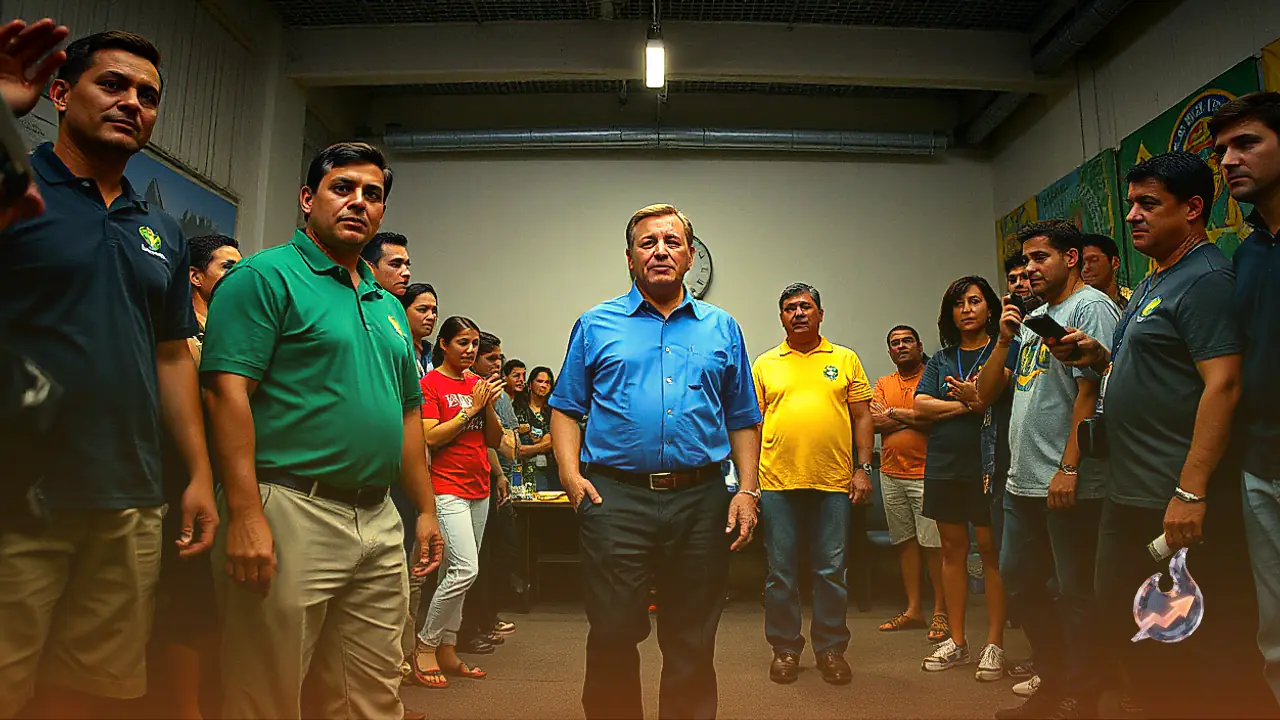

The outcome of Brazil's presidential contest has sparked immediate diplomatic reverberations, drawing sharp criticism from United States President Donald Trump regarding the credibility of the ballot. Following the declared triumph of leftist leader Luiz Inacio Lula da Silva, Trump openly questioned the fairness of the vote counting process, describing the election as marred by irregularity. The remarks highlight emerging global tensions around the election results in Latin America's largest democracy.
Allegations Leveled Over Counting Mechanics
Addressing reporters before departing for a rally in Mississippi, Donald Trump offered a blunt assessment of the electoral process in Brazil. He stressed that democratic ballots must produce outcomes that remain entirely beyond dispute, arguing that the conduct of this election leaves room for deep scepticism. In his remarks, Trump asserted that the methodology employed during the tabulation raised fundamental concerns, flatly characterizing the event as another rigged election.
Flavio Bolsonaro Mounts Legal Challenge
The road to office for Luiz Inacio Lula da Silva encountered immediate resistance following Sunday's second-round runoff, as conservative opponent Senator Flavio Bolsonaro refused to concede and pledged to contest the outcome. This formal opposition threatens to escalate friction between the country's deeply polarized ideological blocs, setting the stage for renewed political turbulence. Lula da Silva had trailed behind in the initial phase of the contest before staging a rebound during the decisive round of vote counting to secure a majority.
Controversy Surrounding Polling Extensions
Speaking at a press conference on Sunday, Flavio Bolsonaro articulated the basis for his forthcoming legal appeal. He argued that operational chaos unfolded after election authorities extended voting hours, an adjustment originally sought by both competing campaigns. Contending that the resulting disruption compromised the election, the senator stated his intention to petition the judiciary to annul the entire vote. Observers have noted, however, that the viable legal pathways and precedents supporting such an annulment demand remain uncertain.
The Official Margin and Historical Significance
Official tallies released by Brazil's Superior Electoral Court after reviewing 100 percent of the ballots showed Luiz Inacio Lula da Silva securing a decisive lead of approximately 4.4 million votes over Flavio Bolsonaro. The victorious candidate garnered 51.8 percent of the total votes cast. Set to inaugurate his fourth presidential term on January 5, 2027, the 80-year-old statesman will consolidate his status as the second longest-serving leader in Brazil's history, surpassed only by Getulio Vargas.
Domestic Pressure and Diplomatic Realities
Luiz Inacio Lula da Silva has maintained a long track record of vocal criticism toward Donald Trump, underscoring the ideological divide between both leaders. Back home, this fiercely contested national election unfolded against a backdrop of intense public dissatisfaction. Rising inflation rates, the surging cost of living, widespread criminal activity, and persistent allegations of systemic corruption dominated campaign discourse, defining the economic and social environment in which voters made their choice.