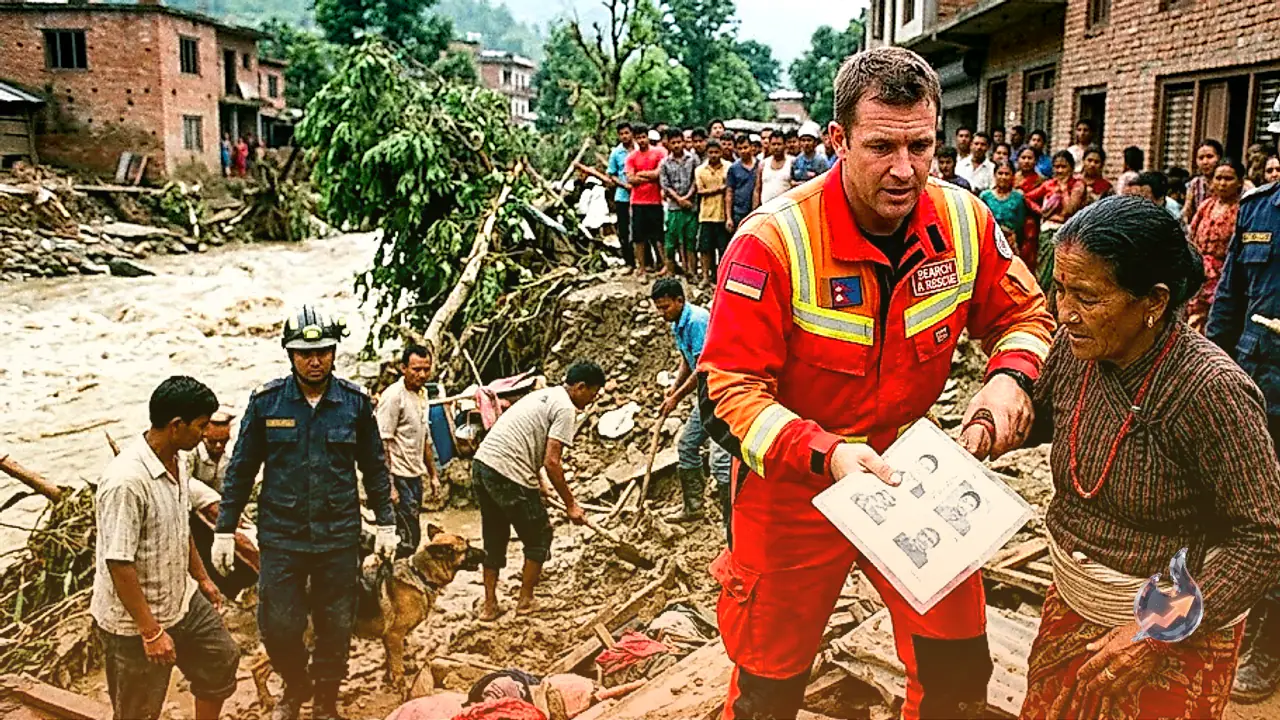























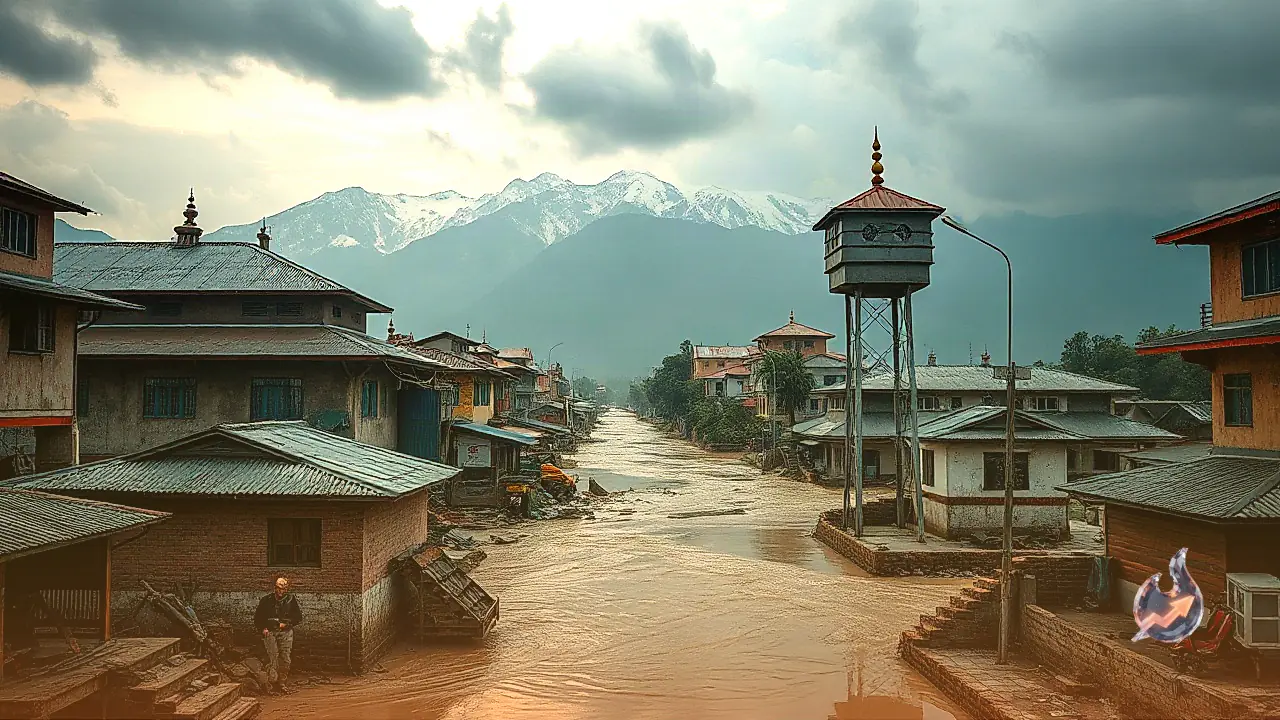

Kathmandu: Surprising new details have emerged regarding the catastrophic floods that struck Nepal on August 26. Vishal Nath Upreti, President of the Nepal Centre for Disaster Management, shed light on the sudden flooding events that unfolded across Nepal and Tibet, noting that the sequence began five to six days prior. In the immediate aftermath, numerous observers assumed the disaster was triggered by a Glacial Lake Outburst Flood (GLOF). However, subsequent verifications established that no such lake had burst in Tibet, rendering the initial assumption completely incorrect.
How did such a destructive flood actually occur in Nepal?
Discussing the calamity, Upreti noted that while many initially believed a GLOF was responsible for the severe flooding, authorities and scientists quickly abandoned the theory once it was confirmed that no Tibetan lake had ruptured. Attention then shifted toward the possibility that an earthquake might have dislodged massive quantities of snow and rock. Yet, data from the United States Geological Survey (USGS) clarified that the reality was precisely the opposite.
The sequence actually began with vast quantities of snow and rock plunging down into the valley, which in turn generated seismic tremors. While the initial magnitude of the earthquake was reported as 4.2, it was subsequently upgraded to 5.2. This meant the flood did not stem from an earthquake; rather, the falling debris and shifting rock masses created the earthquake itself.
Death toll could rise further as hundreds remain missing
Upreti further explained that roughly three hours and eight minutes later, a secondary landslide occurred, forming a temporary dam that eventually breached and unleashed a smaller secondary flood. Fortunately, the water drained away gradually, preventing a larger secondary catastrophe. He drew a parallel to the tragedy in Chamoli, Uttarakhand, where snow and rock cascading from a height of approximately two kilometers created a similar debris flow resulting in nearly 200 fatalities. In the Nepal disaster, however, the number of dead or missing individuals has already surpassed 5,000, and this grim figure could potentially climb to 7,000 or even 10,000.
The sudden deluge has instantly rendered countless residents homeless across the region. According to official figures, around 590 foreign nationals from 39 countries remain missing in the ongoing Nepal disaster, while hundreds of others have been successfully rescued.
Scientific community still investigating the exact trigger
Elaborating further, Upreti noted that while researchers have long understood the mechanics of glacial lake outbursts capable of sending millions of cubic meters of water rushing down a valley like a sky-borne tsunami, this particular event defied that pattern. The occurrence involved simple masses of snow and rock cascading downward. Because the exact site remains physically inaccessible to researchers, investigations rely primarily on satellite imagery.
One emerging hypothesis suggests the event was primarily a massive rockslide with a surface layer of snow, rather than a traditional glacier slipping downward. As a scientist, Upreti emphasized that these conclusions remain preliminary and unconfirmed. Meanwhile, the disaster has inflicted immense personal and financial tolls on individuals, such as businessmen who lost multi-crore enterprises, while international bodies and neighbors like China have extended financial assistance exceeding 2 million US dollars to aid the victims.