























State-owned enterprise Oil India Limited has secured permission from the Supreme Court of India to withdraw its pending interlocutory application and present a fresh writ petition contesting the central government's refusal to clear a high-stakes hydrocarbon extraction project near Assam's Dibru-Saikhowa National Park. The public sector energy producer is seeking judicial intervention to overturn an adverse ruling by environmental regulators that blocked the deployment of Extended Reach Drilling technology. This specialized engineering method is designed to tap petroleum deposits located thousands of metres beneath the protected forest reserve without installing any physical machinery or surface infrastructure inside the ecological sanctuary.
Supreme Court Directions and Registry Constraints
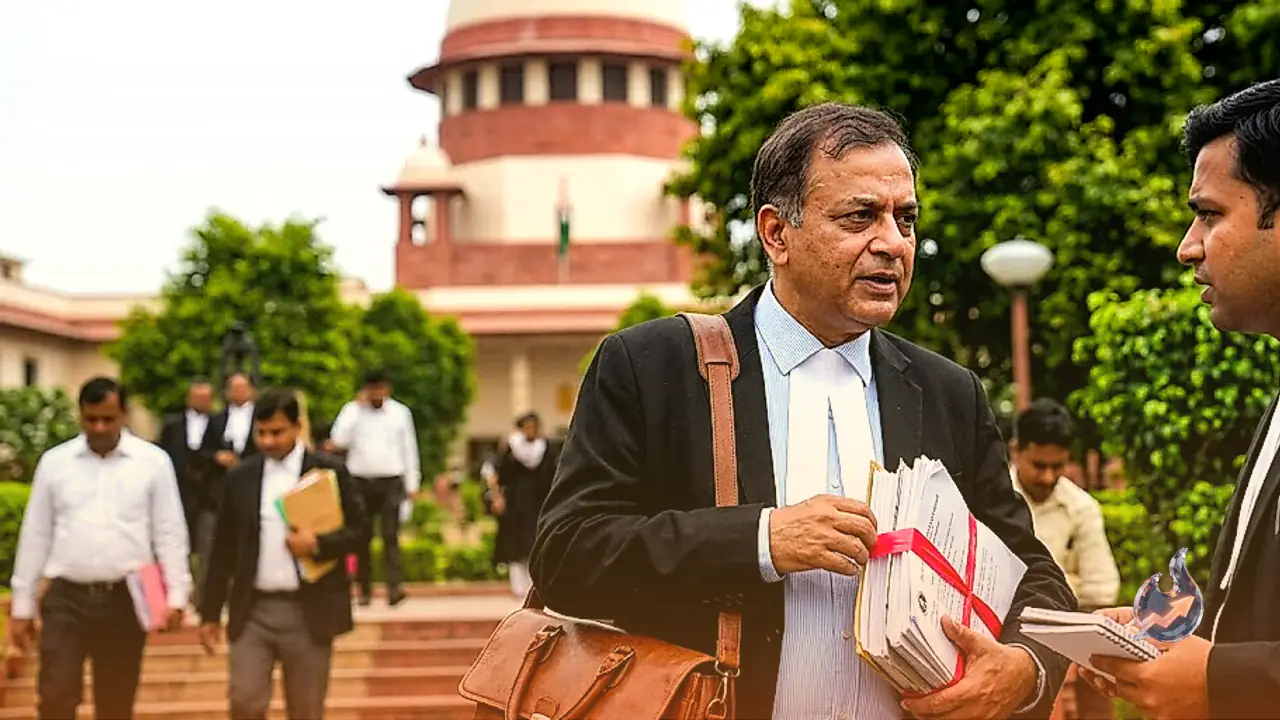
The legal proceedings unfolded before a Supreme Court bench comprising Chief Justice Surya Kant, Justice Joymalya Bagchi, and Justice V Mohana. Senior advocate Rakesh Dwivedi, appearing for Oil India Limited, pressed the bench for an urgent hearing on the company's legal petition. Clarifying procedural boundaries, Chief Justice Surya Kant explained that the court registry was restricted from listing interlocutory applications within the omnibus forest conservation case because of earlier judicial orders aimed at concluding that legacy litigation. The Chief Justice informed counsel that if a genuine new cause of action has arisen, the energy corporation is permitted to file a fresh standalone petition, which the court would entertain for formal consideration upon filing.
National Energy Capacity and Advanced Drilling Architecture
Submitting arguments on the strategic weight of the venture, senior advocate Rakesh Dwivedi emphasized before the bench that the proposed exploration project holds significant national importance, with the potential to fulfill nearly three per cent of India's total domestic oil requirement. Dwivedi detailed the operational mechanics of Extended Reach Drilling (ERD), stressing that the technology is fundamentally different from conventional open-cast or subterranean mining operations. The counsel highlighted that all surface installations, including drilling rigs, power systems, and wellheads, are situated entirely beyond the boundaries of Dibru-Saikhowa National Park. The drilling apparatus penetrates vertically down to a depth of 4,000 metres on land outside the reserve before curving horizontally to reach hydrocarbon pockets positioned 3,500 to 4,000 metres beneath the national park floor.
Judicial Precedents and Environmental Ban Interpretation
The initial application had been submitted under the framework of the long-pending T.N. Godavarman Thirumulpad versus Union of India case, a cornerstone legal proceeding that has guided forest conservation and environmental jurisprudence in India over several decades. Counsel for Oil India Limited argued that executive decision-makers misconstrued the Supreme Court's verdict of April 26, 2023. That ruling prohibited mining operations inside national parks, wildlife sanctuaries, and within a one-kilometre eco-sensitive boundary zone surrounding protected areas. The state-backed energy firm maintained that subterranean horizontal extraction conducted strictly from external surface platforms does not violate surface safety mandates or breach environmental protection rules established for national parks.
Forest Land Diversion Denial in Tinsukia District
The central dispute centers on decisions issued by central environmental authorities concerning land usage in Assam's Tinsukia district. Oil India Limited is challenging the recommendations of the Forest Advisory Committee and the subsequent refusal by the Ministry of Environment, Forest and Climate Change to sanction the diversion of 0.069 hectares of forest land required for the undertaking. The public sector enterprise asserted that hydrocarbon exploration through Extended Reach Drilling is governed by distinct regulatory and statutory standards rather than general mining regulations. Concluding his submissions, the company's senior advocate sought permission to withdraw the interlocutory application with liberty to refile a fresh petition, requesting that the matter be scheduled for hearing at the beginning or end of the court day once formally lodged.