






















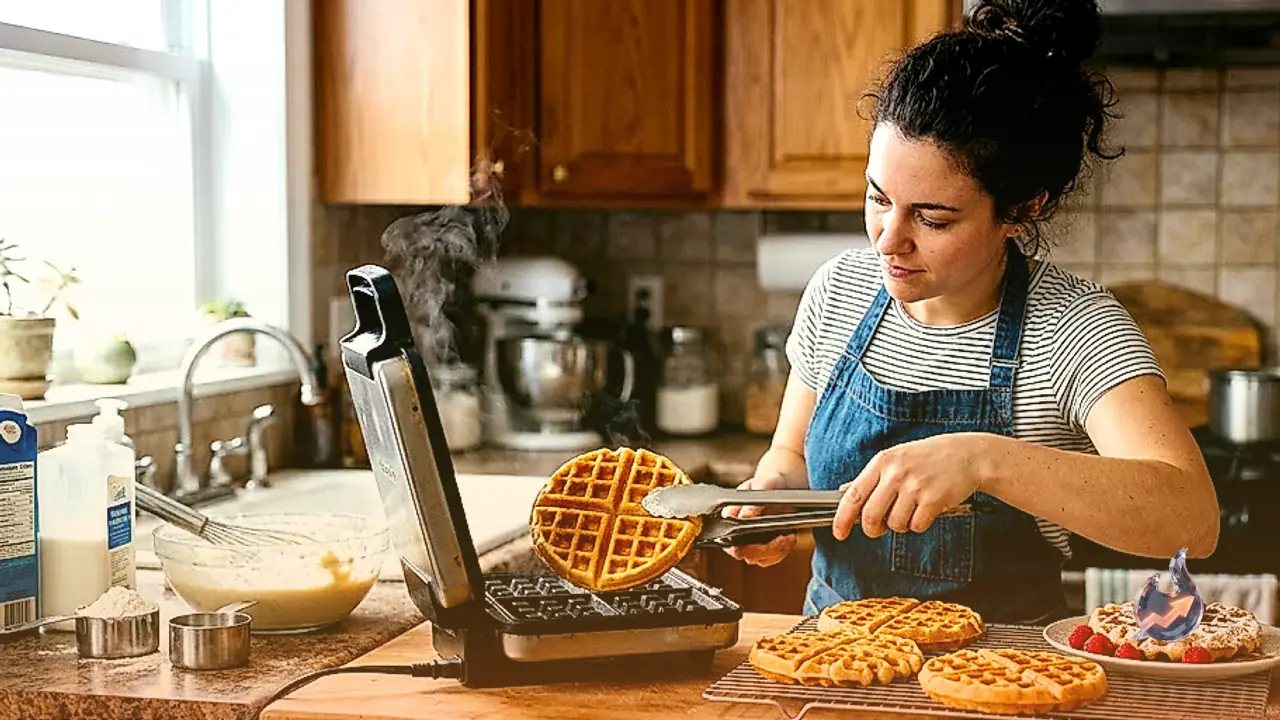

Belgian waffles hold a cherished spot among dessert lovers and breakfast enthusiasts worldwide. Characterized by their crisp outer shell and light, airy center, these treats are traditionally enjoyed loaded with chocolate sauce, fresh berries, whipped cream, or a scoop of ice cream. While many diners assume that achieving that signature cafe-style crunch requires eggs in the batter, that is far from the absolute truth. By utilizing exact measurements, clever ingredient substitutions, and a key cooling technique, you can easily bake restaurant-quality eggless waffles right on your kitchen counter.
Essential Ingredients and Precise Ratios for Waffle Batter
The secret to a flawless eggless waffle lies in maintaining the correct balance between moisture and structure. Skimping on liquid or over-measuring dry ingredients will compromise the final texture, rendering the waffle either chewy or dense. Gather the following key components before mixing
- Cornflour: 2 teaspoons (the essential ingredient responsible for creating an exceptionally crispy outer crust)
- Milk: 1 cup (kept at room temperature or slightly warmed)
- White Vinegar or Lemon Juice: 1 teaspoon (used to curdle the milk and form instant buttermilk)
- Vanilla Extract: 1/2 teaspoon (for aroma and classic dessert flavor)
- Dry Base Components: All-purpose flour, sugar, baking powder, baking soda, and melted butter.
Step-by-Step Recipe Guide for Eggless Waffles
Following a methodical mixing order ensures that the batter remains smooth, light, and free of flour lumps, allowing it to rise properly inside the waffle iron.
Begin by combining 1 cup of milk with 1 teaspoon of white vinegar or fresh lemon juice in a small container. Allow the liquid to rest undisturbed for 5 minutes. This brief resting period slightly curdles the milk, creating an instant homemade buttermilk. Acting as a natural egg substitute, this acidic mixture reacts during baking to yield a soft, airy interior structure.
In a separate large bowl, sift together the all-purpose flour, 2 teaspoons of cornflour, sugar, baking powder, and baking soda. Sifting incorporates air into the dry ingredients, preventing the batter from becoming heavy when mixed.
Next, pour the prepared buttermilk, melted butter, and vanilla extract into the bowl of dry ingredients. Gently whisk the mixture in a single direction until a smooth, lump-free batter takes shape. Take care not to over-thin the batter with excess liquid.
Preheat your waffle maker thoroughly prior to baking. Once the iron reaches operating temperature, lightly grease both grid surfaces with melted butter or cooking oil.
Ladle the prepared batter directly into the center of the waffle iron and spread it out gently toward the edges. Close the lid and let it cook uninterrupted for 4 to 6 minutes. Avoid opening the iron repeatedly during the baking process; wait until steam stops escaping from the sides and the waffle develops a rich golden-brown color.
Carefully transfer the cooked waffle to a plate. Top generously with warm chocolate syrup or Nutella, sliced fresh fruit, and a scoop of vanilla ice cream before serving.
The Secret Cooling Trick to Prevent Sogginess
A frequent mistake home cooks make is placing hot waffles directly onto a flat ceramic plate straight out of the iron. Residual heat trapped beneath the bottom surface creates steam condensation, which quickly turns a crisp waffle soft and soggy. To preserve the crunch, place the freshly baked waffle onto a wire cooling rack for 1 minute before adding toppings. Elevating the waffle allows air to circulate around both sides, locking in the crispness for a significantly longer duration.
Historical Roots and Famous Belgian Variations
The history of waffles stretches back centuries before they became modern cafe staples. By the 16th century, street vendors across Belgium and France were selling waffles at open-air markets and seasonal fairs. Because they were easy to hold and eat on the go, they quickly became a staple street snack. Decades later, the 1958 Brussels World Fair played a pivotal role in catapulting the Belgian waffle onto the international culinary stage, introducing its distinct style to global audiences.
In Belgium, two distinct regional waffle styles dominate the culinary landscape
- Brussels Waffle: Light, airy, and rectangular in shape, this style features deep pockets and a very porous structure. It is traditionally garnished with powdered sugar, chocolate sauce, whipped cream, or fresh fruit. The classic Belgian waffle recognized around the globe stems directly from the Brussels tradition.
- Liège Waffle: In contrast, the Liège variant is denser, richer, and noticeably sweeter. Its defining ingredient is Pearl Sugar mixed directly into the dough. As the waffle cooks in the iron, these sugar pearls melt and caramelize, embedding crunchy, sweet pockets throughout the pastry.