






















The midsize SUV category remains one of the most competitive segments in the Indian passenger vehicle market, with the Hyundai Creta retaining a prominent spot on sales charts. Buyers planning a purchase around the festive season often need clarity on upfront financial commitments alongside recurring loan outflows. The entry-level variant of the SUV carries an ex-showroom tag of ₹10,90,700, moving all the way up to ₹20,11,300 for the range-topping trim. In this space, the model directly challenges competitors such as the Kia Seltos, Honda Elevate, and Skoda Kushaq.
Understanding the On-Road Cost Structure
The transition from ex-showroom sticker to driving a car home legally involves several statutory additions. On the base model's ₹10,90,700 ex-showroom figure, registration through the regional transport office demands an outlay of ₹1,19,977. Comprehensive vehicle insurance adds ₹51,770, while miscellaneous charges account for ₹10,907. Combining these statutory and operational fees brings the final on-road acquisition cost of the base version to ₹12,73,354.
Down Payment Scenarios and Loan Principal
Auto financing arrangements vary according to an individual's available savings and cash flow preferences. Opting for a down payment of ₹2,00,000 on the entry variant leaves an outstanding principal balance of ₹10,73,354 to be financed. Banking institutions typically offer auto loans at an interest rate hovering around 10 percent per annum to applicants maintaining a healthy monthly salary and a strong credit profile.
Five-Year EMI Outflow and Total Expenditure
Structuring the car loan over a five-year tenure translates to 60 consecutive monthly payments. Under a 10 percent interest rate, the calculated monthly installment works out to ₹22,806. Over this 60-month duration, the cumulative interest payment totals ₹2,94,982. Factoring in the initial ₹2,00,000 down payment alongside the principal and total finance charges, the actual financial commitment on the vehicle reaches ₹15,68,336 by the end of the term. Financial prudence suggests taking on such an installment primarily if a household earns between ₹60,000 and ₹80,000 per month without substantial pre-existing debt obligations.
Exterior Profile and Styling Highlights
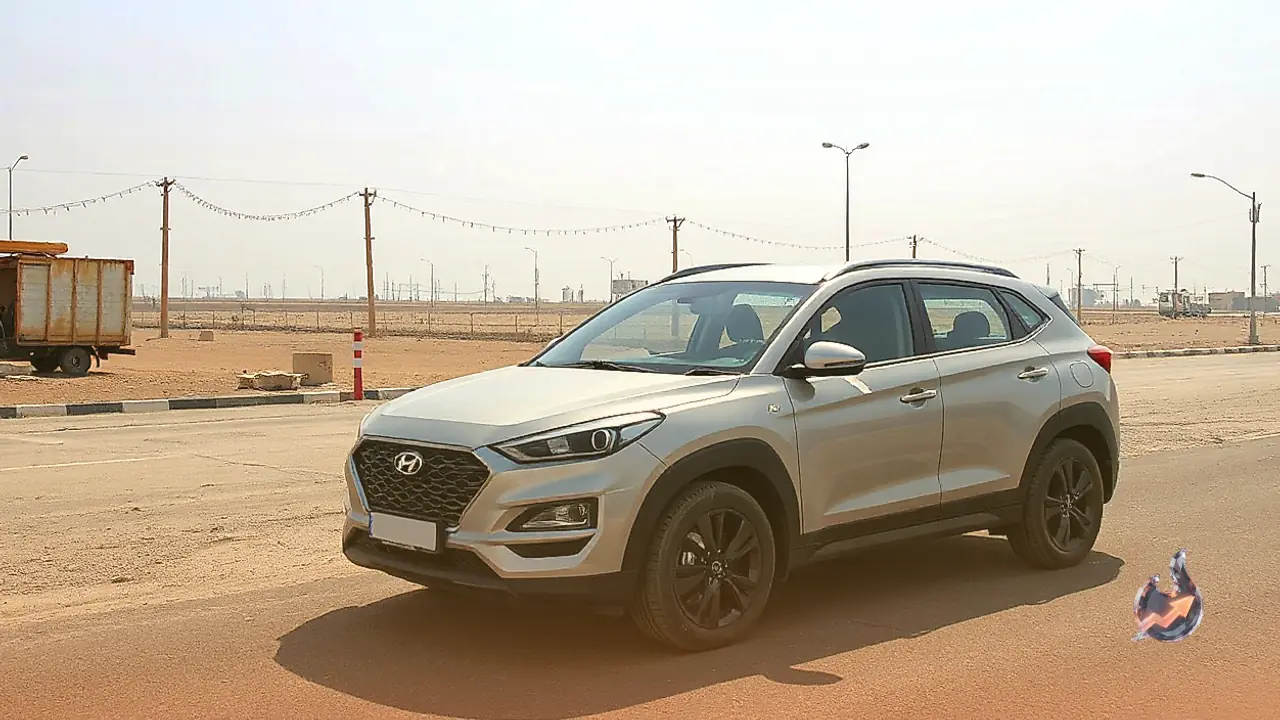
Visually, the vehicle exhibits a confident road stance highlighted by a prominent parametric black-chrome front grille. Positioned directly above the grille is an uninterrupted horizon-style connected LED daytime running light bar, flanked by newly styled quad-LED headlamp units. Along the sides, the SUV sports 17-inch or 18-inch diamond-cut alloy wheels depending on the variant, accompanied by integrated roof rails and sharp body creases. The rear styling mirrors the front with a full-width connected LED taillight assembly across the tailgate and a refreshed bumper profile.
Interior Layout, Seating, and Cabin Comfort
Inside, the five-seater passenger cabin features a dual-tone dashboard trimmed in soft-touch surfaces with integrated horizontal climate vents. Occupants receive leatherette upholstery with balanced legroom and head protection, supported by 433 litres of dedicated luggage capacity in the trunk. Nighttime driving is complemented by customizable interior ambient lighting. Additional cabin comforts include a dual-pane panoramic sunroof, front ventilated seats, an eight-way electrically adjustable driver's seat, and an induction wireless smartphone charging pad.
In-Cabin Tech and Entertainment
Front passengers face a twin integrated 10.25-inch dual-screen setup where one display operates the infotainment controls and the other functions as a fully digital driver cluster. Acoustic duties are handled by an eight-speaker premium sound system sourced from Bose. Cabin temperature regulation is managed through a dual-zone automatic climate control unit allowing independent adjustments for both front occupants.
Comprehensive Safety Gear and ADAS Level-2
Active and passive safety standards across the model line include six airbags, anti-lock brakes with electronic brakeforce distribution (ABS with EBD), electronic stability control (ESC), hill-start assist control, and disc brakes fitted on all four wheels as standard equipment. Advanced protection arrives via Level-2 ADAS suite incorporating roughly 19 individual active driver aids, such as automatic emergency braking, lane keep assist, adaptive cruise control, and blind-spot monitoring. Navigating tight streets or parking bays is facilitated by a 360-degree surround-view camera coupled with blind-view monitor displays.
Engine Lineup, Gearbox Choices, and Fuel Economy
The SUV provides three powertrain selections tailored to distinct driving requirements. The 1.5-litre naturally aspirated petrol unit produces 115 PS and 144 Nm of torque, linked to either a six-speed manual or an IVT automatic, achieving fuel efficiency figures between 17.4 and 17.7 km per litre. For heightened performance, a 1.5-litre turbocharged GDi petrol mill yields 160 PS and 253 Nm of torque solely with a seven-speed dual-clutch transmission (DCT), returning around 18.4 km per litre. Long-distance cruisers can pick the 1.5-litre CRDi diesel motor generating 116 PS and 250 Nm, coupled to a six-speed manual or a six-speed torque-converter automatic, with certified mileage ranging from 19.1 to 21.8 km per litre.