


















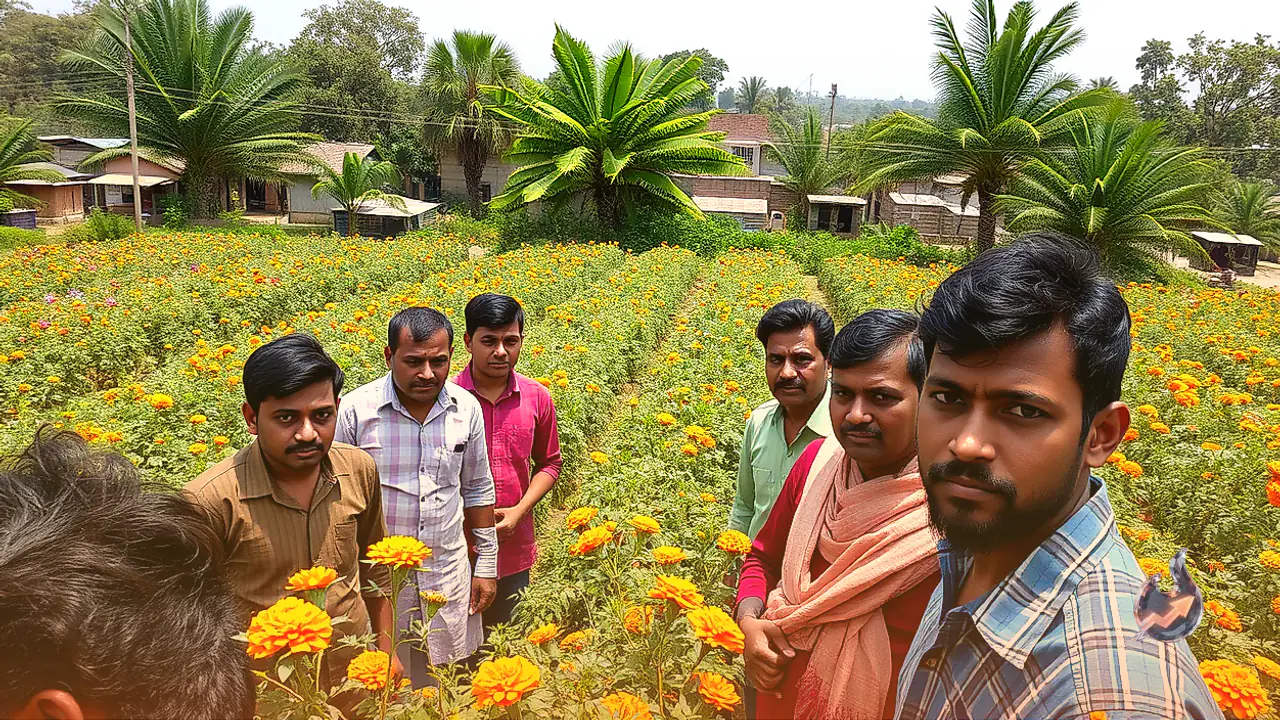

Lakhisarai district in Bihar is expanding its agricultural identity beyond conventional cereal crops by venturing directly into organized floriculture. Under a dedicated initiative spearheaded by the Directorate of Horticulture, the district has been brought under the official marigold cultivation scheme. The central objective behind this strategic agricultural intervention is to systematically encourage flower production in rural areas while creating dependable alternative revenue streams for local cultivators. Lakhisarai, which also serves as the home district of Bihar government minister Vijay Kumar Sinha, has been specifically prioritized to receive this structured state assistance.
Cost Norms and Direct Financial Assistance for Marigold Growers
To reduce initial capital expenditure and encourage farmers to adopt commercial floriculture, authorities have defined clear financial parameters. District Horticulture Officer Rajiv Ranjan stated that the Bihar government has officially established an expenditure baseline of Rs 80,000 per hectare for cultivating marigolds. Against this fixed ceiling, eligible farmers can receive a direct government subsidy of up to 50 percent, translating to maximum financial support of Rs 40,000 per hectare.
The scheme has been tailored to accommodate producers operating across different operational scales. Individual farmers are permitted to apply for benefits starting from a minimum threshold of 0.1 hectare up to an upper limit of 2 hectares. This flexible landholding window ensures that smallholders seeking diversification as well as growers pursuing commercial scale can access financial relief without prohibitive entry barriers.
Inclusion of Non-Raityat and Landless Cultivators
A notable feature of this floriculture program is that land ownership is not an absolute prerequisite for participation. Cultivators who do not hold personal agricultural plots are fully permitted to participate by leasing suitable arable land from existing property owners. In such instances, the applicant is required to formally furnish a valid lease agreement to demonstrate tenancy rights.
Similarly, in situations where an applicant's name is not explicitly recorded within the official land revenue papers, the farmer must furnish a verified genealogy document. Once these eligibility credentials and tenancy agreements are thoroughly authenticated by departmental officials, the subsidy can be sanctioned in accordance with regulatory norms.
Building 25-Hectare Commercial Clusters in Ramgarh and Chanan
To prevent fragmented output and create commercial viability, the district administration is adopting a concentrated cluster framework. According to District Horticulture Officer Rajiv Ranjan, ground implementation is scheduled across a consolidated 25-hectare cluster. The operational blueprint designates two specific administrative blocks, Ramgarh and Chanan, for development into dedicated flower villages.
By concentrating cultivation across Ramgarh and Chanan, the program aims to systematically expand acreage under marigold farming while strengthening growers' economic resilience. If implemented effectively, these cluster settlements could position Lakhisarai as an emerging commercial hub for fresh floral supplies across regional markets.
Application Procedure and Documentation Formalities
Farmers interested in availing of the grant can register and submit their applications through the designated web portal established by the Directorate of Horticulture. Alternatively, prospective beneficiaries may approach their local block horticulture office or the district horticulture department directly to seek procedural guidance and complete their enrollment.
Applicants must furnish standard personal credentials, active bank account details, and relevant land records. Non-raiyat participants will need to upload their written lease deeds, while applicants facing unclear revenue documentation must provide genuine genealogy certificates to ensure transparent and dispute-free administrative approvals.