























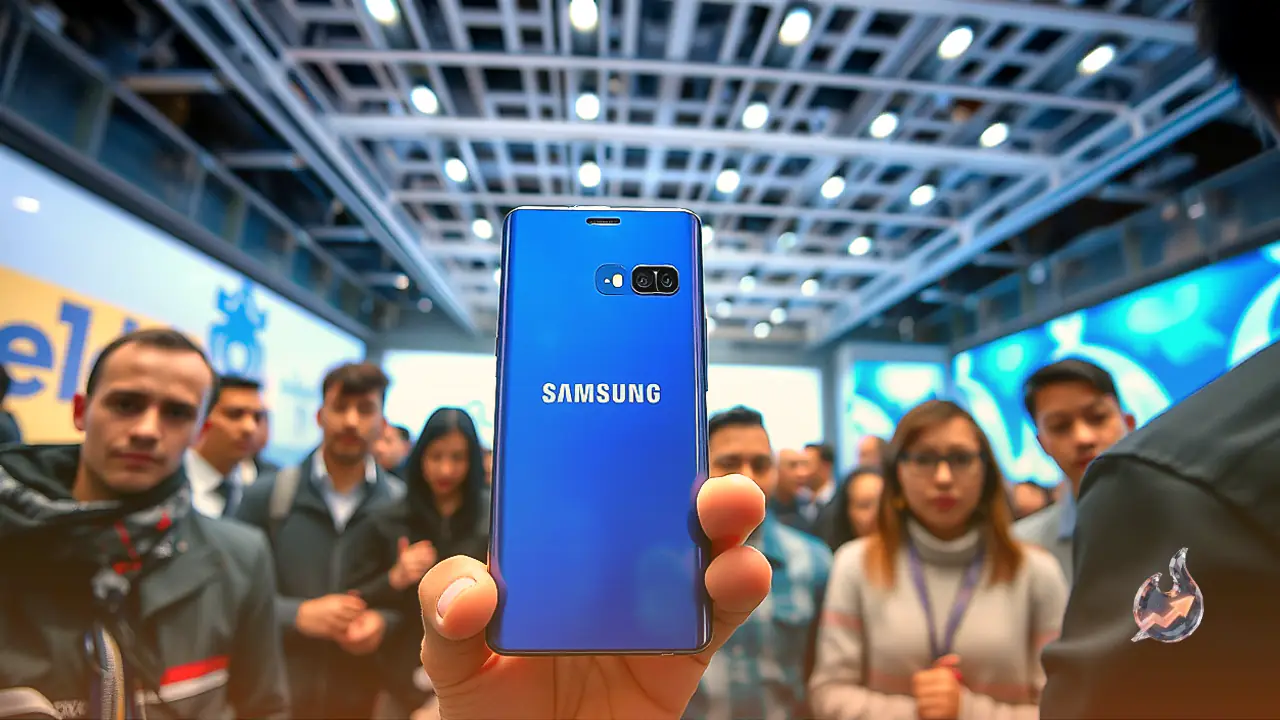

Anticipation is already building across the tech industry for Samsung's future flagship smartphone, even though its official debut is still far on the horizon. Early leaks and supply chain reports have begun circulating around the prospective Galaxy S27 Ultra, pointing toward significant hardware enhancements spanning power delivery, camera modules, charging capabilities, and core processing power. While the South Korean technology firm has not officially confirmed the existence of the device or its internal specifications, the smartphone is tipped to introduce several substantial evolutionary steps over the preceding Galaxy S26 Ultra.
According to preliminary details emerging from industry publications, the Galaxy S27 Ultra could showcase a noticeably larger battery, a redesigned 200MP primary camera sensor, and a next-generation Snapdragon platform. Additional whispers suggest faster wired charging rates, adjustments to the rear telephoto array, and material improvements across the front display. Because these specifications are surfacing years ahead of a production rollout, they should strictly be treated as early exploratory information rather than confirmed hardware choices.
Substantial Battery Expansion and Modernised Charging Speeds
One of the most consequential potential upgrades highlighted in early discussions centres on battery endurance. For multiple product cycles, recent Galaxy Ultra iterations have consistently relied on a 5,000mAh power cell. In contrast, emerging reports suggest that the Galaxy S27 Ultra might step up to a 5,700mAh battery capacity. Adding an extra 700mAh of capacity would deliver meaningful practical advantages for demanding users who depend heavily on their smartphones for high-frame-rate gaming, intensive video recording, streaming media, and prolonged productivity workflows.
Real-world longevity, however, does not depend solely on milliamp-hour numbers. It will also hinge on the thermal and electrical efficiency of the underlying application processor, display backlight draw, and internal software power management. To accommodate a higher capacity without expanding device thickness or weight drastically, leaks indicate that Samsung might evaluate silicon-carbon battery chemistry. This battery technology offers higher energy density within compact physical footprints, though the company has not verified any shift in cell chemistry.
Alongside the capacity bump, charging speeds could also receive an overdue update. The handset is tipped to support 60W wired charging, which would mark a welcome acceleration over the 45W ceiling seen on previous Ultra generations. Furthermore, the device is rumoured to integrate Qi2-style magnetic wireless charging functionality, facilitating simpler alignment and broader compatibility with magnetic charging stands and mobile accessories. Neither charging wattage nor magnetic hardware has been formally addressed by Samsung.
Next-Generation Camera Sensor and Rear Module Adjustments
Mobile photography remains a core selling proposition for the Ultra tier, and the rear camera setup is reportedly slated for notable internal revisions. Insights suggest that Samsung could deploy an updated 200MP ISOCELL HP6 primary sensor inside the Galaxy S27 Ultra. While the raw megapixel count matches recent generations, transitioning to a newer sensor generation can introduce superior light-gathering ability, refined on-sensor image processing, broader dynamic range, and improved clarity when shooting in low-light environments.
Complementing the primary shooter, the rear cluster is rumoured to retain a 50MP ultra-wide lens alongside a 50MP periscope telephoto camera capable of 5x optical magnification. Intriguingly, some reports hint that Samsung may reconsider or modify the separate 3x secondary telephoto module as engineers re-evaluate the ergonomics and layout of the rear camera island. For front-facing duties, early leaks mention a 16MP selfie sensor equipped with optical image stabilisation. Nevertheless, the final camera configuration, sensor dimensions, lens aperture values, and mechanical stabilisation systems remain completely unconfirmed.
Advanced 2nm Processing Architecture and Upgraded Memory
Performance expectations are equally high, with reports indicating that the Galaxy S27 Ultra will run on Qualcomm's upcoming flagship mobile silicon. Specifically, leaks mention the possibility of a Snapdragon 8 Elite Gen 6 Pro for Galaxy processor driving the handset. The defining technical highlight of this prospective chipset is its projected 2nm fabrication process, representing an architectural step forward from earlier manufacturing nodes.
A 2nm semiconductor design would deliver higher instruction throughput alongside improved power conservation, curbing excessive heat generation during demanding computational tasks. This level of sustained performance is increasingly vital for processing complex graphics, managing multi-window productivity, and running on-device artificial intelligence models that execute locally on the neural processing engine.
Memory configurations are also expected to see enhancements to avoid bottlenecks. The handset is tipped to arrive in 12GB and 16GB RAM configurations, paired with a minimum of 256GB of onboard storage. Furthermore, certain technical reports discuss the inclusion of cutting-edge LPDDR6 memory alongside UFS 5.0 flash storage standards. If implemented, these memory specifications would drastically boost read and write speeds, accelerating app launch responsiveness and heavy file transfers. Samsung has yet to announce any final partnerships, RAM capacities, or storage standards for the unit.
Display Panel Enhancements, Physical Form and Expected Schedule
Visual output will likely be anchored by a sprawling premium screen, with rumours pointing toward a 6.9-inch QHD+ LTPO OLED display. LTPO panel technology dynamically throttles the refresh rate based on real-time screen activity, conserving energy during static viewing while enabling fluid frame rates during scrolling and fast-paced gaming. Advances in panel substrates and emitter efficiency could also decrease overall power draw while maintaining sharp pixel clarity and peak outdoor visibility.
Beyond the display glass, speculative diagrams suggest potential revisions to the rear camera housing and industrial styling. However, precise physical measurements, chassis materials, glass durability standards, and final color finishes remain firmly under wraps. In terms of market availability, Samsung has not set an official release date or pricing tier. Following the brand's established winter flagship unveiling tradition, the device could realistically surface in early 2027, but that timeframe remains an informed projection rather than an established calendar commitment.