






















Public grievance resolution across government departments in India has undergone a structural transformation over recent years through the Centralized Public Grievance Redress and Monitoring System (CPGRAMS). Citizens seeking remedies for administrative delays, procedural bottlenecks, or service deficiencies are finding that turnaround times have dropped sharply compared to previous years. The portal now routinely processes millions of applications annually while steadily reducing the backlog across central ministries and regional departments.
Halving the Resolution Timeline at the Central Level
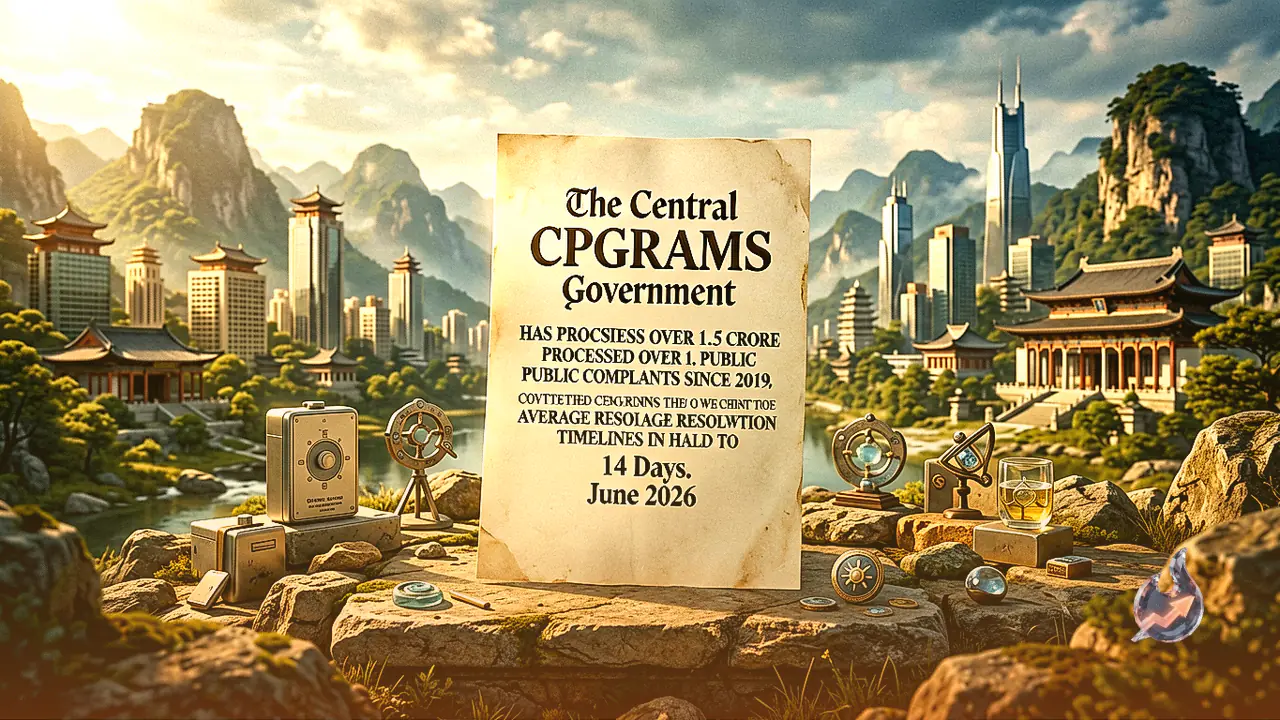
One of the most clear performance indicators of the CPGRAMS mechanism is the drastic drop in the average time required to resolve a citizen complaint. Back in 2019, an average central government grievance took approximately 28 days to be processed and officially closed. By 2025, that timeframe was trimmed down to 15 days. Fresh data from June 2026 shows that the turnaround time has further reduced to just 14 days, effectively halving the waiting period for citizens relative to six years ago.
This operational efficiency is supported by consistent monthly output figures across central ministries and departments. During June 2026, the Central Secretariat alone processed and disposed of nearly two lakh complaints. This achievement marked the 48th consecutive month where monthly disposals remained consistently above the one lakh mark, demonstrating sustained administrative throughput despite an increasing volume of submissions.
Managing Over 1.5 Crore Grievances Across India
The speed of disposal becomes even more significant when evaluated against the rapidly rising influx of incoming grievances. Since 2019, central ministries and departments have received over one crore complaints directly through the CPGRAMS platform. As of the end of June 2026, the total pending grievances at the central level stood at 78,793 cases.
The system has also expanded deeply across various state governments and Union Territory administrations. State-level authorities have received more than 50 lakh complaints via the portal since 2019, with approximately two lakh cases remaining pending at the end of the recent reporting period. When combining central, state, and Union Territory figures, CPGRAMS has handled a total of over 1.5 crore grievances since 2019.
Understanding the Age Profile of Pending Cases
Beyond tracking total pendency numbers, public grievance administrators place heavy emphasis on evaluating how long pending matters remain unresolved in the system. The age analysis of pending grievances reveals that long-standing backlog is being systematically cleared.
In June 2026, out of all grievances awaiting resolution in the Central Secretariat, 68 percent were less than 21 days old. This distribution demonstrates that the overwhelming majority of pending matters are fresh complaints that recently entered the portal, rather than old, unresolved issues lingering for extended periods. Time-bound closure has become a core parameter in evaluating administrative performance.
Surge in Direct User Registration and CSC Network Outreach
Public participation on the portal has seen continuous growth as awareness of the digital platform spreads. During the year 2025, a total of 7,43,533 new users created accounts on CPGRAMS, with June alone accounting for 83,544 new registrations. The trend of user onboarding has remained robust in 2026, with over two lakh new citizens registering on the platform during the current year.
To ensure that digital grievance redressal remains accessible beyond tech-savvy populations, the government leverages the Common Service Center (CSC) infrastructure. In June 2026 alone, citizens lodged 6,262 complaints through CSC locations. This physical network provides a vital bridge for rural residents and individuals with limited digital access or connectivity, ensuring that grievance redressal is not confined to urban or online users.
Focusing on Quality Solutions Through Citizen Feedback
A critical focus area in the evolution of CPGRAMS is verifying that complaints are meaningfully resolved rather than simply closed on paper. Administrative closure without addressing the core problem can distort performance metrics, which is why systematic citizen feedback collection has been integrated into the workflow.
In 2025, the portal logged more than 10.7 lakh feedback responses from citizens following the closure of their complaints. A specialized Feedback Call Center generated approximately two-thirds of these feedback entries. This mechanism allows the government to evaluate whether department replies met citizen expectations and ensured real relief, offering an essential benchmark for service delivery quality.