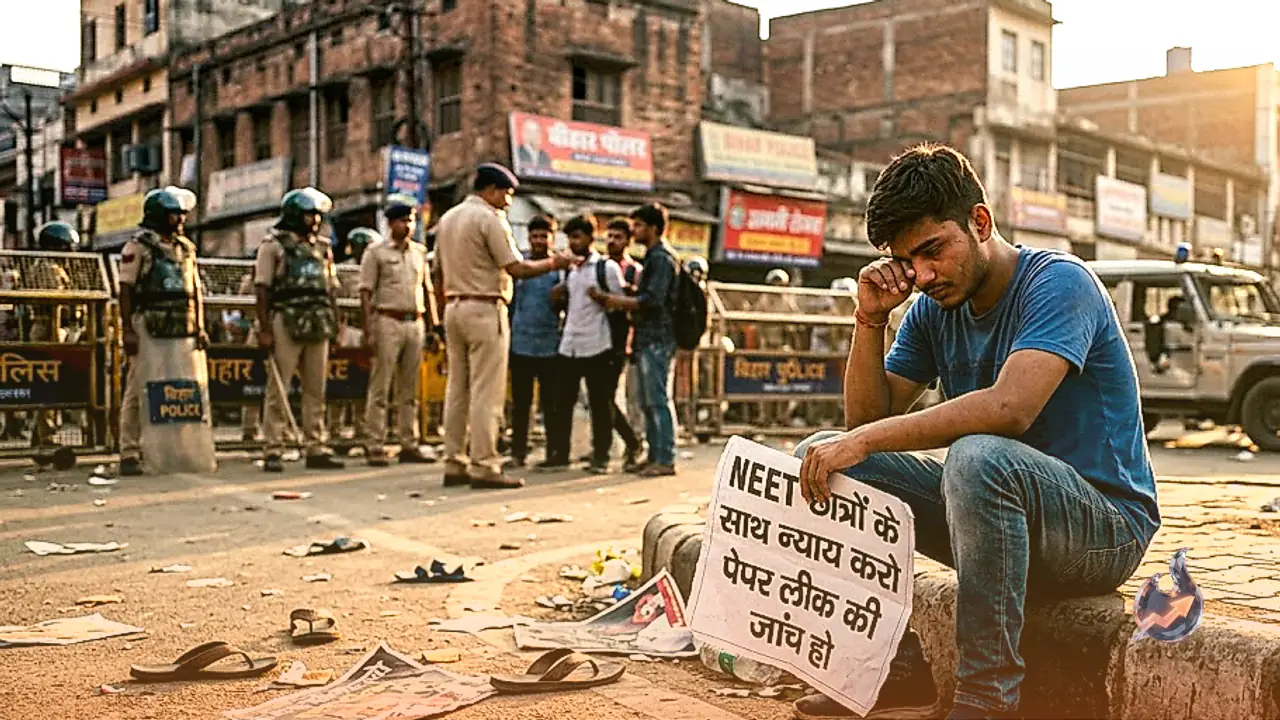























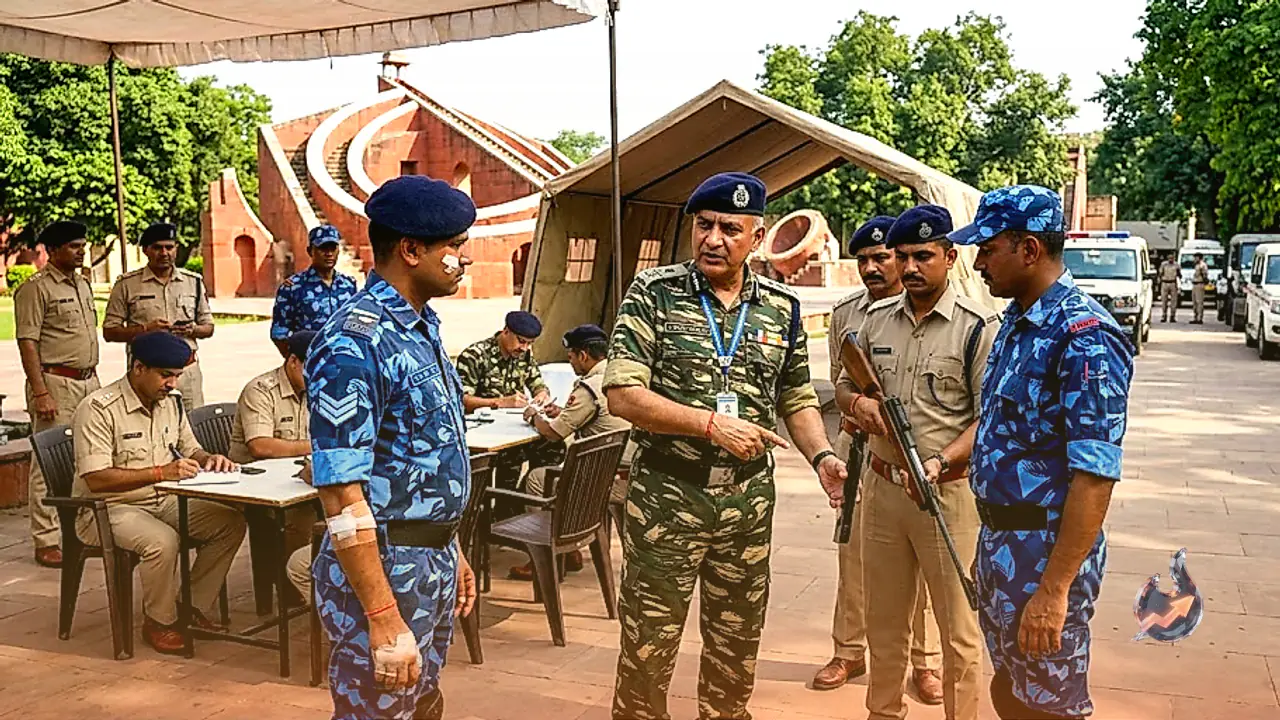

An internal review conducted by the Central Reserve Police Force has validated the action taken by its riot control unit during the demonstration at Jantar Mantar on July 20. The evaluation concluded that the deployment of force, including the firing of pellet guns against demonstrators protesting the NEET paper leak, strictly adhered to established standard operating procedures and anti-riot drills. The findings counter allegations of excessive force, confirming that all steps were executed following formal authorization and structured crowd control protocols.
Graduated Escalation and Adherence to Riot Control SOPs
The assessment focused on the sequence of operational tactics employed by the Rapid Action Force, a specialized wing of the CRPF. According to the internal findings, security personnel did not resort to aggressive measures immediately. Instead, the force initiated crowd dispersal by issuing formal warnings over loudspeakers, urging protesters to vacate the premises voluntarily. When the verbal announcements failed to clear the venue, security personnel deployed tear gas shells to push back the gathering. As the crowd continued to resist dispersal, a lathicharge was executed. Only after these initial measures proved insufficient to control the escalating situation did the unit seek and obtain official permission to use pellet guns to restore order.
Clash Details, Officer Casualties, and Violence by Demonstrators
The confrontation at Jantar Mantar resulted in casualties on both sides. Between 3 and 5 protesters sustained injuries due to pellet impacts during the security action. Concurrently, security personnel faced severe physical resistance from elements within the crowd. Reports from the evaluation highlight that certain individuals among the demonstrators actively targeted law enforcement officers using stones and metal railings torn from barricades. This violence led to injuries among 47 personnel belonging to the Rapid Action Force, with 6 officers suffering head injuries from thrown projectiles and heavy objects.
Legal Framework and Mandate for Written Authorization
The authorization for using force during the July 20 demonstration was granted by Delhi Police in full accordance with statutory provisions. Under the Bharatiya Nagarik Suraksha Sanhita, an Executive Magistrate is empowered to order the use of force to disperse an unlawful assembly after assessing ground conditions. In the National Capital Territory of Delhi, this legal authority rests with the Police Commissioner and can be delegated down to officers holding the rank of Assistant Commissioner of Police. Internal protocols require that the Rapid Action Force deploy riot control equipment only after receiving explicit written authorization from an on-site Deputy Commissioner of Police or Assistant Commissioner of Police, strictly prohibiting reliance on oral instructions.
Sub-Judice Status and Representation Before Supreme Court
Addressing queries regarding the internal review and operational conduct of security forces at the protest site, CRPF Director General GP Singh noted that the matter remains sub-judice before the Supreme Court. The top officer affirmed that all factual documentation, evidence regarding the circumstances on July 20, and the official stance of the CRPF concerning the RAF deployment will be formally submitted before the apex court during the ongoing judicial proceedings.