






















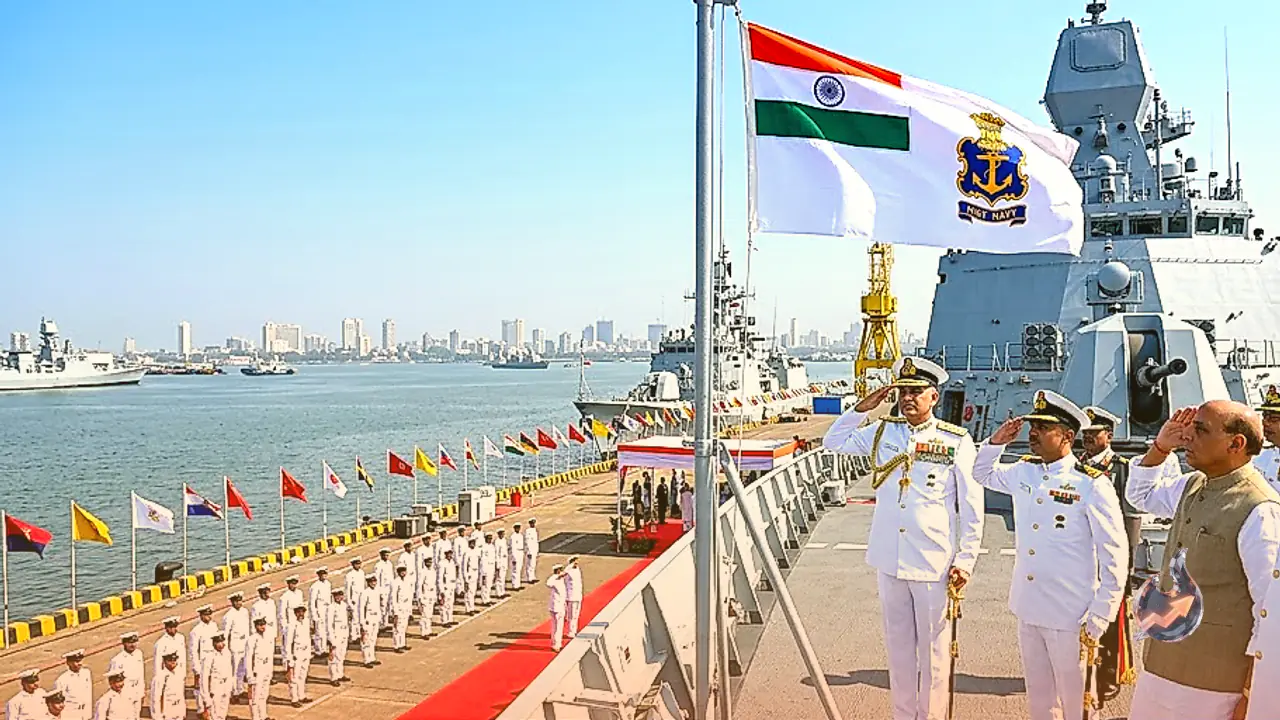

The Indian Navy has reached a significant milestone in expanding its maritime reach and strategic superiority. On July 11, 2026, the indigenous stealth frigate Mahendragiri (F38) was formally commissioned into the Indian Navy during a ceremony in Visakhapatnam. The vessel was dedicated to the nation by Defence Minister Rajnath Singh, with the Chief of the Naval Staff, Admiral Krishna Swaminathan, in attendance. The addition of Mahendragiri significantly enhances India's maritime security posture and combat readiness within the Indian Ocean Region.
Project 17A: Setting New Technical Benchmarks
Mahendragiri serves as an advanced evolution of the previous Project 17 class, known as the Shivalik series. These frigates represent a leap forward in stealth technology, featuring state-of-the-art weaponry, cutting-edge sensors, and sophisticated platform management systems. Under this project, a total of seven stealth frigates are currently under construction. The manufacturing process is being executed in stages by Mazagon Dock Shipbuilders Limited (MDL) and Garden Reach Shipbuilders and Engineers (GRSE). These vessels are engineered to operate with high stealth efficiency, minimizing their radar signature while maintaining superior offensive capabilities.
Symbolism of Strength and Resilience
The warship is named after the renowned Mahendragiri mountain range located in the Eastern Ghats, a landmark that symbolizes power, endurance, and unwavering resolve. This marks the first occasion in the annals of the Indian Navy that a warship has been bestowed with the name Mahendragiri. The design was conceptualized by the Indian Navy's Warship Design Bureau, while the actual construction was performed at the Mazagon Dock Shipbuilders Limited (MDL) facility in Mumbai, serving as a testament to India's domestic shipbuilding prowess.
A Monument to Self-Reliance
One of the most impressive aspects of Mahendragiri is its reliance on domestic technology, with over 75 percent of its components being indigenously manufactured. The construction process integrated contributions from several major industrial firms as well as a vast network of MSMEs. This collaboration has fostered job creation and provided a substantial boost to India’s defense industrial base. The integration of advanced automation and specialized stealth features ensures the ship remains difficult to detect, allowing for high-level operations even in hostile environments.
Technical Prowess and Versatility
Equipped with a Combined Diesel or Gas (CODOG) propulsion system, the frigate is capable of sustaining high speeds over long distances during maritime deployments. Its offensive suite is formidable, comprising surface-to-surface and surface-to-air missile systems, modern electronic warfare suites, anti-submarine weapons, and an Integrated Combat Management System. Beyond its role in combat, Mahendragiri is designed for multi-mission versatility. It is fully capable of conducting search and rescue missions, providing humanitarian assistance and disaster relief (HADR), and performing continuous maritime surveillance to safeguard India's strategic interests in the Indo-Pacific region.