




















The golden era of Hindi cinema witnessed numerous illustrious musical collaborations, yet the duo of Shankar-Jaikishan holds an unmatched position of respect. Their creative synergy provided the musical soul to seminal cinematic works including Awara, Shree 420, Sangam, and Mera Naam Joker. The inception of this renowned partnership was not an orchestrated event, but a serendipitous encounter born out of personal struggle in Mumbai. When Shankar Singh Raghuvanshi noticed Jaikishan Panchal looking for work, an impromptu conversation began that would ultimately reshape the soundscape of Indian film music.
An Unplanned Encounter Outside a Filmmaker's Door
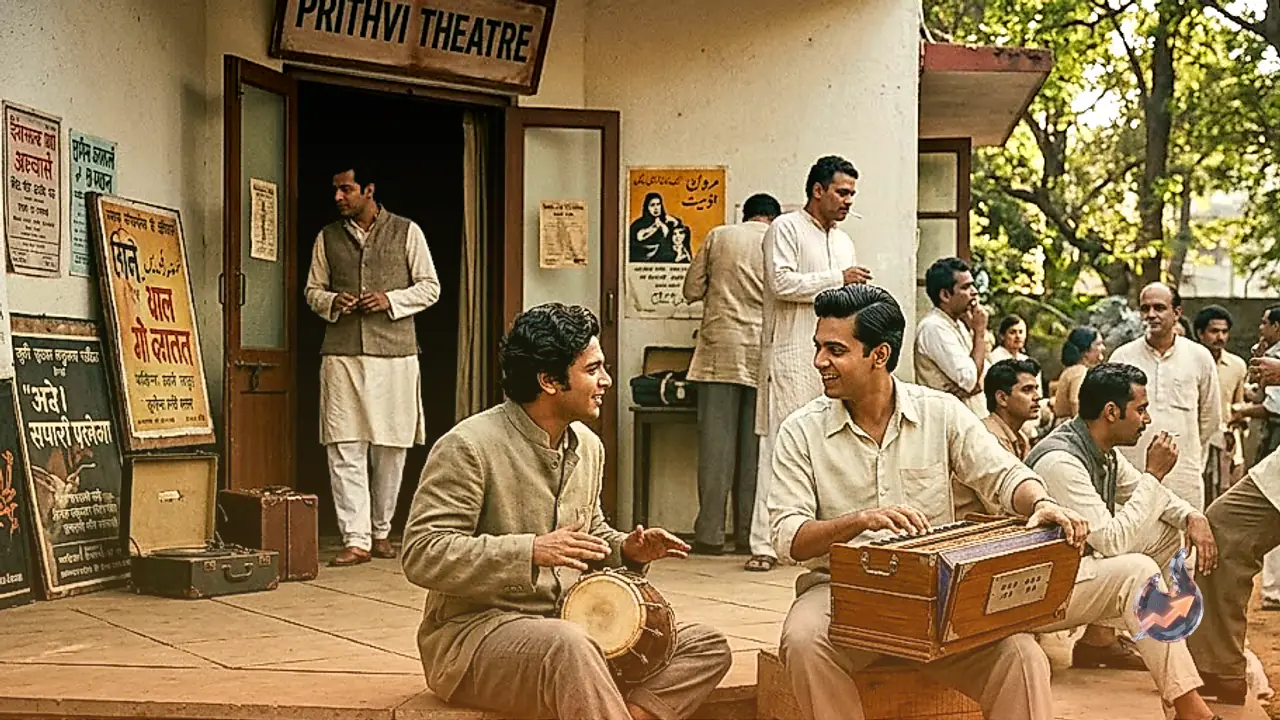
Shankar Singh Raghuvanshi was a frequent visitor to the workplace of Gujarati filmmaker Chandravadan Bhatt. Shankar nurtured the ambition that Chandravadan Bhatt would provide him an opportunity to compose music independently. Around the corridors of that same office, Shankar spotted Jaikishan Panchal, who was also navigating the city in search of musical employment. Jaikishan was an adept harmonium player trying to establish a foothold in the entertainment industry. For some time, both musicians observed each other in passing without exchanging a single word.
Eventually, Shankar took the initiative to approach Jaikishan and start a discussion. Through this dialogue, Shankar learned that Jaikishan was actively searching for work connected to music. As they talked, they realized that their creative inclinations, philosophy, and musical passion aligned seamlessly. Impressed by Jaikishan's evident skill and disposition, Shankar decided to extend a helping hand.
Employment at Prithvi Theatre Without Prior Approval
Born on October 15, 1922, Shankar Singh Raghuvanshi possessed an innate passion for rhythm and melody from his early childhood. Having mastered the tabla, he expanded his proficiency across various other musical instruments over the years. Upon moving to Mumbai, Shankar associated himself with Prithvi Theatre, an institution founded by Prithviraj Kapoor. Working within that vibrant performing arts environment allowed Shankar to deeply observe and understand the intricacies of theatrical performance and stage music.
Convinced of Jaikishan's artistic value, Shankar assured him a position as a harmonium player at Prithvi Theatre. What made this gesture remarkable was that Shankar extended this employment commitment without consulting Prithviraj Kapoor beforehand. Fortunately, when informed of the arrangement, Prithviraj Kapoor respected Shankar's judgment and endorsed the decision, formally onboarding Jaikishan into the theatre company.
From Theatrical Stages to Raj Kapoor's Masterpieces
While working together inside Prithvi Theatre, the camaraderie between Shankar and Jaikishan flourished into a deep creative bond. Their collective musical sensibilities and sharp mutual understanding inspired them to compose together as a unified team. Around this period, they interacted closely with Raj Kapoor, who was active within the creative surroundings of his father's theatrical enterprise.
Raj Kapoor recognized the dynamic spark between the two musicians. The release of Raj Kapoor's Barsaat in 1949 provided Shankar-Jaikishan their breakthrough platform as a composing duo. Subsequent soundtracks for films like Awara, Shree 420, and Jis Desh Men Ganga Behti Hai elevated their fame to extraordinary heights. Their compositions were characterized by a unique blend of romance, pathos, vivacity, and expansive orchestral arrangements. Melodies such as Awara Hoon, Mera Joota Hai Japani, and Pyar Hua Iqrar Hua endure as defining milestones of retro Hindi film music.
Accolades, Loss, and an Enduring Heritage
Spanning multiple decades, Shankar-Jaikishan crafted scores for Hindi cinema that earned widespread critical acclaim and popular adulation. The partnership collected numerous prestigious accolades throughout their tenure, including multiple Filmfare Awards for Best Music Director.
The successful alliance suffered a major blow when Jaikishan passed away in 1971. Despite the loss of his close collaborator, Shankar chose to continue working in the film music industry, composing songs independently under the established moniker. Shankar later passed away on April 26, 1987. Although both maestros are no longer present, the rich catalog of melodies they co-created remains permanently etched in the cultural fabric of cinema.