


















When Begum Akhtar sang at musical gatherings, the audience did not merely listen; they absorbed and lived every nuance of emotion behind each poetic verse. Her celebrated ghazal 'Ae Mohabbat Tere Anjaam Pe Rona Aaya' continues to hold a revered place in the hearts of music connoisseurs across generations. Remarkably, this iconic composition was not birthed inside a polished recording studio. Instead, its melody was conceived aboard a moving railway carriage after a poet handed her a handwritten verse during her travels.
The Journey From Faizabad To Ghazal Royalty
Begum Akhtar was born on October 7, 1914, in Faizabad. Long before the world came to revere her under her iconic title, she was known by her original name, Akhtari Bai Faizabadi. Her affinity for classical melody manifested at an exceptionally young age. She began receiving rigorous vocal training in early childhood, quickly catching the attention of seasoned musicians. By the age of 14, she had already made her formal public performance debut, instantly establishing her identity in the music circle. Over time, that very voice grew into the definitive standard for genres like thumri, dadra, and ghazal singing across India.
Personal Turbulence And A Return To Musical Grace
What set Begum Akhtar apart was not merely her vocal range, but her profound connection with poetry. She would deeply absorb the emotional weight of a poem before setting it to tune. Her selection of verses was remarkably deliberate, anchored in her belief that unless a composition stirred the singer's own heart, it could never truly move the listener. Her personal life, however, was filled with trials that affected her deeply. In 1945, she married barrister Ishtiaq Ahmed Abbasi. Later, the devastating grief of her mother's passing pushed her into profound trauma, prompting her to step away from singing entirely. It was only after her husband urged her to return that she resumed her musical path. When she returned, her singing carried an even more poignant and soulful resonance.
A Rail Journey And A Melody Composed Near Bhopal
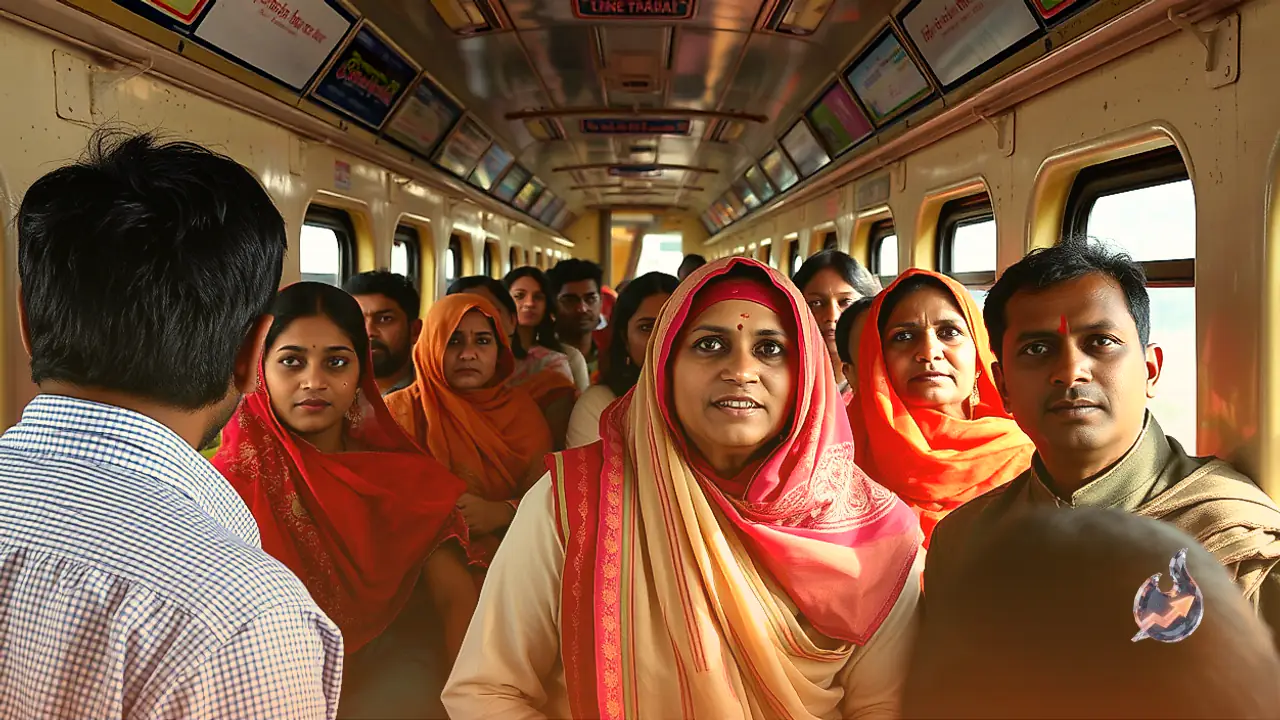
The story behind 'Ae Mohabbat Tere Anjaam Pe Rona Aaya' remains one of the most compelling chapters of her artistic legacy. While traveling back from Mumbai to Lucknow, a poet approached her en route. He presented a written verse on a slip of paper, requesting that she lend her voice to his work. Begum Akhtar accepted the slip and kept it safely inside her purse. As the journey progressed and the train approached the vicinity of Bhopal, the verse came back to her mind. She brought out her harmonium and began exploring musical scales to fit the rhythm of the words. Gradually, the notes aligned, giving rise to an evergreen ghazal that evokes profound emotion to this day.
The Words Of Shakeel Badayuni And Nana Patekar's Recollection
Towards the conclusion of the ghazal, the poetic pen name 'Shakeel' appears, belonging to the illustrious poet Shakeel Badayuni. Begum Akhtar breathed unforgettable life into his poetic lines through her distinct rendition. Film star Nana Patekar once recalled a telling episode from her career. At one performance, when Begum Akhtar concluded her recital, the hall did not break into applause. While her performances were usually greeted with thundering clapping, complete silence gripped the gathering on that particular day. When someone inquired about the reaction, she smiled and remarked that it is precisely for this silence that an artist lives, since the listener had been moved so profoundly that they forgot to applaud. Begum Akhtar passed away on October 30, 1974, yet her rich artistic legacy endures, bridging generations of listeners through her haunting voice.