





















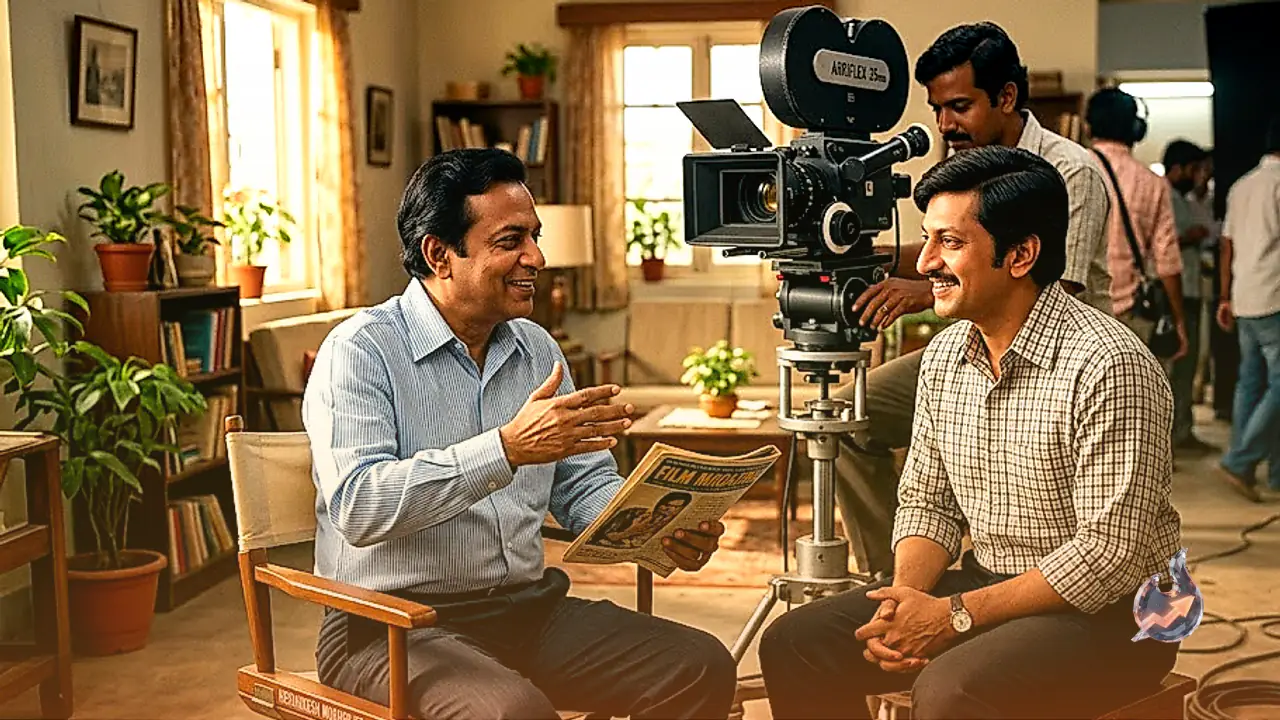

In the history of Indian Hindi cinema, filmmaker Hrishikesh Mukherjee stands out as a director who brought the everyday lives of ordinary people to the big screen with profound warmth and authenticity. The defining characteristic of his movies was that audiences never felt as though they were watching a fictional tale in a theater; instead, they felt as if a story from their own households or neighborhoods was unfolding before them. Steering clear of grand production sets, heavy budgets, flashy glamour, and high-octane action sequences, he focused his artistic vision on the subtle emotions and realities of simple living.
Portraying Middle-Class Reality and Emotional Nuances
The core theme of Hrishikesh Mukherjee's directorial work revolved around middle-class families, personal relationships, friendship, love, hope, and the natural ups and downs of life. His narratives highlighted the routine struggles and challenges faced by common people while simultaneously offering reasons to smile and find joy amid those difficulties. Because of this approach, the characters he created felt remarkably relatable and down-to-earth. Through his cinema, he demonstrated that a film does not require artificial spectacle to leave a lasting impact; rather, the delicate truth of relationships and genuine human emotions are what truly touch viewers' hearts. His direction also played a significant role in shaping the early careers and honing the acting talents of stars such as Rajesh Khanna and Jaya Bachchan.
From Teaching to Editing and Debut to Breakthrough
Born on 30 September 1922 in Kolkata, Hrishikesh Mukherjee completed his higher education at Calcutta University, earning a degree in Chemistry. After finishing his studies, he initially worked as a teacher for a brief period. However, he felt a strong pull toward the world of cinema. Driven by this interest, he entered the film industry and began his career as a film editor. After gaining valuable editing experience at New Theatres, he received the opportunity to work alongside renowned filmmaker Bimal Roy, an experience that helped shape his directorial vision.
In 1957, Hrishikesh Mukherjee made his directorial debut with the film Musafir. However, his first directorial effort failed to create a mark at the box office and turned out to be a commercial flop. Undeterred by this initial setback, he continued his pursuit. Two years later, in 1959, he released Anari, which brought him widespread critical and commercial recognition. Following the success of Anari, he never looked back and went on to establish new benchmarks in filmmaking.
Masterpieces, National Honors, and Cinematic Legacy
Across his long and distinguished career, Hrishikesh Mukherjee delivered numerous memorable classics to Hindi cinema. His impressive filmography includes celebrated titles such as Bawarchi, Guddi, Abhiman, Chupke Chupke, and Gol Maal, which remain widely popular among audiences today. While the comedy of his 1979 release Gol Maal continues to entertain viewers, his work in Abhiman beautifully captured the delicate friction and emotional depth within personal relationships. Similarly, in Anand, he explored the profound themes of life and death with such sensitivity that audiences were moved to tears.
In recognition of his extraordinary and unforgettable contributions to cinema, he was conferred with top national honors. Hrishikesh Mukherjee was awarded the Dadasaheb Phalke Award, the highest honor in Indian cinema, along with the prestigious Padma Vibhushan.
A Four-Decade Career and Unfading Impact
Spanning over four decades, Hrishikesh Mukherjee's career saw him direct a total of 42 feature films. Whether handling the emotional intensity of Anand, the witty humor of Gol Maal, the lighthearted fun of Chupke Chupke, or the poignant relationship dynamics in Abhiman, he brought a distinctive touch to every narrative. On 27 August 2006, Hrishikesh Mukherjee breathed his last, but his cinematic legacy remains vibrant. Years after his passing, his films continue to be watched, cherished, and deeply felt by new generations of moviegoers.