






















A localized ceasefire has taken effect in the Russian-held Ukrainian town of Oleshky in the Kherson region, bringing a fragile pause in fighting for thousands of civilians who have endured severe shortages of food, clean water, and electricity. Both Ukrainian officials and the Russian defence ministry have confirmed that the limited truce is being honoured on the ground. The arrangement, which the White House credited to the diplomatic involvement of US First Lady Melania Trump, is specifically designed to facilitate emergency relief deliveries and enable a civilian evacuation scheduled for Friday.
Extreme Deprivation Along the Front Line
Oleshky sits in an exceptionally perilous position directly on the war's active front. It is hemmed in on one side by the Dnipro River, which separates the Russian-occupied town from Ukrainian military positions on the opposite bank, and bordered on the other side by Russian forces. This geographic trap has left the local population cut off from regular humanitarian pipelines.
Deprivation has reached such severe levels that numerous trapped residents have been forced to boil and eat wild garden weeds simply to stay alive. Those inside describe living through extreme hunger and desperation, with their primary wish being a safe way out of the encircled town. However, the atmosphere remains saturated with skepticism. One local resident openly voiced doubt regarding the longevity of the pause, remarking, "I don't believe in Russia's humanity."
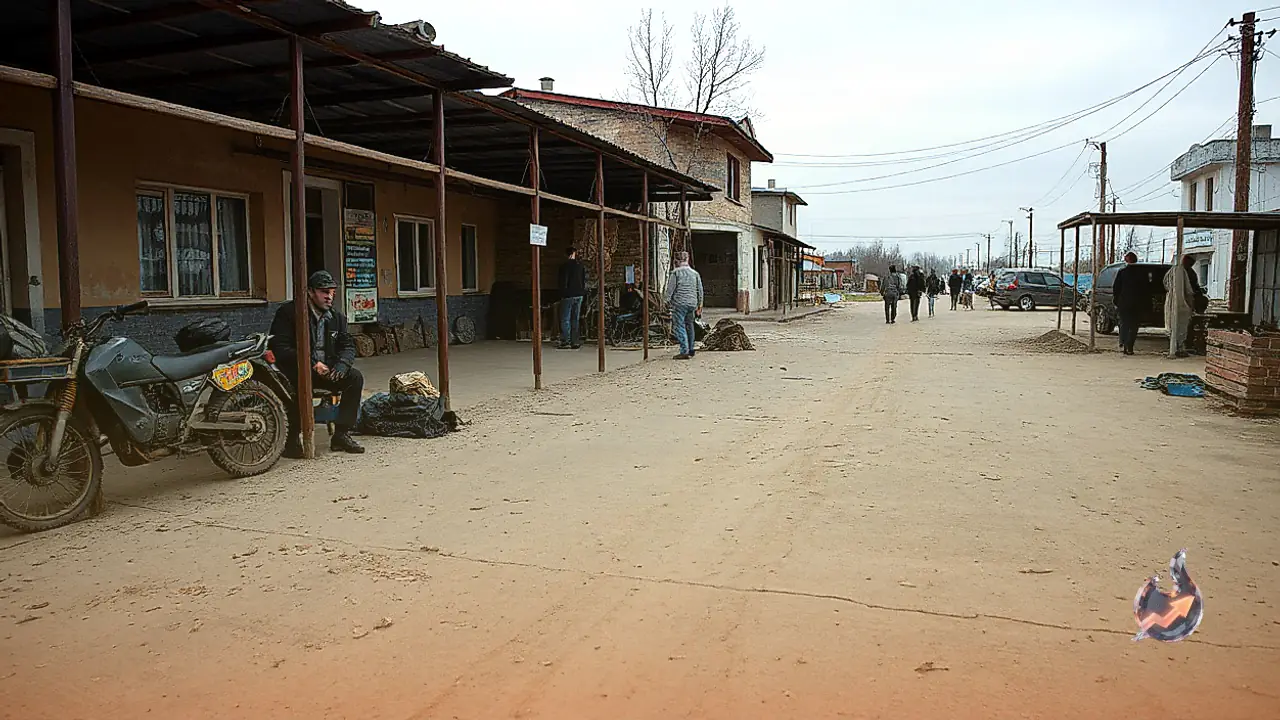
The physical living conditions have deteriorated comprehensively over years of hostilities. All retail shops and commercial outlets have shut down, and the town has been entirely without electricity, piped gas, or running water for three full years. For the civilians who stayed behind, surviving has meant relying on dwindling personal reserves and ad-hoc foraging.
Plummeting Population and the Lethal Barrier of Landmines
Prior to the outbreak of full-scale warfare, Oleshky had an established population of around 24,000 residents. That changed rapidly when Russian forces seized control of the settlement during the initial days of the full-scale invasion launched in February 2022. According to assessments from Kyiv, no more than 6,000 people, including roughly 200 children, now remain across Oleshky and its surrounding rural communities, with only 1,700 civilians still living inside the town limits itself.
Getting essential supplies into the enclave has become virtually impossible, while trying to flee without an organized agreement carries catastrophic risks. Outbound transit corridors have been heavily seeded with landmines and remain under constant surveillance and strike threat from overhead combat drones. The reality of these dangers was underscored by a local woman who stepped on a landmine and is currently hospitalized after undergoing two separate surgeries. Expressing fear that her injuries might prevent her from joining the planned convoy, she stated, "I don't know how long I will have to spend there."
Medical Infrastructure on the Brink of Collapse
The town's healthcare system has been hollowed out by prolonged fighting and isolation. Only a single hospital remains partially operational, functioning merely a few days every week. Its capacity is overwhelmingly restricted to urgent, life-saving trauma procedures, primarily performing critical limb amputations on victims of blasts and shelling.
Verifying conditions on the ground remains an arduous task. Telecommunications throughout Oleshky are erratic and heavily degraded, while many locals deliberately avoid speaking over phones or messaging channels due to persistent fears of Russian military retaliation. This pervasive climate of surveillance and suspicion makes tracking the implementation of the truce unusually difficult.
Uncertain Logistics and the Perils of Screening
As the Friday target date for departures approaches, confusion surrounds the practical mechanisms of the evacuation. Prospective evacuees initially struggled to find out where and how they needed to register. Residents have also raised basic questions about whether domestic pets will be permitted to travel with them, while many are gripped by deeper anxieties over what kind of life awaits them once they abandon their ancestral homes.
Addressing the operation, Kyrylo Budanov, the head of Volodymyr Zelensky's office, stated on Tuesday, "It is critically important that this mission to rescue our people proceeds successfully and safely." On the other side, Russia's defence ministry announced that specialized units from the army's Dnepr grouping have been carrying out engineering reconnaissance along access roads leading into the settlement, sweeping and neutralizing explosive hardware and booby-trap devices to prepare passage.
Even with access roads being cleared, significant apprehension persists. Civilians worry that Russian authorities may prevent them from crossing back into Ukrainian-held territory, redirecting them deeper into Russian-controlled areas instead. There is also widespread fear surrounding rigorous checkpoint screenings, where Russian forces routinely inspect mobile phones and digital footprint data. Any uncovered evidence indicating sympathy or support for Ukraine carries the imminent threat of arbitrary detention and severe torture.
A contact communicating with relatives inside Oleshky highlighted an additional fear: that active firing could easily erupt during the evacuation process itself, followed by accusations that Ukrainian units breached the truce. Some residents had managed to escape Oleshky earlier in the spring of this year, but safe windows have since been virtually non-existent.
High-Level Appeals and Ceasefire Architecture
Mounting international attention helped drive the push for a temporary respite. Last month, the Kremlin publicly conceded that Oleshky was confronting a critical situation characterized by acute deficits in food and medical provisions. While acknowledging the hardship, Moscow asserted that its military forces were acting to resolve the supply crisis while casting blame on Kyiv for creating the blockade.
High-level moral appeals also entered the diplomatic sphere earlier this month when Pope Leo XIV directly addressed Russian President Vladimir Putin, urging him to allow medical aid and sustenance into Oleshky alongside safe exit corridors. The pontiff simultaneously called upon Ukrainian President Volodymyr Zelensky to engage cooperatively with Moscow to establish a functional ceasefire.
Following those calls, the White House announced last week that US First Lady Melania Trump had successfully secured an agreement for the humanitarian window. In accordance with the terms, Russia's defence ministry confirmed via Telegram that it halted artillery and rocket fire aimed across the river toward the Ukrainian-held city of Kherson starting at 04:00 Moscow time, corresponding to 03:00 in Ukraine and 01:00 GMT, to set the stage for relief operations.
Ukrainian lawmaker Davyd Arakhamia, who heads Zelensky's party in parliament, indicated that the current truce is scheduled to remain operational through 23:59 local time on 1 November. Dmytro Lubinets, the Ukrainian parliament's human rights commissioner, traveled directly to the border zone to oversee logistics. Detailing the initiative on social media, Lubinets wrote, "This is part of a humanitarian mission being carried out with the mediation and co-ordination of US First Lady Melania Trump, in co-operation with Yana Lantratova, Russia's Commissioner for Human Rights." Meanwhile, the General Staff of the Ukrainian Armed Forces emphasized that an operational silence protocol is being maintained and urged the public to refrain from circulating unconfirmed speculation or publishing details regarding evacuation routes, timetables, and convoy movements.
Political Complexities and Ongoing Warfare Elsewhere
Despite the formal truce, Ukrainian President Volodymyr Zelensky expressed pointed reservations regarding the ultimate destination of the evacuees. He warned that routes cleared and managed by Russian military personnel would predominantly direct departing civilians toward Russia to remain there. However, Zelensky maintained hope that at least some residents would manage to reach Ukrainian-held territory through one means or another, adding that the ideal outcome remains enabling all trapped citizens to reach their chosen destinations safely in Ukraine.
The White House previously noted that non-military civilian representatives from both nations would coordinate home visits across Oleshky to evaluate the exact volume and nature of humanitarian aid required by remaining residents. Although the US First Lady maintains a comparatively low public profile and rarely appears at routine White House functions, she has taken direct initiative on humanitarian challenges connected to the conflict. In August 2025, she authored a personal letter to Putin, emphasizing that it was time to safeguard children and future generations across the globe.
The fragile local calm in Oleshky stands in sharp contrast to unrelenting violence across other sectors of the war. On Monday evening, hostile strikes slammed into the Ukrainian capital of Kyiv, damaging a university facility and a bridge, leaving one person dead and 14 others wounded. Across the border in the Russian region of Bryansk, a Ukrainian drone attack claimed one life and injured six individuals, illustrating that the wider conflict continues unabated.