















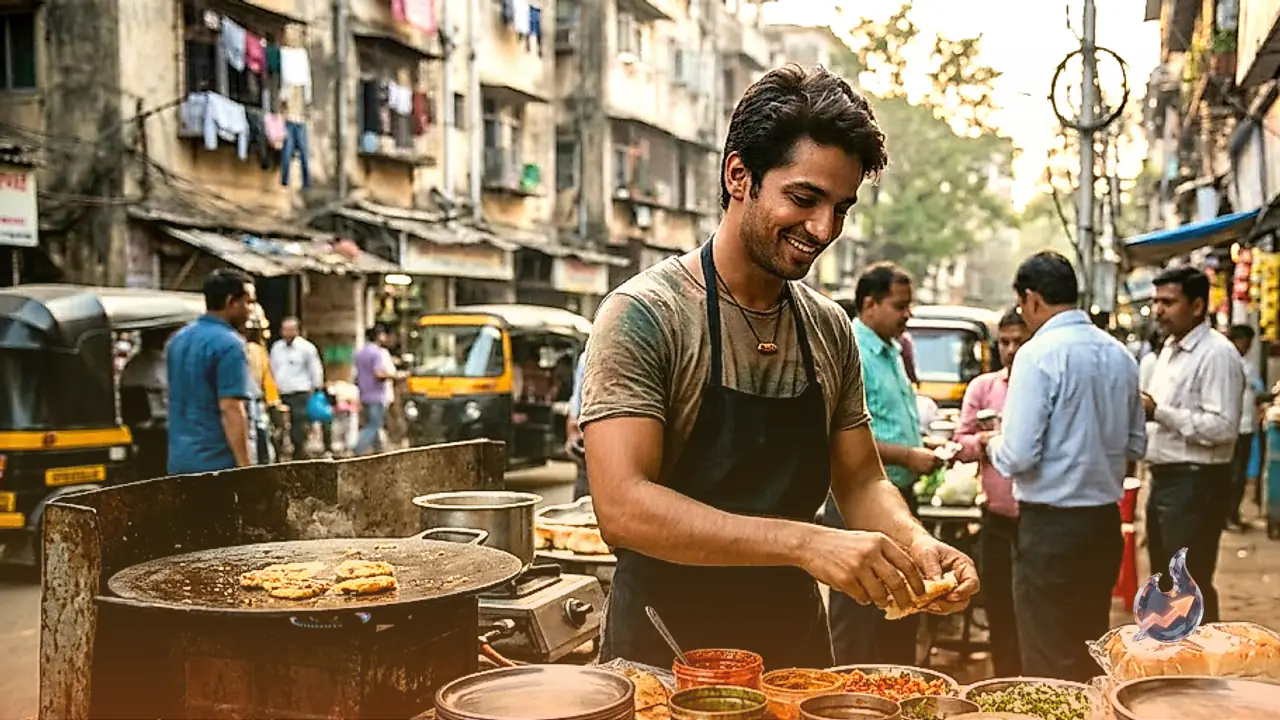

Known across the Indian entertainment industry for his distinct style and intricate footwork, Dharmesh Yelande has built a celebrated career through sheer resilience and dedication. Today, he is widely recognized as an accomplished dancer, choreographer, and actor, yet his path to national prominence was paved with relentless personal hardships. During his early years, his family faced severe economic distress that made handling basic day-to-day household expenses an ongoing ordeal. To keep his artistic ambitions alive while helping his parents stay afloat, he took on work as an office peon and later operated a street food stall selling misal pav.
Childhood Fascination and Early Family Hardships
Dharmesh Yelande was born on October 31, 1983, in Vadodara, Gujarat. His father ran a small neighborhood retail shop that served as the sole livelihood for the household. From an early age, Dharmesh developed a profound interest in dance. He would watch actor Govinda perform on television screens and practice copying his signature steps at home. His natural flair became evident when he entered and won a local dance competition during his sixth grade. Recognizing his keen interest, his father enrolled him in formal dance classes, bearing the additional financial burden despite limited resources.
The family suffered a major setback when the local municipal corporation demolished his father's small commercial shop. Deprived of their established source of income, his father had to adapt quickly and began operating a tea stall on the roadside. The stall generated a modest daily earning of about 50 to 60 rupees. Sustaining a four-member household on such lean daily receipts became increasingly difficult, pushing the family into severe financial strain.
Leaving College at 19 to Shoulder Responsibilities
Seeing his household struggle, Dharmesh chose to step forward and provide financial support. Academic pursuits gradually took a backseat under the pressure of these circumstances, leading him to drop out of college at age 19. He found employment as an office peon, which brought in a fixed monthly salary of approximately 1,600 rupees. Alongside this job, he started training young children in basic dance routines to earn supplementary income.
Even with grueling working hours, he refused to let go of his craft. As soon as his shift as a peon ended, he would head straight to practice sessions to hone his techniques. To balance his schedule better, he also opened a misal pav food stall right next to his father's tea outlet in Vadodara. This arrangement allowed him to generate extra income for the family while ensuring he had enough flexible hours left in the day to continue his rigorous dance training.
Moving to Mumbai, Reality Show Breakthrough, and Initial Setbacks
Determined to establish a career in the performing arts, Dharmesh relocated to Mumbai. He secured an entry into the popular televised dance contest Boogie Woogie, where his exceptional performances helped him win first place. The victory came with a substantial cash prize of five lakh rupees. Instead of using the reward on personal comforts, he directed the entire sum toward paying off the debts his father had accumulated during their financial crises.
Winning the reality contest did not immediately translate into steady cinematic opportunities. For nearly two years, he actively auditioned and pursued lead roles in feature films without success. As his financial reserves dwindled in the metropolitan city, he found it unsustainable to remain in Mumbai and was compelled to return home to Vadodara to regroup.
National Recognition Through Dance India Dance
Back in his hometown, Dharmesh kept practicing and refused to abandon his aspirations. Opportunity presented itself again when auditions opened for the second season of the reality series Dance India Dance. He auditioned successfully and made it into the competition. Although he did not win the final championship trophy, his distinctive choreography and unique movement style instantly captured national attention, particularly his solo act performed to flute music.
The national exposure transformed his professional prospects. Dance show organizers sought him out, and he began working alongside prominent film personalities, eventually getting opportunities to choreograph routines for stars such as Katrina Kaif. In 2015, he stepped into the role of a mentor on the talent hunt show Dance Plus, guiding aspiring performers over multiple consecutive seasons. He also went on to feature prominently in other programs, including Dance Deewane.
Acting Career and Stunt Reality Show Success
His transition to the big screen was facilitated by renowned choreographer and filmmaker Remo D'Souza. In 2013, Dharmesh was cast in a central role in the dance-themed film ABCD: Any Body Can Dance, portraying the character named Danish. Following the film's success at the box office, he reprised his presence in the sequel ABCD 2.
He expanded his filmography with roles in mainstream releases such as Banjo, Nawabzaade, and Street Dancer 3D. Beyond Hindi cinema, he also ventured into regional entertainment by acting in the Gujarati feature film Safalta 0 Km. Demonstrating his physical endurance outside the dance studio, Dharmesh participated in the tenth season of the stunt reality television competition Khatron Ke Khiladi 10, completing the show as the second runner-up.