
















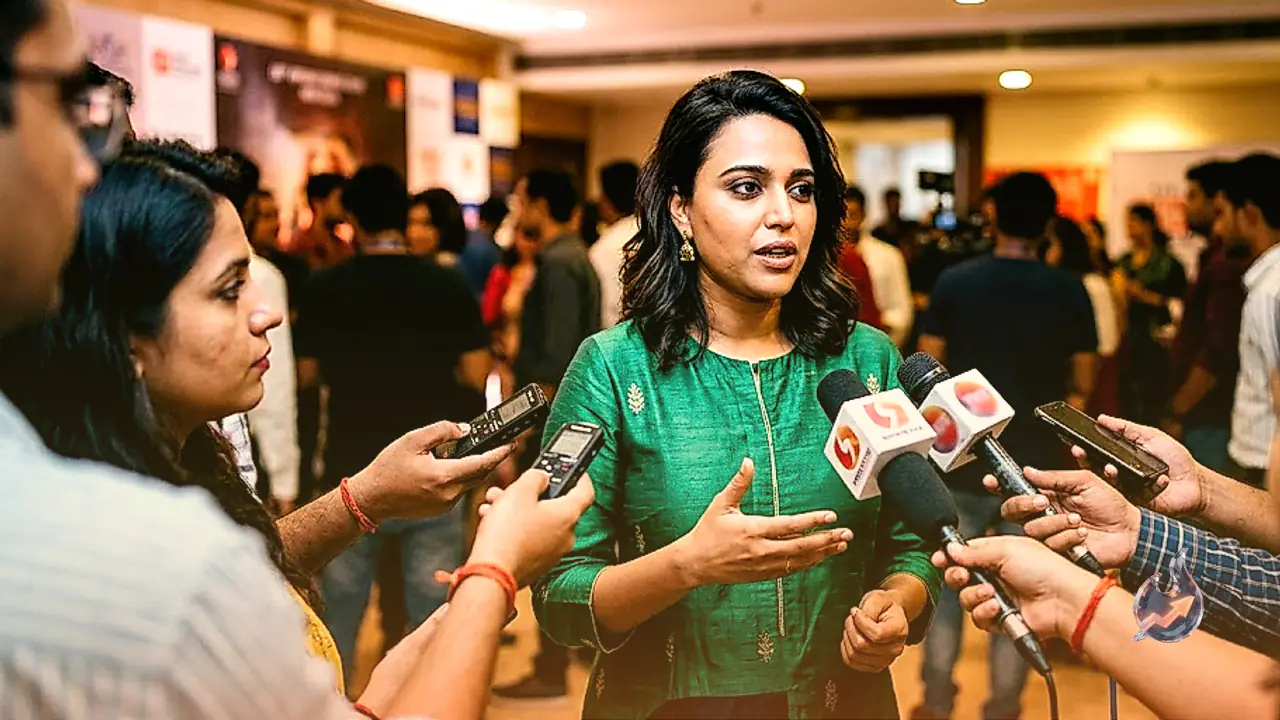

Bollywood actor Swara Bhasker has once again found herself at the center of a intense public debate following widespread trolling over a viral video clip on social media. The online backlash erupted after claims surfaced accusing her of making derogatory remarks about Rani Padmavati and labeling women who historically committed Jauhar as cowards. Responding to the mounting criticism, Swara Bhasker released a detailed video statement to clarify her stance. The actor emphasized that her remarks were completely taken out of context and grossly mis-translated to create a false narrative. She categorically denied ever referring to Rani Padmavati or the women who participated in Jauhar as cowards, urging critics to evaluate the facts before jumping to conclusions.
Viral Snippet Triggers Social Media Outrage
The controversy stems from an appearance made by Swara Bhasker on 31 August at an event titled 'Mahila | Jeevan | Swatantrata' held at the India International Centre in Delhi. During the session, the actor addressed the controversial Jauhar scene portrayed in the 2018 feature film Padmaavat. By 1 September, a short video snippet of her speech began circulating heavily across Twitter, sparking anger among numerous social media users who accused her of insulting historical figures. Addressing the trolls in her clarification video, Swara questioned the practice of orchestrating outrage based on truncated video clips. She remarked that while people are free to criticize her, such criticism should at least be anchored in what she actually said rather than manufactured falsehoods.
Swara Bhasker Alleges Incorrect Translation of Remarks
In her video statement, Swara Bhasker offered a step-by-step account of the discussion that took place at the Delhi event. She explained that a audience member had questioned her regarding the open letter she addressed to director Sanjay Leela Bhansali back in 2018. While answering the question, she attempted to describe the precise emotional response she experienced while watching the film's climax in theaters. Swara pointed out that because she delivered her response in English, her statements were incorrectly translated into Hindi and circulated with malicious intent. Translating her original thoughts into Hindi for her viewers, Swara explained that while watching the climax, she felt that if she were ever to become a victim of sexual assault, the narrative presented on screen would make her feel like a coward for choosing to survive rather than taking her own life.
Reflections on Trauma, Physical Purity, and Cinema
Elaborating on the core message of her intervention, the actor asserted that her commentary was never aimed at disrespecting historical figures. Instead, it was intended as a critique of how society and popular culture perceive sexual violence survivors and female agency. Swara posed fundamental questions to both cinema creators and audiences, asking whether films are reinforcing the notion that a woman's physical purity is worth more than her very life. She asked whether society is signaling to rape survivors that surviving an assault is something shameful and that death would have been a preferable outcome. To illustrate her point about female resilience, she cited a horrific incident in Delhi-NCR where a teenage victim endured brutal violence across a distance of 47 kilometers. She also evoked the memory of Nirbhaya, highlighting how she fought back against six perpetrators until her final breath. Swara concluded by stressing that the fundamental will of women to live must never be diminished.
The Resurfacing of the 2018 Padmaavat Open Letter Debate
This is not the first instance where Swara Bhasker has raised concerns over the portrayal of historical practices in cinema. In 2018, upon the theatrical release of Padmaavat starring Deepika Padukone in the title role, Swara wrote a widely discussed open letter to director Sanjay Leela Bhansali. In that letter, she strongly criticized the romanticized cinematic depiction of practices like Jauhar and Sati, maintaining that a woman's value and right to life should not be tethered strictly to her physical purity or sexuality. Nearly eight years after that initial public debate, Swara's recent observations at the Delhi convention have reignited discussions surrounding cinematic responsibility, historic representations, and women's rights in contemporary India.