























As Geoffrey Vos prepares to step down from his high-ranking position within England's civil justice infrastructure, he is working to spark a broader conversation regarding the integration of artificial intelligence into judicial proceedings. Current official guidelines advise judges within England to restrict their employment of automated technology strictly to administrative duties. However, Vos acknowledges utilizing Microsoft Copilot on a regular basis to locate distant files and condense extensive blocks of text during his daily workflow.
During a recent visit to a courthouse located in Shenzhen, China, Vos observed civil disagreements being resolved under the heavy advisement of automated systems. Deeply influenced by what he witnessed abroad, he maintains that judicial systems globally ought to evaluate adopting similar practices. That particular pathway remains filled with distinct obstacles and professional hazards. Several legal practitioners have already faced repercussions for submitting case law that was entirely hallucinated by automated chat platforms, and a UK practitioner recently lost their license to practice law partly due to the misuse of such software.
Concurrently, members of the public utilizing chatbots as unofficial legal advisors are overwhelming judicial registries with an unprecedented volume of litigation, a portion of which lacks merit. Nevertheless, Vos remains steadfast in his conviction that artificial intelligence will eventually assist in concluding civil disputes with greater speed and at a drastically reduced financial burden. While complex commercial litigations and delicate family matters likely demand human oversight, he argues that personal injury claims and low-level professional negligence matters are prime candidates for automated adjudication.
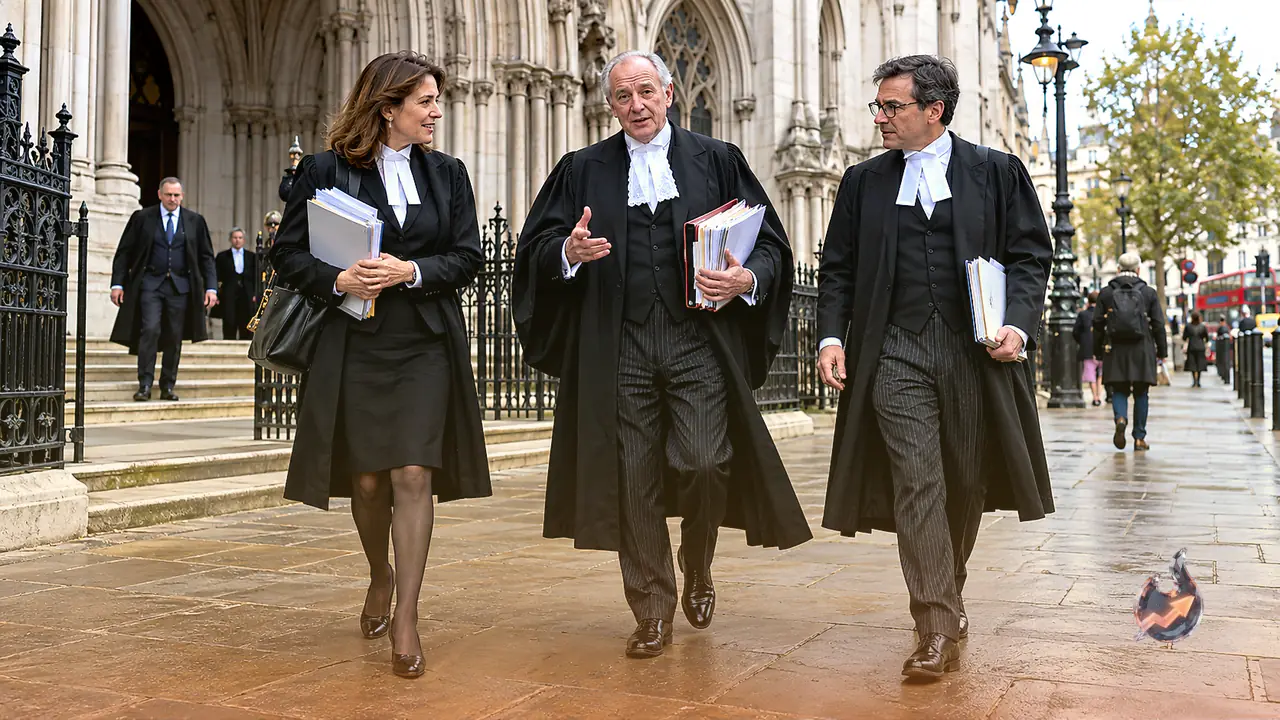
Explaining his perspective on public expectations during an interview, Vos emphasized that individuals embroiled in civil disputes fundamentally desire a resolution above all else. Given his impending retirement, the ongoing discourse remains largely philosophical for him personally, yet the regulatory landscape is shifting rapidly for practicing attorneys, software developers, and cybersecurity professionals alike. Meetings held at his chambers within the Royal Courts of Justice in London previously explored how automated tools are infiltrating courtrooms, the ethical dilemmas accompanying them, and how the judicial framework must evolve to accommodate younger demographics.
Reflecting on the evolution of legal practice over decades, Vos recalled starting his career surrounded by foolscap paper, traditional typists, and correction fluid, before rapidly transitioning through word processors, facsimile machines, and personal computers. He characterizes the legal profession as inherently conservative in a traditional sense, though he stresses that such caution should not translate into being regressive or closed-minded toward necessary progress. Effective administration of justice requires aligning technological capabilities with the expectations of the citizenry.
Detailing his personal implementation of these tools, Vos clarified that he avoids utilizing automated software for drafting final judgments, relying instead on retrieval, navigation through large datasets, and cross-referencing information. Managing numerous daily meetings requires efficient document retrieval, a task where his digital assistant proves invaluable. When questioned about whether public trust depends entirely on a human judge meticulously reviewing every single page of a submission, he noted exercising heightened caution with major cases due to the immense stakes involved.
Addressing the current influx of automated filings, Vos noted a notable annual increase in county court initiations, driven largely by individuals utilizing conversational models like Gemini, ChatGPT, and Claude to draft formal claims and particulars. While acknowledging uncertainties regarding the legal soundness of every AI-generated filing, he cautioned against dismissing them as entirely frivolous, viewing increased filings as an indication of expanded access to a system that was historically accessible primarily to affluent individuals. People initiating these claims generally believe their grievances are legitimate, even if initial consultations reveal nuanced legal distinctions.
Regarding the emergence of synthetic evidence such as fabricated photographs, manipulated videos, and cloned audio recordings, Vos drew parallels to historical challenges involving forged documents and wills. He argued that evaluating the veracity of presented evidence has always been a core responsibility for magistrates, and artificial intelligence merely introduces new mediums for old forms of deception. Individuals attempting to submit falsified digital media will face severe legal consequences, including imprisonment for perjury, just as historical fraudsters did.
Looking toward the future, Vos advocates for measured optimism rather than unwarranted panic regarding technological integration in the courts. He envisions an inevitable trajectory where simpler civil proceedings are handled entirely through algorithmic mechanisms, provided that society establishes appropriate legislative frameworks or secures explicit consent from participating parties. While acknowledging that human judges possess a unique psychological resonance that society values, he reiterates that embracing technological efficiencies will ultimately broaden access to swift justice for the wider economy.