
















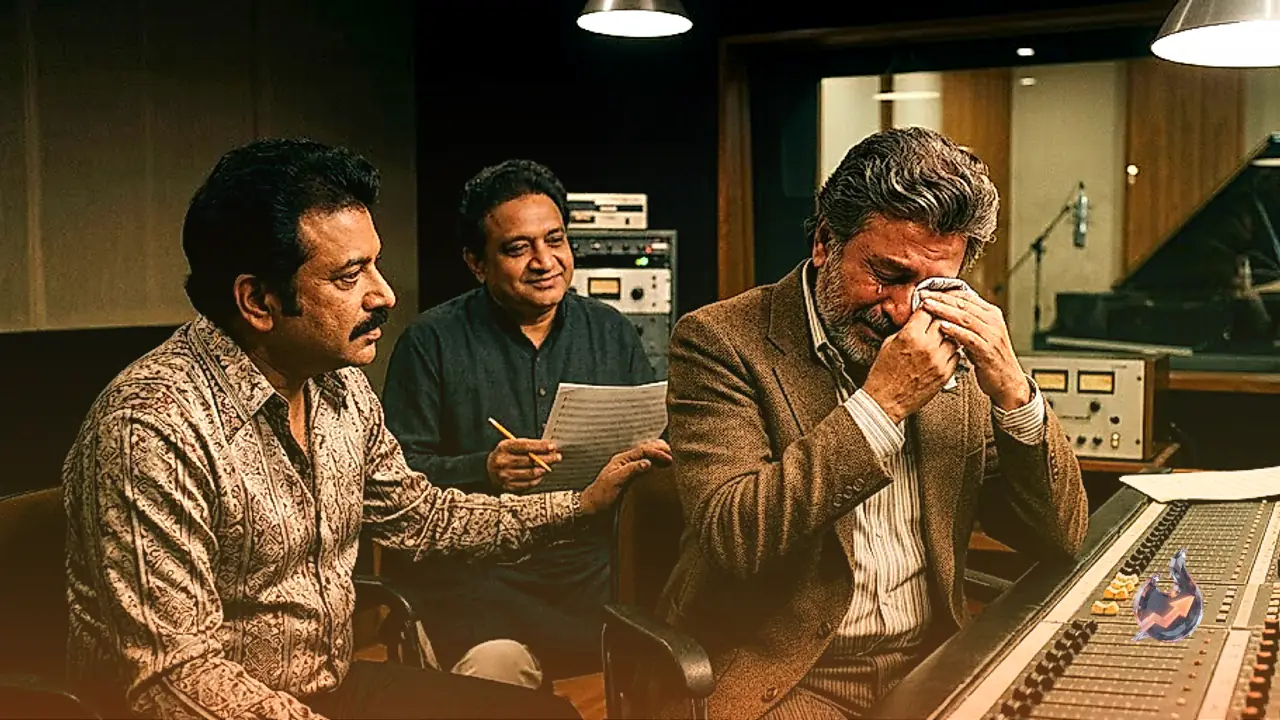

The making of Indian cinema's most legendary melodies often carries behind-the-scenes moments that are as emotionally charged as the films themselves. Among the vast archive of Hindi film music, the title track of the feature film Main Tulsi Tere Aangan Ki stands out as a timeless masterpiece that dissolved boundaries between real-life emotion and cinematic storytelling. When the celebrated composing duo Laxmikant-Pyarelal first rendered the draft composition of this song for director Raj Khosla, the sheer intensity of the melody overwhelmed the filmmaker, leaving him weeping openly during the session. Recorded in two to three separate parts by the incomparable singer Lata Mangeshkar, the song continues to resonate deeply with audiences across generations.
Translating a Complex Narrative into Music
Raj Khosla had approached Laxmikant-Pyarelal with a sensitive and intricate story outline. The narrative revolved around a male protagonist who takes a second wife, bringing home a woman who is forced to live in the shadow of the primary marriage. Despite her presence, this second wife is denied the dignity and legitimate status she rightfully deserves, remaining symbolically stranded outside the physical and emotional threshold of the household. Raj Khosla conceived the character of Tulsi not merely as a passive figure, but as an emblem of sacrifice and quiet tragedy. Conveying such complex social dynamics and inner agony through a musical sequence presented a daunting challenge for the composers and lyricist Anand Bakshi.
Six Words That Moved a Veteran Director
To capture the crux of this predicament, lyricist Anand Bakshi penned two poignant lines: "Main Tulsi Tere Aangan Ki, Koi Nahi Main Tere Saajan Ki." As Laxmikant-Pyarelal began shaping these verses into a tune, the second line, containing just six words ("Koi Nahi Main Tere Saajan Ki"), struck a profound chord with Raj Khosla. The raw truth embedded in those words instantly brought tears to the director's eyes. As the composers played out the musical progression, the vivid imagery of the film's scenes seemed to unfold right before their eyes, creating an atmosphere charged with genuine heartbreak.
The Composers' Hesitation and Khosla's Verdict
When Laxmikant-Pyarelal moved on to demonstrate the composition of the stanza (antara), Raj Khosla broke down into uninhibited tears. Surprised by this extreme reaction, the musical duo momentarily froze in apprehension. Fearing that their melody had somehow failed to meet expectations or contained some flaw, they approached the director and hesitantly offered to compose an entirely fresh tune. However, an emotional Raj Khosla reassured them immediately, stating that no other composition could ever capture the essence of that dramatic situation with such perfection.
Cinematic Tragedy and Additional Musical Contributions
The emotional potency of the title track reached its peak in a pivotal sequence later in the film, which marks the demise of the character played by Asha Parekh. As her funeral procession passes near the residence of Nutan's character, the tragic line "Mat Ro Bahna Andar Jaake" echoes through the scene, leaving audiences in theaters completely overwhelmed with tears. While Laxmikant-Pyarelal also recorded another memorable composition with Mohammed Rafi for the soundtrack, the title track attained an unmatched stature due to its haunting emotional depth and Lata Mangeshkar's soul-stirring vocal performance.
A Legendary Partnership Born of Mutual Respect
The collaboration between Raj Khosla and Laxmikant-Pyarelal was built on years of artistic trust. Early in his career, Khosla had frequently collaborated with composer Madan Mohan. However, when he chose Laxmikant-Pyarelal to score his film Anita, he was astonished by their versatility and musical genius. This successful pairing went on to deliver blockbuster soundtracks for films like Do Raaste and Mera Gaon Mera Desh. Their tracks played in every street and corner across the country, establishing Laxmikant-Pyarelal as master composers who could craft the ideal musical backdrop for any cinematic situation.