






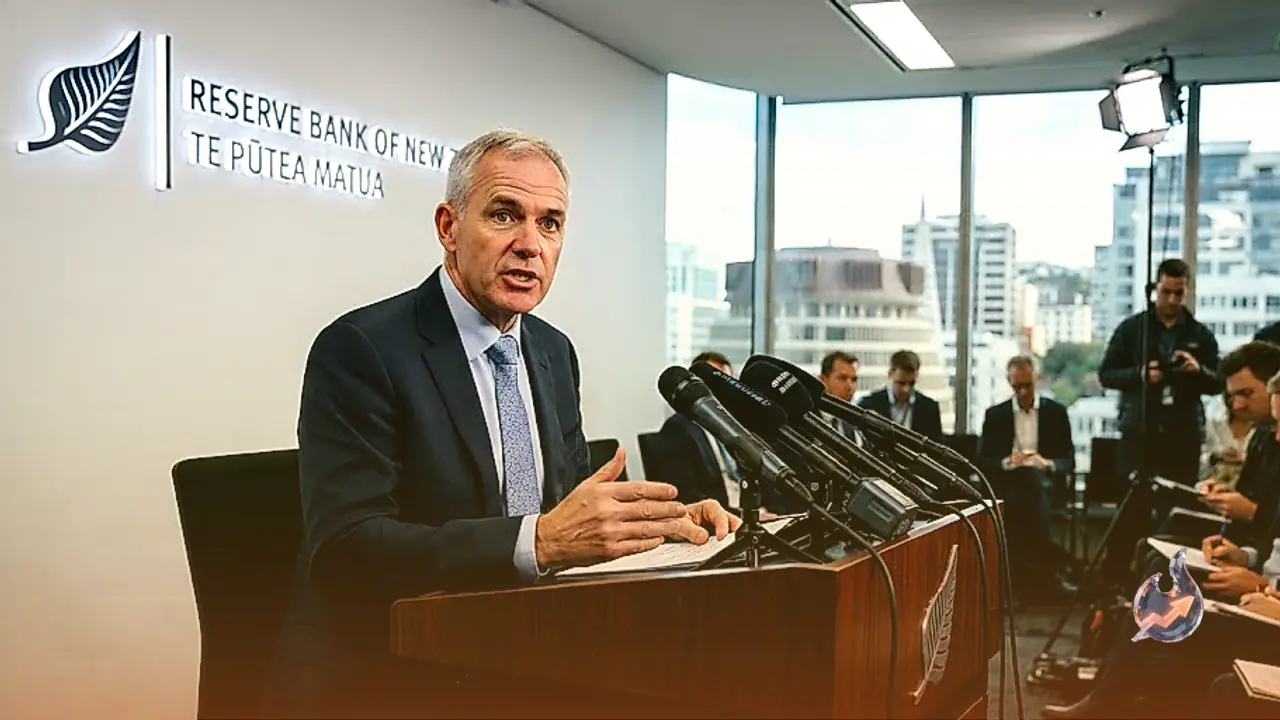


















Steadily rising crude oil prices and resilient domestic growth indicators are refocusing monetary policy expectations on the Bank of Canada. While economic slack and controlled core inflation previously afforded policymakers room for patience, energy price pressures are threatening to broaden inflation risks across the wider economy. National Bank of Canada economists Taylor Schleich and Ethan Currie point out that prolonged strength in petroleum costs is steering the central bank toward delivering its first benchmark interest rate increase since July 2023, while setting up roughly 50 percent odds for a consecutive move in December.
Energy Pressure Erodes Central Bank Patience
Throughout the current year, economic slack alongside well-contained underlying core inflation metrics enabled the Bank of Canada to maintain a patient stance. However, monetary officials have regularly highlighted that elevated energy costs carry the compounding danger of spilling over into broader price baskets. Back in early September, the Governor conveyed clear unease when West Texas Intermediate crude traded around $90 per barrel. The subsequent 10 to 20 percent price advance appears to have tested the central bank's tolerance to its limit.
In active commodity trading, Crude Oil futures last traded at $99.76 per barrel, reflecting a decline of 1.97 percent from the previous settlement mark of $101.76. Technical readings demonstrate ongoing underlying strength, with the 14-day RSI positioned at 56 and the MACD line at 2.42 standing above its 1.95 signal line, generating a positive histogram of 0.47. The 20-day EMA sits at $97.44, the 50-day EMA is at $93.70, and the 200-day EMA registers at $83.66. Concurrently, the 50-day SMA at $93.62 remains above the 200-day SMA at $85.71, confirming a sustained long-term uptrend within a 52-week band of $54.98 to $119.48. Bollinger Bands span between $85.76 and $105.65 around a $95.71 midpoint, the ADX at 31 indicates trending conditions, and the daily ATR is 4.30. Price structure shows a pivot at $99.92, resistance thresholds at $100.10 and $100.43, and primary support barriers at $99.59 and $99.41.
December Trajectory and Policy Communication
Should the central bank initiate a tightening step, investor scrutiny will immediately pivot to the timing of any subsequent hike. Upward adjustments to official inflation and gross domestic product projections in the forthcoming Monetary Policy Report could build a case for another tightening step in December. Furthermore, historical patterns show that the Bank of Canada frequently commences policy tightening sequences with back-to-back interest rate hikes.
The global central banking landscape continues to offer contrasting strategies. The European Central Bank has chosen a more gradual trajectory, and the US Federal Reserve is widely expected to pursue an incremental path. Analysts do not anticipate a dovish hike scenario where policymakers explicitly promise a December pause. Equally, officials are unlikely to pre-commit to a subsequent rate increase. Instead, forward guidance is expected to remain firmly linked to fresh incoming economic data and the evolving balance of macroeconomic risks, leading markets to evaluate December rate hike probabilities at approximately 50 percent.
Currencies Navigate Central Bank Horizons
Foreign exchange markets have reflected these shifting monetary currents across several primary trading pairs. The Australian Dollar gained ground against the US Dollar during Asian market hours, lifting AUD/USD to 0.7030 and wiping out the prior session's pullback from one-month highs on expectations of hawkish policy action from the Reserve Bank of Australia. Spot rates nonetheless stayed beneath the critical 100-day simple moving average barrier as broad US Dollar strength persisted ahead of Australia's September CPI figures.
Simultaneously, USD/JPY advanced for a third consecutive trading day, extending its recovery away from one-month lows in anticipation of the Federal Open Market Committee decision and the Bank of Japan's upcoming policy review. Market projections that Japanese authorities will avoid aggressive tightening measures weighed on the Yen, allowing the US Dollar to climb toward a two-week peak.
Precious Metals and Digital Asset Dynamics
In precious metals, spot gold held ground modestly above the critical benchmark of $4,000 per troy ounce. Bullion built upon earlier upward momentum despite firm US Dollar trading, mixed yields across US Treasuries, and widespread investor caution heading into key monetary policy announcements.
In digital assets, Pi Network token traded above $0.0760, pausing after an earlier 2 percent recovery. Tepid market sentiment and muted transaction activity continue to cap performance. The technical structure remains tilted to the downside, with prices trapped underneath an established overhead resistance trendline and lacking directional buying momentum.
Broader financial markets are also weighing the upcoming November 3 US midterm elections. Even as investors contemplate potential Fed rate action in December, shifting legislative dynamics could alter federal fiscal trajectory expectations and reshape monetary policy assumptions heading into 2027.