

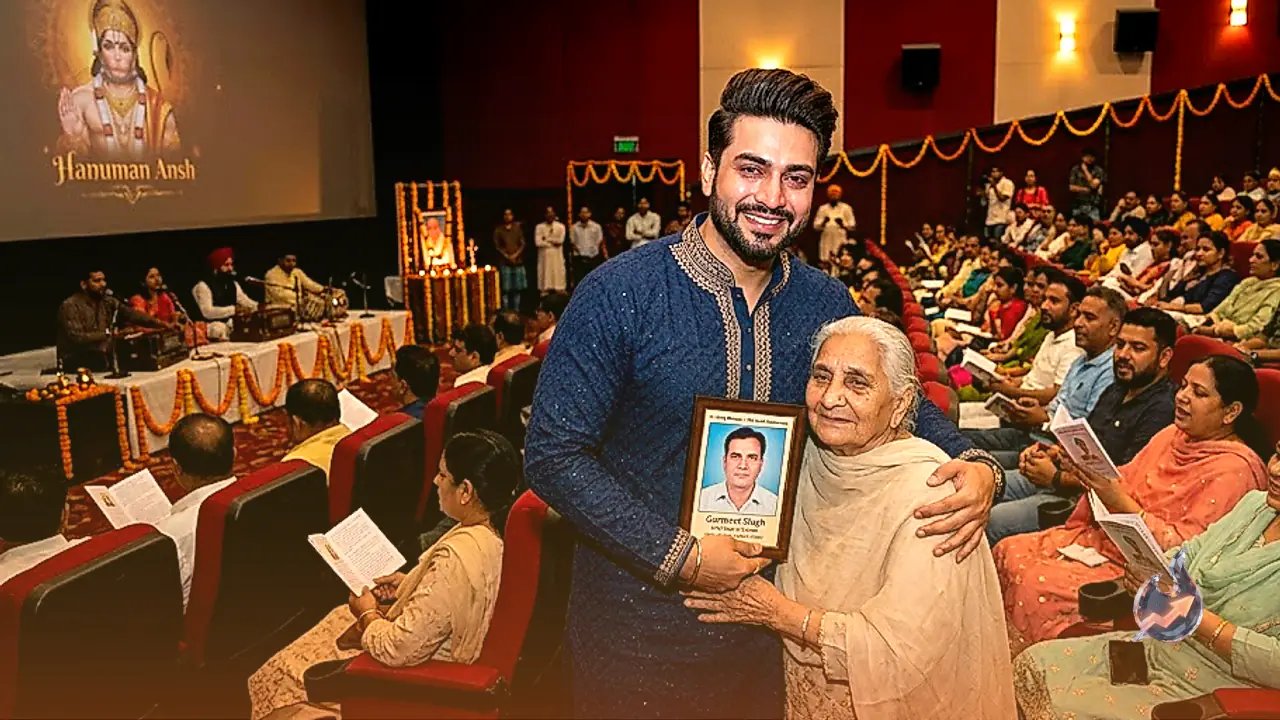


















Whenever conversations turn to the devotion of Lord Ram, one sublime melody almost reflexively surfaces in the memory of listeners across the country, 'Ram Siya Ram, Siya Ram Jai Jai Ram'. This timeless cadence has become a permanent feature of personal prayers and festive gatherings, and its musical resonance continues to inspire contemporary cinema as well. A subtle motif of this very composition was recently heard in the track Jai Jai Ram from Ranbir Kapoor's upcoming cinematic retelling Ramayana. Concurrently, public attention has been captured by the visually impaired singer of the devotional piece Hanuman Ansh, bringing renewed appreciation to the legendary maestro who created this unforgettable spiritual anthem despite lacking eyesight from birth.
The 1975 Origin in the Film Geet Gaata Chal
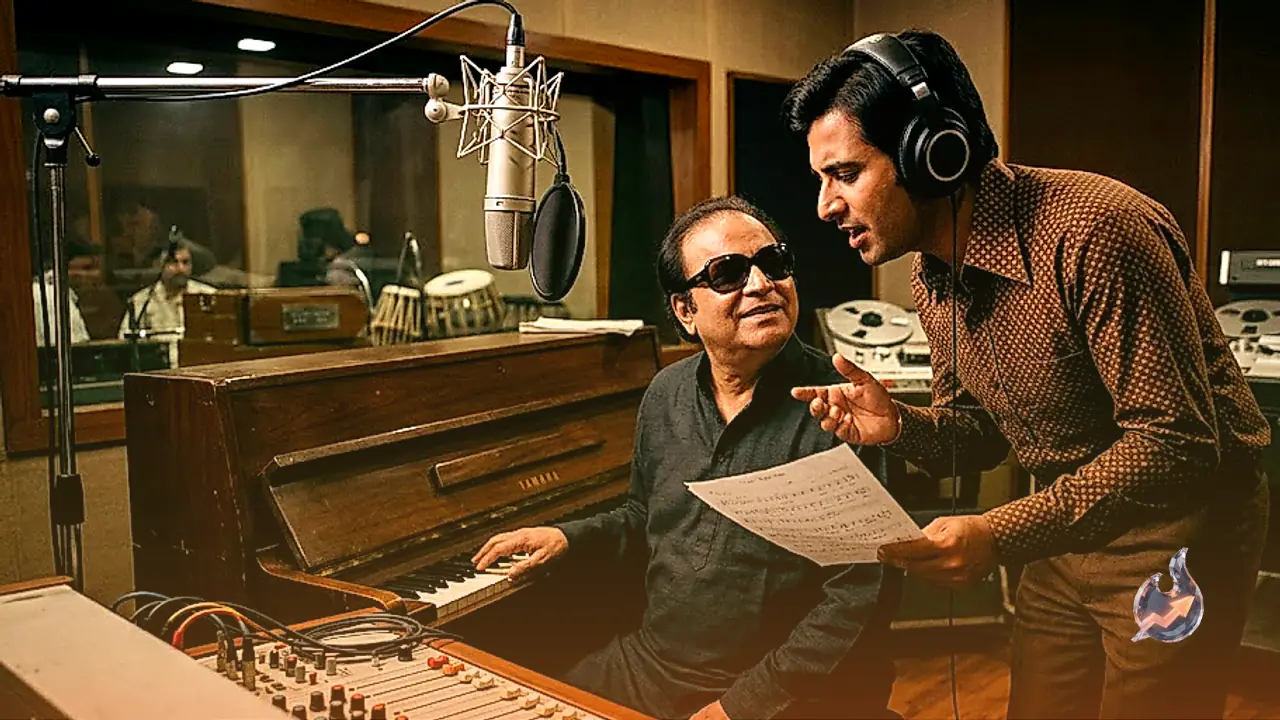
The genius behind this enduring devotional melody was the celebrated composer, lyricist, and singer Ravindra Jain. He crafted the original composition in the year 1975 for the cinematic production Geet Gaata Chal. Vocalist Jaspal Singh was entrusted with rendering the track, and the creative collaboration between the composer and singer proved to be nothing short of extraordinary. The partnership delivered an anthem that transcended the commercial boundaries of the silver screen to become an immortal fixture in the cultural memory of millions. Even after five decades, few devotional recordings have matched its emotional impact and widespread familiarity.
Sachin Pilgaonkar and Sarika's Box Office Success
The movie Geet Gaata Chal featured actors Sachin Pilgaonkar and Sarika in lead roles. Backed by its soulful musical score, the feature was an immense commercial success in theatres. Within this cinematic narrative, Ravindra Jain integrated the celebrated chaupai from Tulsidas's Ramcharitmanas, 'Mangal Bhavan Amangal Haari', adapting it with his signature acoustic simplicity. Nestled inside this traditional verse was his melodic creation, 'Ram Siya Ram, Siya Ram Jai Jai Ram'. The phrasing resonated so powerfully with audiences that subsequent generations of musicians have repeatedly incorporated variations of it across numerous subsequent albums and devotional compilations.
Adaptation of Rabindranath Tagore's Short Story Atithi
From a filmmaking perspective, Geet Gaata Chal was directed by Hiren Nag, while Ravindra Jain took charge of the musical score and lyrics. The cinematic narrative drew its thematic foundation from Rabindranath Tagore's celebrated short story titled Atithi. The complete soundtrack comprised a total of 9 songs, featuring the voices of legendary playback singers such as Kishore Kumar, Mohammed Rafi, and Asha Bhosle alongside Jaspal Singh. Beyond the spiritual verse, the album produced celebrated numbers like 'Geet Gaata Chal O Saathi' and 'Shyam Teri Bansi Pukaare', establishing the film as one of the most musically accomplished productions of its era.
Ramanand Sagar's Ramayan Brought the Melody to Every Household
In 1987, director Ramanand Sagar embarked on his television project Ramayan and roped in Ravindra Jain to supervise the entire musical direction. Through the reach of national television broadcast via Doordarshan, Jain introduced this sanctified melody directly into living rooms across the nation. The television series transformed the song into a daily spiritual ritual for Indian families. As a result, whether during morning rituals, evening prayers, or festive celebrations, the distinctive voice of Jaspal Singh set to Ravindra Jain's tune remains a vital accompaniment to devotion even today.
Overcoming Visual Impairment to Build an Unrivaled Legacy
Ravindra Jain was visually impaired from early childhood, yet this physical condition never placed limits on his artistic range or creative productivity. He approached compositions through deep emotional intuition, producing complex harmonies and memorable cadences that rivaled the finest works of his contemporaries. Born on 28 February 1944 in Aligarh, Jain built an illustrious career delivering musical scores for celebrated films such as Saudagar, Paheli, Ram Bharose, Pati Patni Aur Woh, Ram Teri Ganga Maili, and Vivah. In recognition of his exceptional contribution to Indian arts and culture, he was awarded the prestigious Padma Shri. Ravindra Jain passed away at the age of 71 on 9 October 2015, leaving behind a musical legacy that continues to resonate across generations.