




















In the rich history of Hindi cinema, several actors left an indelible mark on audience hearts without ever playing traditional lead roles. Among these fine artist figures, Keshto Mukherjee occupies a uniquely cherished position. Through his innocent facial expressions, unmatched body language, and remarkably believable portrayals of intoxicated characters, he entertained audiences for decades. However, the path to this enduring fame was carved through years of hardship, persistent waiting, and unwavering dedication to the performing arts. Securing his initial breakthrough required knocking on countless studio doors, including an exceptionally unusual audition before a legendary filmmaker.
From Kolkata Theater to Early Struggles in Mumbai
Keshto Mukherjee was born on August 7, 1925, into a modest family in Kolkata. From his early childhood years, he harbored a deep passion for acting. He actively participated in drama productions organized at his school and across his neighborhood. His continuous engagement with theater refined his artistic skills and deepened his understanding of character work. During this formative phase, he met acclaimed filmmaker Ritwik Ghatak. Recognizing his natural acting potential, Ghatak cast him in his Bengali film Nagarik. Although filming concluded in 1952, the project faced delays and could only reach theaters much later in 1977.
Following this experience, Keshto Mukherjee appeared in prominent Bengali films such as Ajantrik and Bari Theke Paliye. While these films earned him artistic appreciation and professional recognition, they failed to significantly improve his financial circumstances. Driven by economic difficulties and the pursuit of broader career horizons, he made the pivotal decision to move from Kolkata to Mumbai. Upon arriving in Mumbai, his journey grew even more taxing as he frequented film studios daily in search of meaningful work opportunities.
The Unforgettable Audition Before Bimal Roy
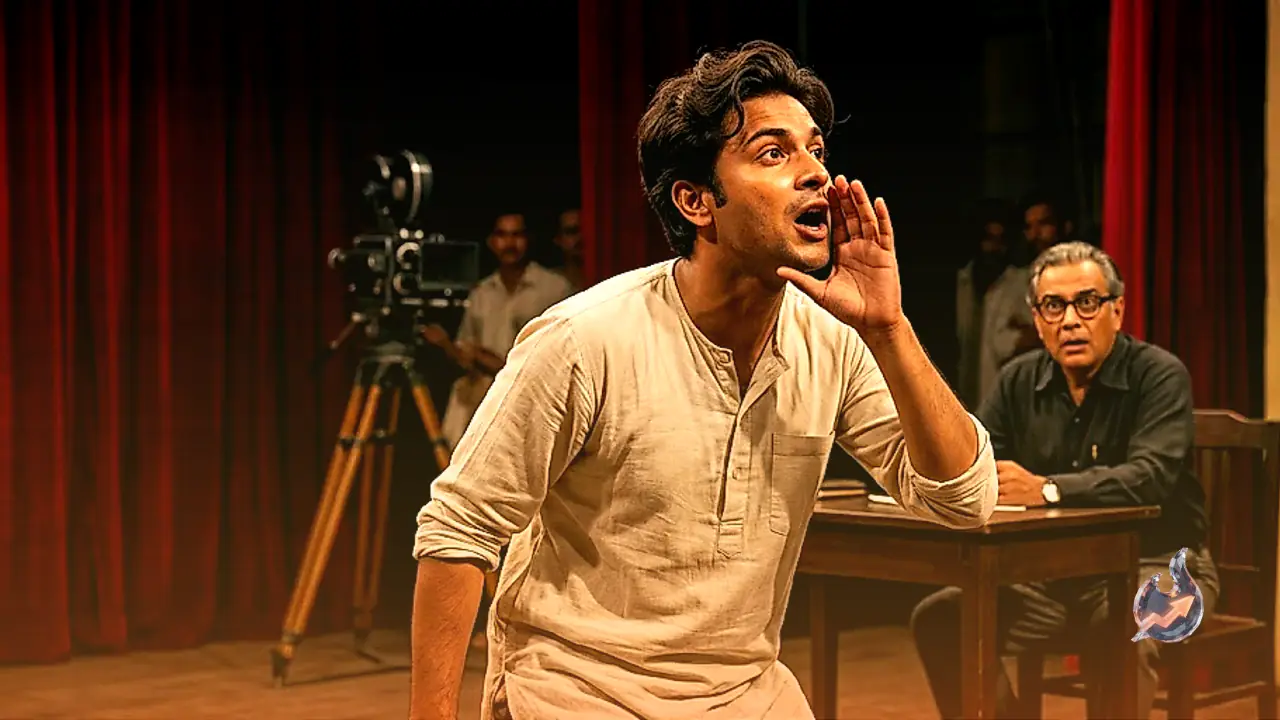
During these challenging days of searching for work, Keshto Mukherjee went to meet renowned director Bimal Roy. At that time, Bimal Roy was entirely consumed with an ongoing film shoot. After a long wait, when the meeting finally took place, the director informed him that no roles were available at the moment and asked him to return later. Despite the disappointing response, Keshto Mukherjee did not leave the set and quietly remained standing in the same spot.
Observing his persistence, Bimal Roy asked him directly if he could imitate the sound of a dog. Pausing for just a brief moment, Keshto Mukherjee responded by convincingly producing realistic barking sounds right there on the set. Everyone present was astonished by his spontaneous performance. Deeply impressed by his quick responsiveness and acting aptitude, Bimal Roy immediately decided to offer him a role. Shortly thereafter in Mumbai, director Hrishikesh Mukherjee cast him in the film Musafir, which provided him with his first major breakthrough in Hindi cinema.
Defining Drunkard Roles and a Legacy of Over 90 Films
The decisive turning point in Keshto Mukherjee's career arrived when director Asit Sen cast him as a drunkard in the movie Maa Aur Mamta. He delivered the role with such effortless authenticity that it quickly transformed into his professional signature. Consequently, whenever scriptwriters and directors required a drunkard character in Hindi movies, Keshto Mukherjee became their immediate first choice.
Nevertheless, he consistently demonstrated that his talent extended far beyond a single archetype. Over a career spanning more than three decades, he acted in over 90 films. He brought joy to audiences through memorable comic performances in evergreen classics such as Padosan, Bombay to Goa, Sholay, Chupke Chupke, Khubsoorat, Gol Maal, Piya Ka Ghar, Zanjeer, and Naseeb.
The Reality Behind His Acting, Filmfare Recognition, and Final Days
His depiction of drunkard characters was so convincing that many moviegoers believed he consumed real alcohol prior to filming his scenes. However, his son Babloo Mukherjee clarified the truth behind his father's craft during an interview. Babloo Mukherjee stated that his father never consumed alcohol for his acting roles. Instead, he meticulously observed the mannerisms, speech patterns, and walking styles of ordinary people in daily life, translating those real-world observations into his screen performances.
His exceptional comic timing earned him multiple nominations in the Best Comedian category at the Filmfare Awards. Ultimately, in 1981, he won the Filmfare Award for Best Performance in a Comic Role for his performance in Khubsoorat. Tragically, in February 1982, he met with a severe road accident. Despite receiving extensive medical care, his physical condition failed to recover, and he passed away in March 1982 at the age of 56.