






















Uncertain weather patterns and deficient rainfall during June and July across Jharkhand heavily impacted kharif crops, with paddy cultivation taking the hardest hit in the Palamu region. Due to a lack of timely rains, numerous farmers were unable to complete their paddy transplantation as scheduled. However, the arrival of favorable rainfall in August has sparked renewed optimism among local cultivators. In light of this weather shift, agricultural experts are strongly advising farmers to opt for short-duration paddy varieties so they can harvest their crops quickly and secure better yields despite the delayed start.
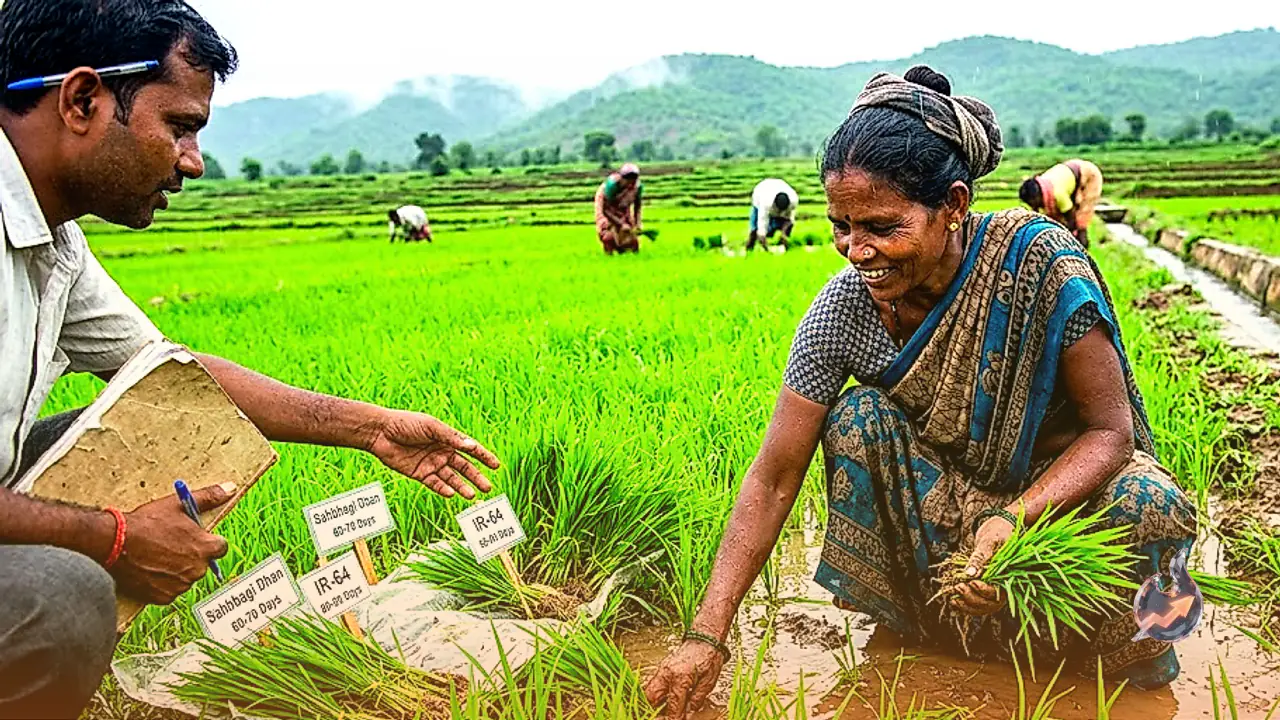
Dr. Akhilesh Shah, an agricultural scientist at the Chianki Regional Research Station, explained that cultivating short-duration rice varieties can serve as an excellent option for growers facing seasonal constraints. Farmers can choose quick-maturing varieties such as Brown Bora. Additionally, hybrid paddy varieties that mature within 100 to 105 days are proving highly useful for cultivators, with the PSC-807 variety standing out as a practical selection. The primary advantage of short-duration rice is that even when planted late, the crop requires relatively less time to reach full maturity.
The Value of Hybrid Paddy During Dry Spells
Experts noted that long-duration paddy farming relies heavily on favorable weather throughout the season. If a crop lacks adequate moisture during its critical flowering phase, grain formation suffers significantly, which in turn reduces overall productivity. Conversely, certain hybrid paddy strains possess a superior ability to withstand drought conditions. Consequently, farmers situated in areas experiencing lower rainfall or soil moisture deficits can safely rely on hybrid alternatives to protect their investments.
Cultivation Options for Upland Fields and Direct Sowing
Agricultural practices in Palamu and surrounding areas have historically included growing short-duration paddy in upland fields, locally known as taand lands. Farmers in these areas have traditionally favored strains that develop rapidly with minimal water requirements. Given the current weather conditions, expanding the use of these quick-maturing varieties can prove extremely beneficial. Furthermore, in regions where adequate August rainfall has supplied sufficient soil moisture, farmers can opt for direct sowing of paddy using specialized machinery. Direct sowing drastically reduces the time and labor required for traditional transplantation. By utilizing varieties that mature in 100 to 105 days, growers can achieve successful cultivation and profitable yields even after a delayed start.