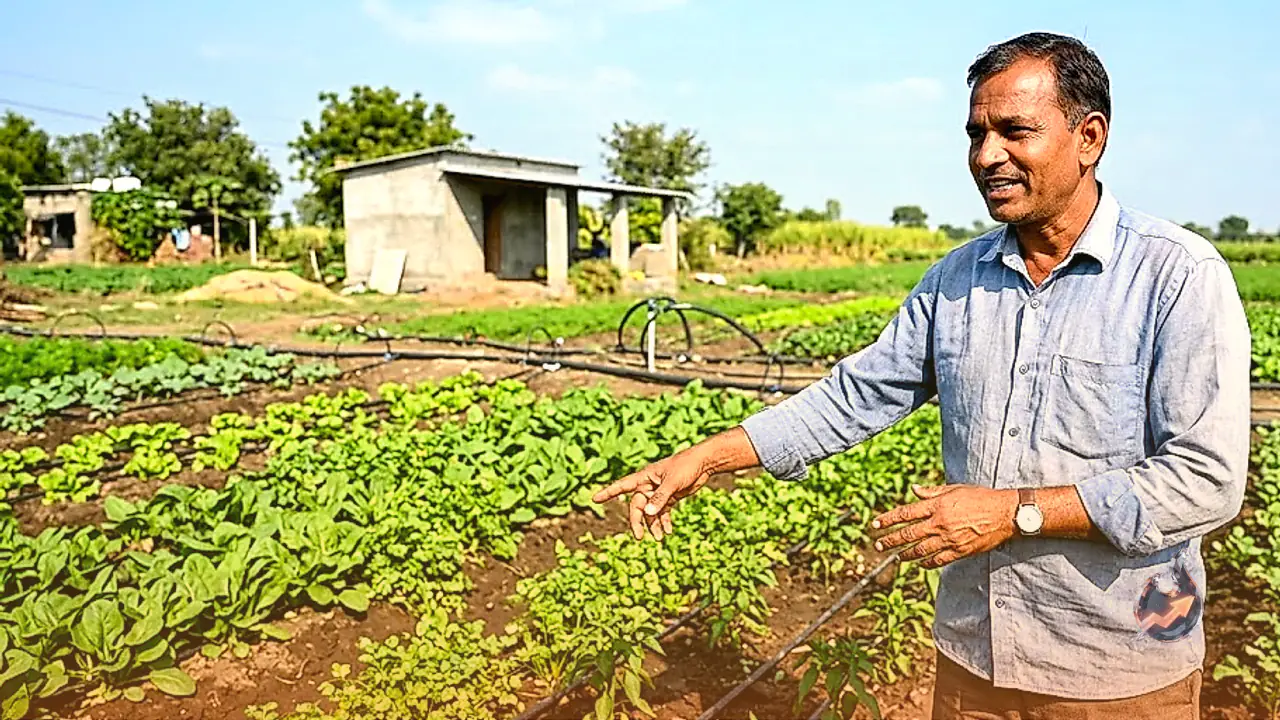

























An important monthly technical workshop was recently organized at the Agricultural Research Center under the Swami Keshwanand Rajasthan Agricultural University in Bikaner to discuss pest and disease management strategies for Kharif crops. During the session, agricultural scientists and department officials collectively alerted farmers about the increasing threats posed by the Katra pest and crop yellowing caused by iron deficiency.
Experts highlighted that when the infestation of the Katra pest exceeds the economic injury level, it directly harms overall crop yields. To counter this, timely field monitoring and the application of recommended chemical pesticides are considered essential steps for protecting agricultural produce from severe damage.
Scientific Formula to Combat Crop Yellowing
During the proceedings, agricultural specialists detailed the primary reasons behind yellowing leaves caused by insufficient iron content in plants and shared a specific remedy. If visible yellowing appears in fields, farmers are advised to prepare a mixture of 500 liters of water combined with 5 percent ferrous sulfate and 1 percent citric acid. Thoroughly spraying this prepared solution across the affected crops helps correct the nutritional imbalance.
Katra Pest Defense and September Action Plan
Agricultural experts Professor S.P. Singh, Dr. H.L. Deshwal, Dr. B.D.S. Nathawat, and Dr. Rajendra Rathore provided detailed insights into the standard package of practices and pest control mechanisms for Kharif crops. They recommended that farmers conduct regular field inspections to catch any pest activity right at its onset. Pesticides should only be applied once the economic threshold level is crossed, and growers must rely strictly on chemicals approved by the agricultural department. The workshop also reviewed the progress of the previous month while outlining vital agricultural and horticultural techniques to be adopted throughout September.
Emphasis on Vegetable Production and Government Support
Hirendra Sharma, Additional Director of Agricultural Extension, pointed out during the session that Bikaner district holds immense potential for horticulture and vegetable cultivation. He instructed officials to ensure that maximum farmers benefit from subsidies provided for support systems in vegetable production. Horticultural schemes must be implemented on a priority basis, and fertilizer sellers along with progressive farmers should receive specialized training through the framework for fertilizer cell. The workshop saw participation from numerous key officials, including Joint Director Bhagwan Sahay Yadav, Madanlal, Dharmveer Doodi, Jaideep Dogne, Premaram, and Assistant Director of Horticulture Mukesh Gehot, alongside other staff members.