























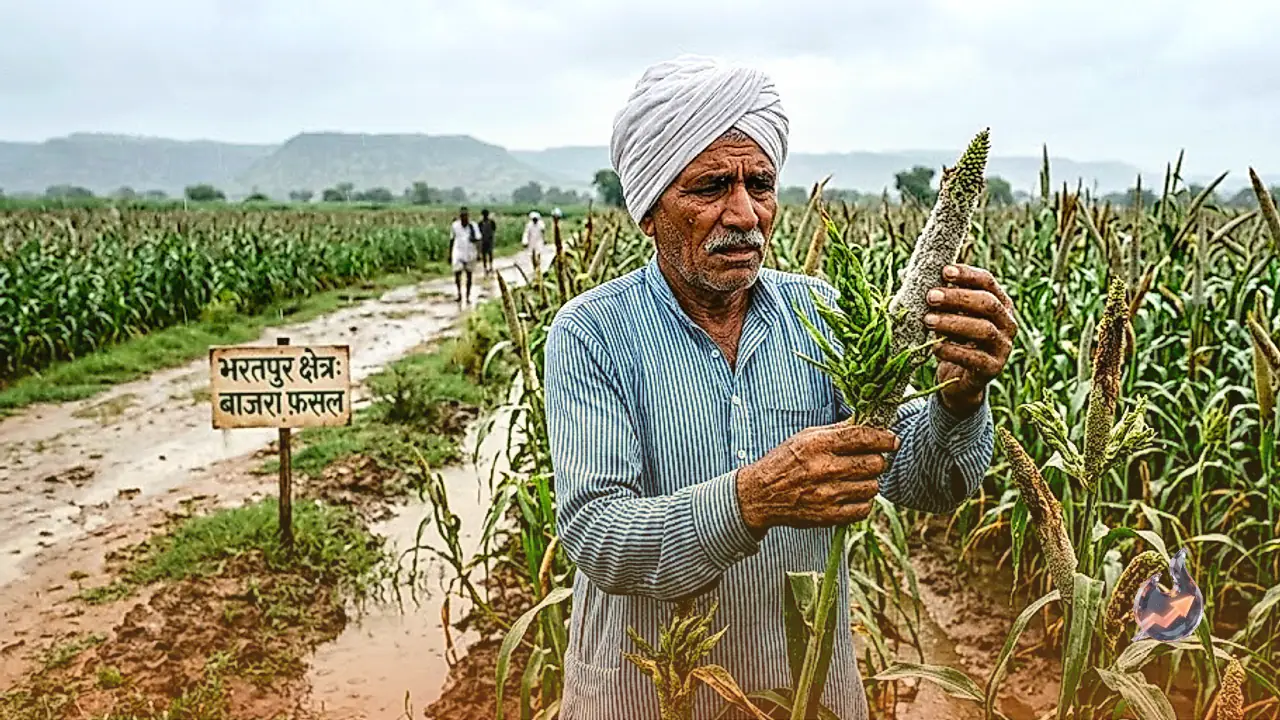

Farmers cultivating bajra in Bharatpur district are facing mounting anxieties as shifting weather patterns and unceasing rainfall take a heavy toll on the fields. The prolonged accumulation of water and excessive humidity levels in the soil have created conditions where various crop diseases are rapidly taking root. In multiple areas, early indicators of infections have started appearing on bajra plants, raising serious fears of crop failure and a drastic drop in overall output. According to agricultural experts, wet conditions combined with stagnant water provide the ideal breeding ground for fungi and other pathogen-driven ailments to multiply swiftly.
Specialists within the agriculture department noted that the current environmental conditions present a severe threat of Green Ear Disease and other fungal infections taking over the bajra fields. High atmospheric moisture enables these pathogens to spread across an entire field within a remarkably short span. Consequently, growers are strongly advised to inspect their fields on a regular basis, closely examining both leaves and ears of the plants for any anomalies. Catching these early signs allows for timely management strategies that can shield the harvest from catastrophic losses.
Essential Crop Protection Guidelines from the Agriculture Department
To safeguard the harvest against these escalating threats, the agriculture department has urged producers to implement specific measures immediately
Ensuring Proper Drainage: Stagnant water must not be allowed to remain in the fields under any circumstances. Areas currently suffering from waterlogging need immediate drainage channels opened to clear out excess moisture.
Eliminating Infected Plants: Any plant showing signs of disease or poor health should be promptly identified, uprooted, and carried far away from healthy crops to be destroyed, preventing the infection from spreading further.
Using Recommended Insecticides: Upon noticing disease symptoms, farmers should prepare a solution using malathion at a rate of approximately 1 milliliter per liter of water, applying it following expert guidance.
Fungicide Application: When necessary, recommended fungicides such as Dithane M-45 can be sprayed across the crop. However, the exact dosage must be determined solely after consulting local agricultural officials.
Monitoring Weather Conditions: Chemical sprays should be strictly avoided during heavy downpours or when rain is forecasted, as precipitation washes the solutions away, completely nullifying their effectiveness.
The department has reiterated that growers should refrain from applying any chemical treatments without prior expert consultation and must manage their fields in strict accordance with prevailing weather conditions.