



















Constructing one's own house remains a monumental aspiration for individuals, often involving lifelong savings and careful planning. However, even minor oversights during the building phase can eventually culminate in major structural complications down the line. Particularly when erecting a home on a compact 100-square-yard plot, giving dedicated attention to soil conditions, structural integrity, architectural mapping, and raw material quality becomes imperative. Ajay Bhadariya, a civil engineer associated with AB Construction in Agra, brings roughly 16 years of hands-on professional experience in the building construction sector.
According to Ajay Bhadariya, if a plot sits flush with the road level, deep traditional excavation is not mandatory under every circumstance. Modern construction techniques allow for the erection of robust frame structures tailored to specific soil conditions and structural designs. Adhering to correct design principles and strict construction benchmarks significantly enhances building resilience, enabling the creation of earthquake-resistant and secure structures.
Prior to initiating construction, property owners should commission a comprehensive map from a competent architect. The selection of fundamental materials like cement, steel reinforcement bars, bricks, and allied supplies must never involve compromises on quality. Individuals can opt either for a turnkey contract that includes material procurement or a labor-only agreement for execution. In either scenario, explicitly outlining work conditions and material responsibilities beforehand remains a prudent approach.
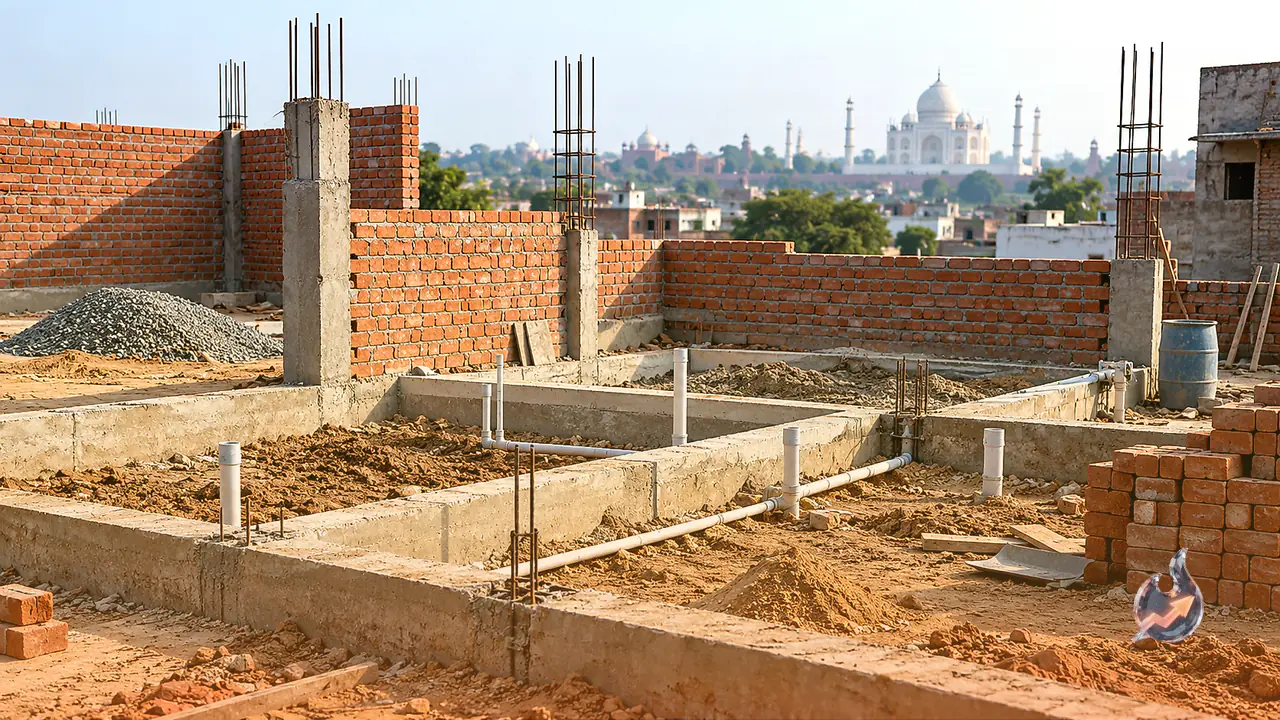
During home construction, people frequently fixate on wall finishes, flooring aesthetics, and visual decor while completely overlooking the critical domain of plumbing. Effective plumbing plays an indispensable role in maintaining structural longevity and overall building durability over extended periods. High-grade pipes and allied plumbing accessories must be utilized during the construction phase, accompanied by precise execution of pipe fittings and joints.
Minor leaks within underground pipelines can progressively induce severe dampness and moisture seepage within walls and floors over time. This detrimental moisture ruins interior paintwork and gradually compromises the overarching structural integrity of the building. Consequently, plumbing installation must always be entrusted to experienced and skilled artisans. Pipelines should undergo thorough pressure testing before being concealed to avert future complications.
Concluding his professional insights, Ajay Bhadariya reiterates that building a residence constitutes a major life investment, making accurate engineering guidance and correct techniques mandatory. Designing a layout mapped for approximately 1,000 square feet allows an experienced engineer to formulate a stable foundational layout. Based on these parameters, establishing the basic structural framework of a house on a 100-square-yard plot typically incurs an estimated cost of around 10 lakh rupees. Nevertheless, actual expenditures fluctuate according to architectural nuances, material grades, the total number of floors, and localized site conditions. Once the core structural shell reaches completion, finishing activities such as plastering, flooring, painting, electrical wiring, plumbing fixtures, and interior decoration are sequentially undertaken.