






















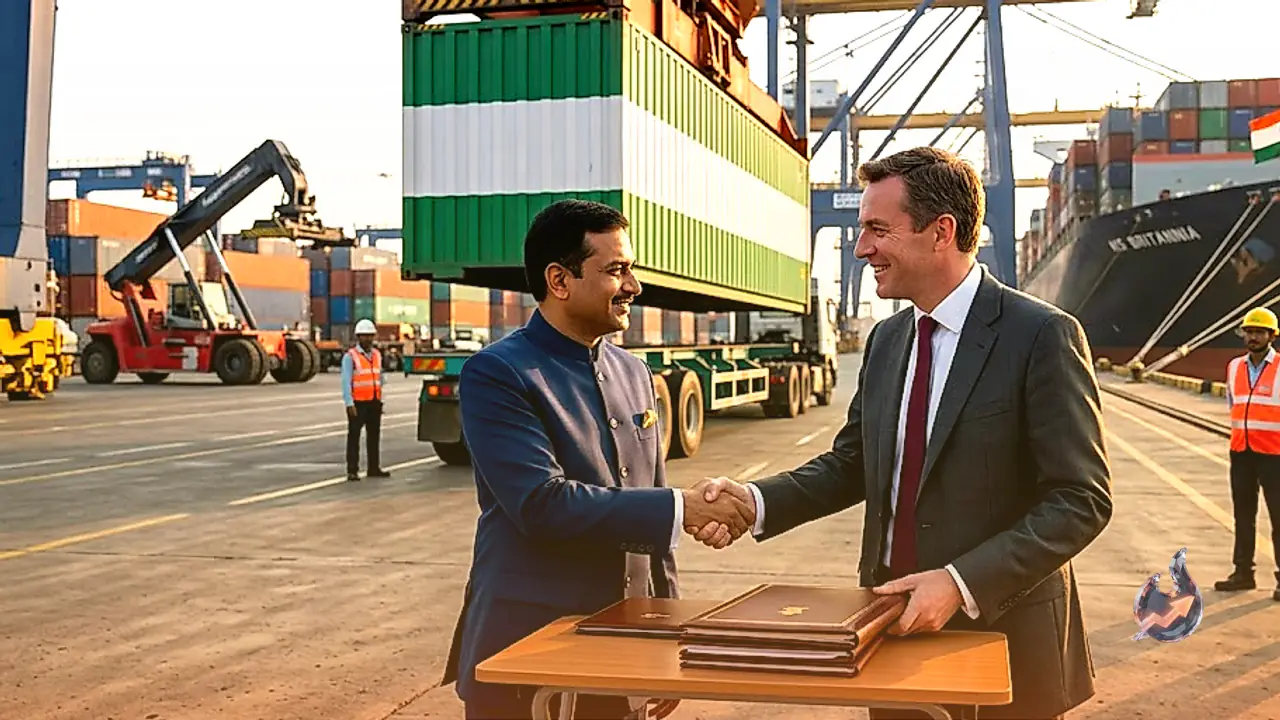

After a long wait, the free trade agreement between India and Britain has finally come into force, and business and industry bodies on both sides have been quick to welcome what they call a fresh chapter in the two countries' commercial ties. The core promise is straightforward: sweeping tariff cuts that make it cheaper and simpler to move goods and services in both directions, which in turn is expected to inject fresh energy into bilateral trade.
A pact the two prime ministers signed last year
Prime Minister Narendra Modi described the moment as a significant one for the India-Britain partnership. The foundations for it were laid in July last year, when Modi and British Prime Minister Keir Starmer signed the Comprehensive Economic and Trade Agreement, known as CETA. The projections tied to the deal are ambitious. Annual trade between the two nations, currently around £48 billion, is expected to at least double by 2030. Over the longer term, the agreement is forecast to add roughly £5 billion each year to the gross domestic product of both countries.
New openings in financial and professional services
Dame Susan Langley, the Lord Mayor of the City of London, called the deal an important one for business. ''This agreement will make it easier for our businesses to trade, invest and expand. It will create fresh opportunities in the financial and professional services sector,'' she said. Referring to her visit to India, the global ambassador for Britain's financial capital said she had seen up close the sheer breadth of opportunity in India, one of the world's fastest growing major economies. She described CETA as a ''historic'' agreement for both nations.
Among India's most wide-ranging trade agreements
From aeronautics to food, and from health services to financial services, the scope of the deal has led to it being counted among the most comprehensive trade agreements India has ever struck. It is expected to give particular support to industries that employ millions of people, such as textiles, footwear and engineering products. Dr Kishore Jayaraman, Group CEO of the UK India Business Council, said, ''Congratulations on CETA. This agreement was awaited for a long time, and it will give new momentum to trade and economic ties between two great economies like Britain and India.''
Industry leaders call it a historic step
Anuj Chande, a partner at Grant Thornton UK and head of its South Asia Business Group, was equally optimistic. ''The potential here is enormous for both countries. Even the estimate of an extra £25 billion in trade every year is probably lower than the real potential,'' he said. Tanuj Kapilashrami, Group Chief Operating Officer at Standard Chartered, described the FTA as a historic step for one of the world's most important development corridors.
Why doing business in India had been difficult
According to an analysis by the British Parliament, companies had until now faced a range of hurdles while doing business in the Indian market. In 2024, the average import duty stood at 12 per cent, while the tariff climbed as high as 150 per cent on drinks and tobacco, 255 per cent on clothing and 125 per cent on transport equipment. It was precisely these steep tariffs that made it hard for British firms to establish themselves in India, and the new agreement is now seen as the biggest step yet towards removing those barriers.