






















Rising cultivation costs have become a major challenge for farmers today. Expenses on diesel, expensive chemical fertilizers, and pesticides are compounding farmers' worries. At the same time, reliance on chemical fertilizers for good yields remains continuous, but can a good rice crop be prepared without urea, chemical fertilizers, and pesticides? An agricultural scientist from Rohtas has tried to find the answer to this question by conducting such an experiment in his own field.
Unique Natural Farming Experiment in Rohtas
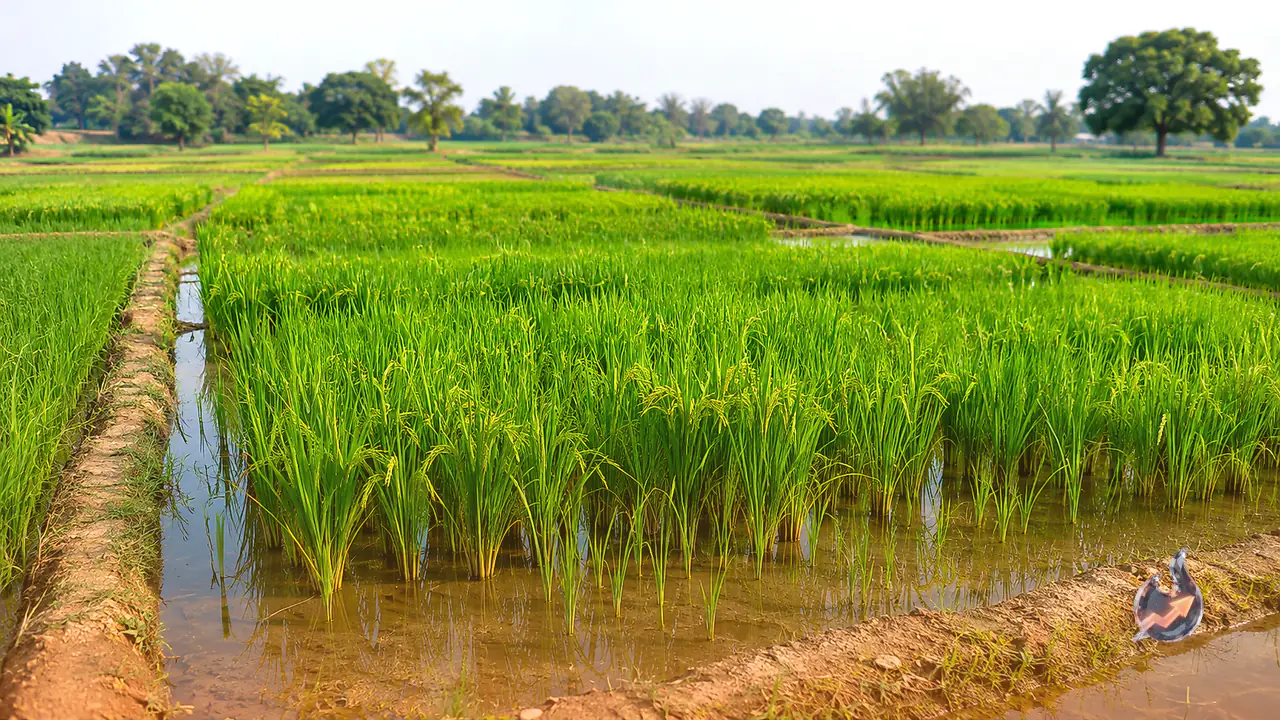
Dr. Ramakant Singh, a soil scientist at the Krishi Vigyan Kendra in Rohtas district, is conducting a unique experiment in paddy cultivation to promote natural farming. In his field, Sabour Sona variety paddy is thriving without any chemical fertilizers and pesticides. The biggest feature of this farming is that an aquatic plant called azolla has been used instead of urea to meet the nitrogen requirement of the crop.
Nutrient Management through Azolla and Jivamrit
According to Dr. Ramakant, azolla helps in absorbing nitrogen from the environment and making it available for the crop. According to him, about 25 to 30 percent of the nitrogen requirement of paddy is fulfilled through azolla, while the remaining requirement is met by the activity of microorganisms naturally present in the soil. At the same time, to provide other nutrients to the crop, jivamrit and ghan jivamrit are being used from time to time.
Traditional and Organic Methods for Pest Control
The scientist states that no outbreak of any disease has been seen so far in this paddy of Sabour Sona variety, nor have any symptoms of nutrient deficiency appeared. The growth of the plants is also balanced and healthy. Sour buttermilk prepared from curd and dasaparni ark are being used for crop protection. The special thing is that no chemical pesticide of any kind has been used in the entire farming.
Production Capacity and Past Record
Dr. Ramakant says that the yield of this crop being prepared by natural methods will not be less than the crop prepared using chemical fertilizers. Earlier last year, he cultivated BPT-52 paddy in the same field, in which a yield of 15 quintals per bigha was recorded. Now this experiment is being taken forward with the Sabour Sona variety as well.
A New and Affordable Alternative for Farmers
Through this experiment, Dr. Ramakant is showing farmers an alternative to farming in which dependence on buying expensive fertilizers and pesticides from the market can be reduced. His effort is that farmers should move towards achieving better production at a lower cost by using natural resources and organic methods available in the field.